Best Celtic Mythology Books
Curated by Skriuwer Editors · Updated April 2026 · Affiliate links
Celtic mythology is the most underrated tradition in the Western canon. From the Ulster Cycle's warrior epics to the eerie strangeness of the Welsh Mabinogion, these are the books that open up the Otherworld.
Celtic mythology is the most underrated mythology tradition in the English-speaking world. It receives a fraction of the cultural attention given to Greek or Norse mythology, yet it produced some of the most psychologically strange and imaginatively rich stories in human literary history. The Otherworld (Tír na nÓg in Irish, Annwn in Welsh) is not the Greek underworld, it is a parallel reality that coexists with this one, accessible through mounds, lakes, and the edges of things. That strangeness is what makes Celtic myth so compelling to readers who have exhausted the better-charted territory.
Celtic mythology divides mainly into Irish and Welsh traditions, with Gaulish and Breton material on the margins. The Irish corpus is the larger and older: the four cycles (Mythological, Ulster, Fenian, and Historical) preserve material that predates Christian influence, even if the manuscripts themselves are medieval. The Ulster Cycle, centered on Cú Chulainn and the great Cattle Raid of Cooley (Táin Bó Cúailnge), is the Irish equivalent of the Iliad in terms of scale and cultural weight. The Welsh material, concentrated in the Mabinogion, is shorter but equally strange.
The books on this list cover myth retellings, scholarly translations with useful commentary, and modern fiction that uses the tradition well. We have marked which books require background knowledge and which work as entry points. If you are completely new to Celtic mythology, the FAQ below will orient you before you start the list.
One honest note on sourcing: Celtic mythology has a complicated relationship with Victorian and early 20th-century popularizers who blended myth, folklore, and romantic invention. Some beloved books in this space (Robert Graves's The White Goddess, for instance) are influential but not reliable as mythological sources. We have flagged where this matters.
Quick comparison, top 5
The ranked list
- 1

Madeline Miller
(220,000 reviews)WINNER OF THE ORANGE PRIZE FOR FICTION 2012 Greece in the age of heroes. Patroclus, an awkward young prince, has been exiled to the court of King Peleus and his perfect son Achille…
Buy on Amazon → - 2

Madeline Miller
(85,400 reviews)Madeline Miller takes a minor figure from Homer's Odyssey, the witch Circe, and builds a full novel around her. An instant number one New York Times bestseller, Circe is the finest…
Buy on Amazon → - 3
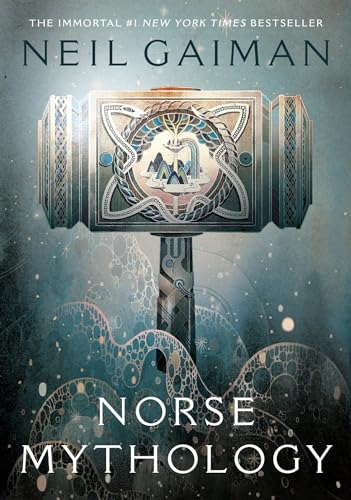
Neil Gaiman
(65,000 reviews)Neil Gaiman's bestselling retelling of the major Norse myths, from the creation of the world through the death of Baldur to Ragnarok. Gaiman stays close to the source material in t…
Buy on Amazon → - 4

Unknown Author
(31,000 reviews)Heroes by Unknown Author — one of the most acclaimed books in its field.
Buy on Amazon → - 5

Edith Hamilton
(21,000 reviews)Sparknotes presents a clear discussion of the action and thoughts of the work.
Buy on Amazon → - 6
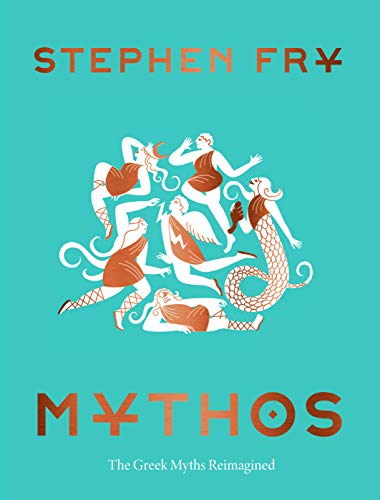
Stephen Fry
(16,800 reviews)Stephen Fry retells the Greek myths from the creation of the universe through the age of the Olympians, in warm, witty, modern prose. Mythos is the most popular recent entry point …
Buy on Amazon → - 7

translated by Robert Fagles Homer
(14,000 reviews)Dating to the ninth century BCE, Homer's timeless poem still vividly captures the horror and heroism of men and gods wrestling with one another's fates on the fields of Troy. Fagle…
Buy on Amazon → - 8

Joseph Campbell
(10,500 reviews)Since its release in 1949, The Hero with a Thousand Faces has influenced millions of readers by combining the insights of modern psychology with Joseph Campbell's revolutionary und…
Buy on Amazon → - 9

Raymond O. Faulkner
(4,500 reviews)The oldest surviving religious text designed to guide the deceased through the Egyptian afterlife, used in funerary practice from 1550 BCE onward. Raymond Faulkner's translation, p…
Buy on Amazon → - 10

Andrew George
(4,200 reviews)The world oldest great work of literature, predating Homer by centuries, in Andrew George award-winning Penguin Classics translation. A story about friendship, grief, and the fear …
Buy on Amazon → - 11

Stephanie Dalley
(3,000 reviews)Stephanie Dalley's Oxford World's Classics translation collects the primary Babylonian and Assyrian mythological texts, including the complete Atrahasis flood epic, multiple Gilgam…
Buy on Amazon → - 12

Snorri Sturluson
(2,200 reviews)Snorri Sturluson's 13th century Prose Edda in the standard Penguin Classics translation by Jesse Byock. This is the single most important primary source for Norse mythology, organi…
Buy on Amazon → - 13

Arthur Cotterell
(1,500 reviews)Over 500 alphabetical entries describing the central mythical figures of each culture (classical, Celtic, and Norse) and over 550 illustrations spanning fifteen centuries of fine a…
Buy on Amazon → - 14

Snorri Sturluson (trans. Anthony Faulkes)
(1,500 reviews)Snorri Sturluson's thirteenth-century compendium of Norse mythology, the single most important text for the tradition. Anthony Faulkes' translation is the standard English edition.…
Buy on Amazon → - 15

Richard H. Wilkinson
(1,500 reviews)Richard Wilkinson's comprehensive visual encyclopedia covers more than 200 Egyptian deities with illustrated entries on iconography, cult centers, and mythological roles. The stand…
Buy on Amazon →
Frequently asked questions
What is the best Celtic mythology book for complete beginners?
Gods and Fighting Men by Lady Augusta Gregory (1904) remains the most readable single-volume introduction to Irish mythology, covering both the Tuatha Dé Danann (the divine race) and the Fenian Cycle (Fionn mac Cumhaill). It is freely available online since it is out of copyright. For a more modern introduction, The Ancient Celtic World by Richard Cavendish gives geographic and historical context that pure myth collections skip. If you want something more narrative and accessible, Morgan Llywelyn's novels (Bard, Druids, Red Branch) dramatize the myths with reliable historical grounding.
What is the Mabinogion and should I read it?
The Mabinogion is a collection of eleven medieval Welsh tales, the foundational text of Welsh mythology. The name comes from the Four Branches (Pedeir Cainc y Mabinogi), which tell the interconnected stories of Pwyll, Branwen, Manawydan, and Math. The remaining tales include the Arthurian stories of Culhwch and Olwen (the oldest Arthurian text) and the Three Romances. The best modern translation is Sioned Davies's 2007 Oxford World's Classics edition, which preserves the oral storytelling texture better than earlier versions. It is not light reading but it is not impenetrable either.
What is the difference between Irish and Welsh Celtic mythology?
Irish mythology is more extensive and more systematized into cycles. It features divine races (Tuatha Dé Danann, Fomorians), heroic warriors (Cú Chulainn, Fionn mac Cumhaill), and elaborate otherworld geography. Welsh mythology is stranger and less systematic: the relationships between characters are oblique, the supernatural intrudes without explanation, and the stories resist easy allegorical readings. Both traditions share the concept of a parallel Otherworld and an emphasis on shape-shifting and the permeability of boundaries between worlds. Irish myth has more war; Welsh myth has more magic.
Who are the most important figures in Celtic mythology?
In Irish mythology: the Dagda (the Good God, father figure of the Tuatha Dé Danann), the Morrigan (goddess of fate, war, and sovereignty), Lugh (the many-skilled sun god), Cú Chulainn (the greatest warrior of the Ulster Cycle), and Fionn mac Cumhaill (leader of the Fianna, warrior band of the Fenian Cycle). In Welsh mythology: Pwyll (lord of Dyfed), Rhiannon (his mysterious wife), Pryderi (their son, who appears across all four branches), Math (a magician king of Gwynedd), and Arianrhod, Gwydion, and Lleu (the tangled family at the center of the Fourth Branch).
Are there good retellings of Celtic mythology like Madeline Miller did for Greek myth?
Yes, though the field is smaller. Morgan Llywelyn is the most prolific and most historically grounded: Red Branch (the Cú Chulainn myth), Druids (the Gaulish Celts and Caesar), and Finn Mac Cool (the Fenian Cycle) are all solid. For Welsh material, Alan Garner's The Owl Service is a haunting modern YA novel built on the Fourth Branch of the Mabinogion. Juliet Marillier's Daughter of the Forest takes the Irish myth of the Children of Lir and builds a full fantasy novel around it. None of these has reached the mainstream visibility of Miller's work, which is precisely why the subgenre remains a real opportunity for readers looking for less charted territory.
Is there a reliable book about the Druids?
The ancient Druids are difficult to write about reliably because the primary sources are Roman (mostly hostile) and there are no surviving Druidic texts. The most scholarly and readable modern account is The Druids by Peter Berresford Ellis, which separates confirmed archaeology from Victorian invention clearly. For a broader cultural history, Ronald Hutton's Blood and Mistletoe: The History of the Druids in Britain is the most rigorous recent work, though it is an academic book rather than a popular history. Avoid most 19th-century Druid literature, including the influential but largely invented tradition of the Iolo Morganwg.
Your next good book, in your inbox
We only write when we find a book worth your time. Hand-picked recommendations across history, mythology, true crime and more.