Best African American Literature in 2026: 12 Essential Books From the Most Important Voice in American Writing
THE AFRICAN AMERICAN literary tradition is the backbone of American literature. That is not a claim made for political reasons. It is a literary judgment: no other tradition in American writing has produced more consistently world-class work across a wider range of forms under worse conditions. From the slave narratives of the 19th century through the Harlem Renaissance to contemporary speculative fiction, this tradition has been the site of American literature's most urgent questions about freedom, identity, memory, and what it costs to build a self in a society designed to prevent it.
Why This Tradition Is Different From Every Other American Literary Tradition
Every great literary tradition emerges from a specific historical experience. The African American tradition emerges from a specific historical crime. Slavery and its aftermath are not background to this literature. They are the pressure that generates the literature's distinctive qualities: the tension between vernacular and formal English, the double consciousness that W.E.B. Du Bois named and Baldwin felt in every sentence he wrote, the relationship between individual story and collective trauma that Morrison worked with across her entire career.
This does not make the literature one-dimensional. Hurston's 'Their Eyes Were Watching God' is a love story. Beatty's 'The Sellout' is a satire. Butler's 'Kindred' is a time-travel novel. Ellison's 'Invisible Man' is one of the funniest books in American fiction, in places. What these books share is not subject matter but a specific quality of attention: the kind that comes from a tradition that has never been able to take its own survival for granted.
12 Best African American Literature Books in 2026
1. Beloved — Toni Morrison

The most important American novel of the second half of the 20th century. Morrison's story of Sethe, a formerly enslaved woman who kills her daughter to prevent her return to slavery, is based on the true case of Margaret Garner (1856). Morrison does not use the historical case to tell a simple story about a woman driven to extremity. She uses it to examine what slavery does to the concept of a self: what it means to own nothing, including your own children, and what it costs to love under those conditions.
The novel is technically demanding. Morrison works with memory and time non-linearly, and the ghost at the center of the book is simultaneously a literal haunting and a metaphor for the history that will not stay past. Read it twice. The second reading is different from the first.
2. Go Tell It on the Mountain — James Baldwin
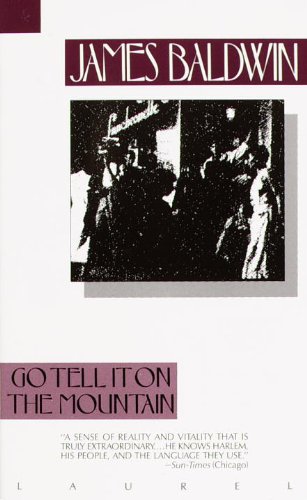
Baldwin's first novel, published in 1953 when he was 28, is the most autobiographical of his works and the most formally concentrated. It follows 14-year-old John Grimes through a single day in Harlem that includes a religious conversion, a confrontation with his father's violence and his father's past, and the histories of two generations that arrive in the North carrying everything the South did to them.
Baldwin's prose is unlike anyone else's: biblical cadences fused with vernacular speech, long sentences that build to an emotional point with the discipline of a musician. The novel is short (under 250 pages) and it earns every page.
3. Invisible Man — Ralph Ellison
The unnamed narrator of Ellison's 1952 novel begins in the Deep South and ends in New York, but the real journey is through a series of encounters with American society that all produce the same result: he is seen as a type, a problem, a symbol, a tool, but never as a specific individual. The invisibility of the title is not literal. It is the social invisibility of a Black man in mid-century America, ignored by everyone who sees him.
The novel is also very funny. The battle royal scene, the college episodes, the Brotherhood sequences: Ellison writes absurdist comedy with the precision of a musician (he trained as a jazz musician before turning to fiction). The humor does not soften the argument. It sharpens it.
4. Native Son — Richard Wright
Published in 1940, Wright's novel about Bigger Thomas, a young Black man in Chicago who accidentally kills a white woman and then kills his girlfriend to prevent her from informing on him, was the first major African American novel to reach a mainstream white audience in numbers. It was a bestseller. It was also a deliberate provocation.
Wright's argument was that Bigger was not a monster but a product: of poverty, of a society that offered no legitimate path to dignity for a young Black man, and of the fear and rage that those conditions produce. The novel is morally uncomfortable in ways Wright intended. It does not allow the reader the comfort of condemnation.
5. Their Eyes Were Watching God — Zora Neale Hurston
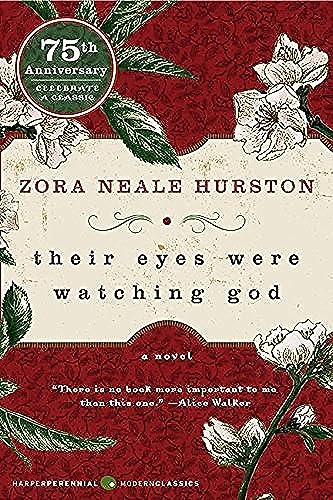
Hurston's 1937 novel was rediscovered by Alice Walker in the 1970s and is now recognized as one of the great American novels of the 20th century. Janie Crawford's story of three marriages and her search for a life on her own terms is written in the vernacular speech of rural Florida Black communities, a choice that was controversial in 1937 (Richard Wright criticized it as minstrelsy) and is now understood as a literary achievement comparable to Twain's use of dialect.
The novel is about love, specifically the difference between love that possesses and love that frees. It is also the most joyful book on this list, and the most insistently physical. Hurston was an anthropologist as well as a novelist, and the world she describes is specific and alive.
6. The Color Purple — Alice Walker
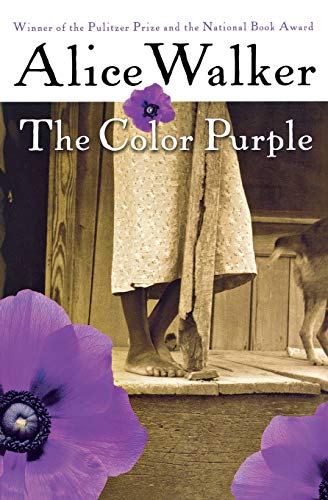
Walker's 1982 novel, told in letters, follows Celie from adolescence to middle age through abuse, survival, and the slow construction of a self. The letters are addressed to God and, later, to her sister Nettie. The novel covers domestic violence, sexual abuse, incest, and lesbianism in a period when mainstream American fiction was not doing so, and it does so without sensationalism.
What distinguishes the novel is the quality of attention Walker gives to Celie's voice: ungrammatical, limited in vocabulary, and precise in a way that formal prose rarely achieves. The transformation of that voice over the course of the novel, as Celie gains experience and language and self-possession, is what the book is actually about.
7. The Underground Railroad — Colson Whitehead
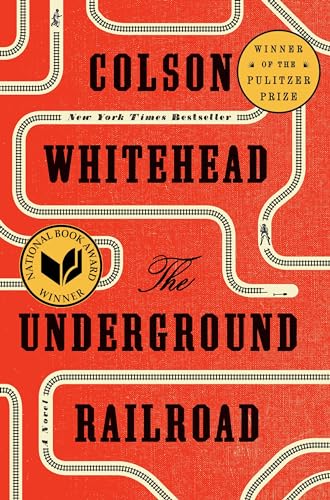
Whitehead's 2016 novel takes a metaphor literally: in his version of antebellum America, the Underground Railroad is an actual railroad, running underground, connecting safe houses and stations across the slave states. Cora, an enslaved woman on a Georgia plantation, escapes on it and discovers that each state she passes through has developed a different, equally sinister response to the question of what to do with Black people.
The literal railroad is a way of examining the whole geography of American racism rather than a single location. Each state represents a different ideological position, from physical terror to paternalistic control to eugenics. The novel won the Pulitzer Prize in 2017 and is the most important African American novel of the last decade.
8. Between the World and Me — Ta-Nehisi Coates
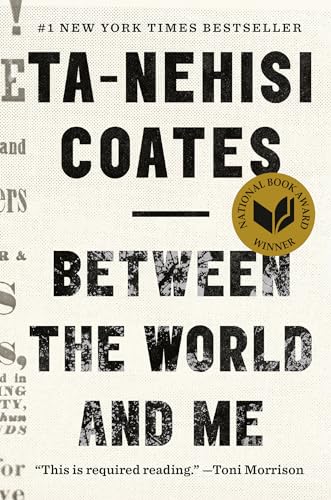
A long letter from Coates to his teenage son about what it means to have a Black body in America. The book is structured around three episodes: the shooting of a college friend, a visit to the plantation where Coates's ancestors were enslaved, and the killing of a young man by a police officer who was not indicted. Coates uses these episodes to construct an argument about the relationship between Black bodies and American wealth, from slavery through redlining to mass incarceration.
The book is short (150 pages) and written with the urgency of someone who believes the stakes are mortal. It is the most direct statement of the tradition's central argument in contemporary form.
9. Salvage the Bones — Jesmyn Ward
Ward's 2011 novel is set in the 12 days before Hurricane Katrina in a poor Black community in rural Mississippi. The narrator is Esch, 15 years old and pregnant, watching her family try to prepare for a storm they cannot afford to leave. The novel is not primarily about the hurricane. It is about what poverty does to family love: how it forces people to rely on each other in ways that are also damaging, how it forecloses options that middle-class characters in fiction take for granted.
Ward writes with a density of physical detail that is unusual in contemporary American fiction. The novel is uncomfortable and beautiful in equal measure. It won the National Book Award.
10. The Sellout — Paul Beatty
The most formally radical novel on this list. Beatty's 2015 Man Booker Prize winner opens with the narrator before the Supreme Court, charged with re-instituting slavery and racial segregation in his California town. The novel is a sustained satirical assault on every available position in American racial politics: liberal pieties, conservative nostalgia, Black nationalism, and the specific absurdities of post-racial discourse.
Beatty writes like someone who finds the entire situation genuinely funny in the way that only absolute despair can produce. The novel demands active reading. The jokes are not always comfortable. It is the most intellectually demanding book on this list and one of the most rewarding.
11. The Known World — Edward P. Jones
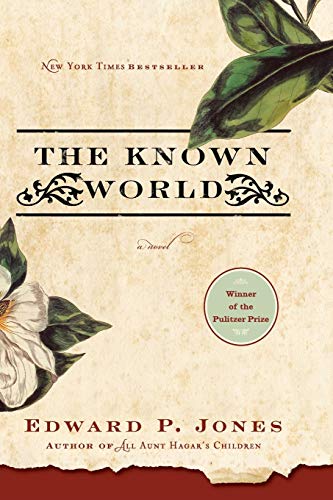
Jones's 2003 Pulitzer Prize winner examines a fact that most American historical fiction ignores: free Black people in the antebellum South who owned slaves. Henry Townsend, a formerly enslaved man who buys his own freedom and then builds a plantation with enslaved workers, is the novel's central figure. Jones does not use this to argue that Black slaveholders were equivalent to white ones. He uses it to show the full moral complexity of a system that degraded everyone it touched.
The novel is written in a non-linear, almost documentary style, moving between characters and time periods. It takes patience, but it is the most morally serious American novel about slavery since Beloved.
12. Kindred — Octavia Butler
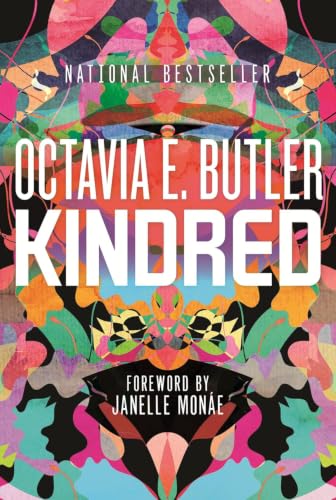
Butler's 1979 novel is the founding text of contemporary African American speculative fiction. Dana, a Black woman in 1970s Los Angeles, is repeatedly pulled back in time to an antebellum Maryland plantation where she must protect the white slaveholder ancestor whose survival is linked to her own existence. Each visit is triggered by his danger and ends when her life is threatened.
The time-travel mechanism is not a genre exercise. It is a way of forcing the reader to experience slavery not as history but as something Dana must survive in the present tense, with her contemporary knowledge and values intact and useless. The novel is the best answer to "why does this still matter" that the tradition has produced.
Where to Start in 2026
New to the tradition: start with Hurston's Their Eyes Were Watching God or Baldwin's Go Tell It on the Mountain for the most immediate entry into the writing itself.
Want the landmark achievement: Morrison's Beloved. Set aside a week, read it slowly, and consider a second reading.
Want contemporary fiction: Whitehead's Underground Railroad, Ward's Salvage the Bones, or Beatty's The Sellout are the three best novels of the last 15 years.
Want speculative fiction: Butler's Kindred is the essential text and one of the best American novels of the 20th century in any genre.
Browse more literature reading lists or see the best Victorian literature books for the tradition that was dominant when African American writers began reshaping American fiction.
Your next good book, in your inbox
We only write when we find a book worth your time. Hand-picked recommendations across history, mythology, true crime and more.
Are you an author?
Get your book in front of readers like these, for free.
- Free book listing →Your own book page with an Amazon button
- Author page →Photo, bio and links to your site
- Featured placement →A spot in our best-of lists, from €29
Free tools we recommend
Get free honest reviewsReview exchange on iWrity, free to join
Books You Might Like

It Ends with Us: A Novel
Colleen Hoover

The Seven Husbands of Evelyn Hugo: A Novel
Taylor Jenkins Reid

The Song of Achilles
Madeline Miller

Educated: A Memoir
Tara Westover