Best Appalachian Literature in 2026: 12 Books From America's Most Misunderstood Region
Appalachia gets the most reductive media coverage of any American region. Poverty statistics, opioid crisis graphics, political analysis that treats the people there as a problem to be explained. What you rarely see is what the literature has always known: that this is a place with a deep and specific culture, a complicated relationship with the land, a history of being economically extracted by outside forces, and writers who have documented all of it with far more complexity than a cable news segment can hold.
Appalachian literature is the counter-narrative. It is written by people who live or lived there, people who grew up with the mountains and the rivers and the particular weight of kinship networks and community obligation that defines the region. Reading it does not solve the political problem of how coastal America understands rural America. But it gives you a foundation that the stereotypes never could.
The Novels
Serena by Ron Rash (2008)
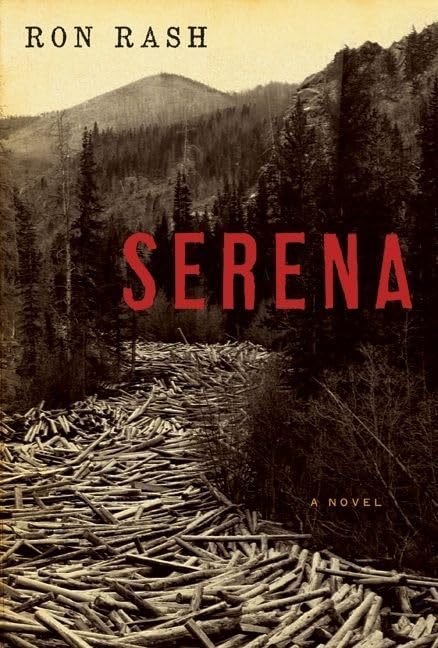
Serena is set in 1929 North Carolina, in the logging camps of the Great Smoky Mountains. George Pemberton brings his new wife Serena back from Boston and finds that she is more ruthless, more ambitious, and more dangerous than anyone else in the camp, including him. Rash writes Serena as a Shakespearean figure, a Lady Macbeth of the timber industry, willing to eliminate anyone who stands between her and what she wants. The backdrop is the battle over whether the mountains become a national park or get stripped bare. The prose is spare and exact in a way that feels almost classical. This is the novel that put Rash on the map outside Appalachian literary circles.
Prodigal Summer by Barbara Kingsolver (2000)
Three interlocking stories set in the southern Appalachians, each approaching the same ecosystem from a different angle. A wildlife biologist tracking a reintroduced coyote population. An elderly farmer and a young botanist arguing across seasons about what belongs in the landscape. A woman alone in the woods with more knowledge of predators than the local men are comfortable with. Kingsolver weaves ecology directly into the narrative structure, so that the human drama and the biological drama are the same drama. It is one of the most intelligent novels written about place and belonging in American fiction.
Clay's Quilt by Silas House (2001)
House grew up in eastern Kentucky and the specificity of that upbringing fills every page of his debut. Clay Sizemore is a young man in a Kentucky mining community trying to figure out who he is outside the patterns his family and culture have laid out for him. The novel is not heavy-handed about the contradictions of Appalachian identity: the fierce loyalty to place alongside the poverty and limited options, the beauty of the culture alongside its capacity for violence and insularity. House writes from inside all of that without condescension or romanticism.
A Land More Kind Than Home by Wiley Cash (2012)
Set in a small North Carolina community in the shadow of a Pentecostal church with a charismatic and dangerous pastor who handles snakes and believes in healing by faith. When a boy dies during a church service, his older brother has to decide what he knows and what he is willing to say about it. Cash writes in the tradition of Southern Gothic but grounds it in specifically Appalachian forms of religious community. The pacing is controlled and the ending is devastating in a way that earns its weight.
Gap Creek by Robert Morgan (1999)
Julie Harmon is seventeen when she marries Hank Richards and moves with him to a rented farm on Gap Creek in the mountains of South Carolina. The novel covers their first year of marriage: the back-breaking labor of subsistence farming in the 1890s, the floods, the deaths, the failures of the land and of people who cannot meet what life demands of them. Morgan writes manual labor with an exactness that makes you feel the cold and the mud and the weight. Oprah chose it for her book club, which brought it a large audience, and the audience was right to find it: this is honest and un-sentimental Appalachian fiction at its best.
Fair and Tender Ladies by Lee Smith (1988)
Fair and Tender Ladies spans an Appalachian woman's entire life, told through letters she writes from childhood to old age. Ivy Rowe never leaves her mountain home in Virginia and the letters track how that choice shapes her, what she loses and keeps, what she understands about herself and the world. Smith writes female interiority with rare precision and the epistolary form gives the novel a quality that is both intimate and epic. Ivy's voice is one of the great first-person voices in American regional fiction.
Jim the Boy by Tony Earley (2000)
Set during the Depression in a small North Carolina town and following a ten-year-old boy through a single year. Earley's prose is clean and carefully observed in a way that recalls early Hemingway without the macho posturing. Jim's father died before he was born and the novel is partly about the weight of inheritance, of the dead shaping the living, in a community where everyone knows your family history going back generations. It is short, quiet, and genuinely beautiful.
Strange as This Weather Has Been by Ann Pancake (2007)
Mountaintop removal coal mining is one of the most destructive industrial practices in American history: explosives blow the tops off mountains to access coal seams, then the debris is dumped into valleys, burying streams and contaminating water. Pancake's debut novel is about a West Virginia family living beneath a mountain being destroyed in exactly this way. The novel uses multiple voices across generations to build a portrait of what this kind of extraction does to a community that has lived in that landscape for centuries. It is the most direct literary confrontation with Appalachian resource extraction that exists.
Blackberries, Blackberries by Crystal Wilkinson (2000)
Wilkinson's debut story collection is set in rural Kentucky and focuses on Black Appalachian women, a community and perspective almost entirely absent from the mainstream image of the region. The stories are grounded in the specific texture of small-town Black Kentucky life: church, family, landscape, the particular weight of gender and race intersecting in a context that does not get literary attention. Wilkinson has become one of the most important voices in contemporary Appalachian literature and this is where her work began.
The Non-Fiction
Hillbilly Elegy by J.D. Vance (2016)

Vance's memoir about growing up in Middletown, Ohio and Jackson, Kentucky is the most debated piece of Appalachian non-fiction in recent memory. Its diagnosis of the region's problems has been contested by other Appalachian writers who argue Vance flattens structural economic causes into personal failures. That debate is worth having, and having it requires reading the book. Whatever its analytical limitations, Hillbilly Elegy is a vivid memoir of a specific Appalachian-adjacent upbringing and the chaos of a family shaped by addiction and poverty. It generated more national conversation about the region than any other book in decades. Read it alongside the other books on this list for the fuller picture.
Tightrope by Nicholas Kristof and Sheryl WuDunn (2020)
Kristof grew up in rural Oregon, and this book documents what happened to his childhood classmates: the addiction, the early deaths, the prison sentences, the poverty. It is not Appalachian in a strict geographic sense, but the conditions it describes, the collapse of rural working-class communities across America, map directly onto what Appalachian writers have been documenting for decades. The book makes the argument that these are structural failures, not individual moral failures, and it does so with specific people and specific data. Essential context for the fiction on this list.
Bloodroot edited by Joyce Dyer (1998)
An anthology of Appalachian women writers including Lee Smith, Barbara Kingsolver, Silas House, and others, collected with essays about what it means to write from this place. If you are new to the tradition and want a map of the major voices, this is the most efficient entry point into Appalachian women's literature as a connected body of work.
What This Literature Actually Does
The writers on this list are not making a tourism pitch for Appalachia. They are not asking you to feel sorry for the people there or to admire them from a safe distance. They are writing about a place and its people with the full weight of human complexity: beauty and violence, loyalty and betrayal, love for a landscape that has been systematically stripped of its economic value by outside interests.
Start with Serena if you want the most cinematically powerful entry point. Go to Fair and Tender Ladies if you want the deepest interior portrait. Read Ann Pancake's Strange as This Weather Has Been if you want to understand what resource extraction actually costs. These books will not let you hold simple opinions about Appalachia afterward. That is precisely the point.
Your next good book, in your inbox
We only write when we find a book worth your time. Hand-picked recommendations across history, mythology, true crime and more.
Are you an author?
Get your book in front of readers like these, for free.
- Free book listing →Your own book page with an Amazon button
- Author page →Photo, bio and links to your site
- Featured placement →A spot in our best-of lists, from €29
Free tools we recommend
Get free honest reviewsReview exchange on iWrity, free to join
Books You Might Like

It Ends with Us: A Novel
Colleen Hoover

The Seven Husbands of Evelyn Hugo: A Novel
Taylor Jenkins Reid

The Song of Achilles
Madeline Miller
