Best Astrophysics Books 2026: The Cosmos Explained
The universe operates on principles so vast they stretch the limits of human intuition. Astrophysics books bridge that gap, translating mathematics and observation into narrative. The best ones make you grasp why distant supernovae matter, how gravity shapes galaxies, and what physicists actually mean when they talk about the expanding universe.
Why Read Astrophysics Books?
Most people never think about astrophysics after high school. That's a loss. Understanding the cosmos changes how you see the night sky. You stop looking at stars as points of light and start seeing them as furnaces with their own lifecycles, with planets orbiting them, perhaps with life dependent on their stability.
Astrophysics isn't just about distant phenomena either. The iron in your blood was forged in a star. The carbon backbone of every molecule in your body came from stellar nucleosynthesis. Reading astrophysics books reconnects you to your physical origins in a way few other subjects can.
The books below avoid pure mathematics without sacrificing accuracy. They're written for curious adults who want to understand, not for physicists writing papers.
The Best Astrophysics Books
Cosmos by Carl Sagan
Sagan set the standard for science writing in the 1980s, and the book has outlasted countless competitors. He moves from the Big Bang to the present day, covering planetary science, stellar evolution, and the search for life. The prose is expansive without being grandiose. Sagan treats the cosmos as something worth awe, and he communicates that reverence page after page.
The structure mirrors a guided tour. You don't get lost in technical jargon because Sagan anchors each concept in human experience or history. You learn about the Hertzsprung-Russell diagram through the journey of discovering stellar classification, not through abstract presentation.
A Brief History of Time by Stephen Hawking
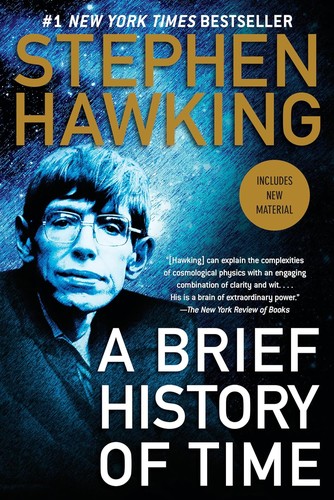
Hawking's book tackles black holes, quantum mechanics, and the arrow of time head-on. It's shorter than Cosmos and more focused on theoretical concerns. If Sagan is a tour guide, Hawking is a teacher pointing at equations and saying, "Let me explain what these mean."
The chapter on black holes alone justifies the book's existence. Hawking explains how something can have infinite density and gravity so strong light cannot escape, and you understand why physicists became obsessed with them. The book touches on time itself, entropy, and whether the universe had a beginning.
This isn't light reading. Hawking makes demands on the reader. But the payoff is that you grasp concepts most people find incomprehensible.
Find A Brief History of Time on Amazon
NightSky: Ancient Wisdom from the Cosmos by Karen Armstrong & Stuart Clark
This book takes a different angle, exploring how humans have understood the cosmos from Babylon to Newton to Einstein. It's part history, part science. You learn the actual astronomical observations that drove paradigm shifts: how tracking Mars's position forced astronomers to question epicycles, how stellar parallax proved heliocentrism.
The value here is context. You understand astrophysics not as a set of timeless truths but as hard-won knowledge built through centuries of measurement and revision. That perspective makes modern astrophysics feel like an achievement, not a background assumption.
The Elegant Universe by Brian Greene
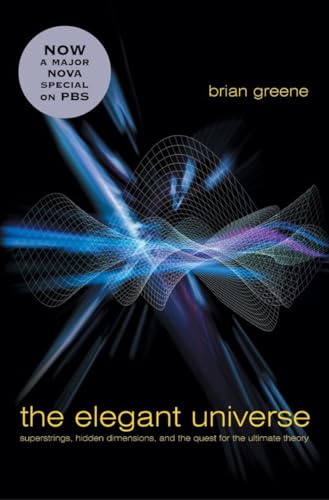
Greene specializes in making theoretical physics accessible. This book focuses on string theory, dimensions beyond three spatial ones, and unifying quantum mechanics with gravity. If you've ever wondered what physicists mean by "extra dimensions," this is the book that explains it.
Greene uses thought experiments and analogies to make the abstract concrete. He doesn't shy away from saying "we don't know" when the science stops. The book is ambitious, moving from relativity to quantum mechanics to the cutting edge of theoretical research without losing coherence.
Find The Elegant Universe on Amazon
Astrophysics for People in a Hurry by Neil deGrasse Tyson

Tyson's book is lean and punchy. Each chapter addresses a big question: What is the universe made of? How did it begin? Why does anything exist? The answers are rigorous but compressed. You can read this book in an afternoon and come away understanding modern cosmology's central claims.
Tyson has a gift for one-liners that stick with you. The universe is 13.8 billion years old, and humans have only recently become intelligent enough to study it. That asymmetry, the cosmic accident of consciousness, threads through the book.
What These Books Have in Common
The best astrophysics books share a few traits. First, they respect both science and the reader's intelligence. They don't condescend, but they don't assume prior knowledge. Second, they use narrative structure. Rather than listing facts, they show how questions lead to observations, which lead to new questions.
Third, they acknowledge mystery. The best authors are clear about what we know with confidence and what we're still arguing about. Dark matter and dark energy still don't have convincing explanations. The best authors admit that. Science is richer when you know its frontiers.
Why Astrophysics Matters Now
Astrophysics is experiencing a golden age. Space telescopes like JWST are seeing the earliest galaxies. Gravitational wave detectors have confirmed Einstein's predictions. We've photographed black holes. The field is moving fast, and books are one way to keep pace.
Reading astrophysics also offers perspective. Your worries about next month's deadline or next year's plans shrink when you're thinking about timescales of billions of years and distances measured in light-years. That's not escapism. It's clarity.
Where to Start
If you've never read astrophysics before, start with Tyson or Sagan. Both are accessible and won't demand background knowledge. If you want to go deeper, add Greene or Hawking once those two have built your foundation.
The cosmos is the largest context humans know. Books that explain it are worth the time.
Your next good book, in your inbox
We only write when we find a book worth your time. Hand-picked recommendations across history, mythology, true crime and more.
Are you an author?
Get your book in front of readers like these, for free.
- Free book listing →Your own book page with an Amazon button
- Author page →Photo, bio and links to your site
- Featured placement →A spot in our best-of lists, from €29
Free tools we recommend
Get free honest reviewsReview exchange on iWrity, free to join
Books You Might Like

It Ends with Us: A Novel
Colleen Hoover

The Seven Husbands of Evelyn Hugo: A Novel
Taylor Jenkins Reid

The Song of Achilles
Madeline Miller

Educated: A Memoir
Tara Westover