Best Autobiography Books in 2026: Life Stories That Shape How We See the World
Best Autobiography Books in 2026
You want to know what someone really thought, not what a journalist reconstructed from interviews. Autobiographies give you that raw account, straight from the source. These are the books where people have actually stopped to examine their own lives, without the filter of someone else's interpretation.
The autobiographies that matter most aren't always the ones written by the most famous people. They're the ones where someone had something genuine to say, where they risked revealing the contradictions and mistakes that make a life interesting.
Why Autobiographies Matter More Than You Think
The best autobiography isn't just a retelling of events. It's an act of self-reckoning. When someone sits down to explain their own life, they have to make sense of it. They have to choose which moments mattered and why. That process of selection tells you everything.
Read an autobiography and you're seeing how someone made peace (or didn't) with their choices. You're watching them defend decisions you might question, admit failures you might have expected them to hide, or justify actions that seemed obvious only to them at the time.
1. Long Walk to Freedom by Nelson Mandela
Mandela's autobiography covers 27 years in prison and the emergence of a different man on the other side. What makes this extraordinary is that Mandela doesn't paint himself as a saint. He writes about his marriage cracking under the strain, about his own anger, about the political calculations he made. You see the cost of what he did, not just the triumph.
The book moves through his childhood in the Transkei, his years as a lawyer in Johannesburg, and the gradual radicalization that led him to the ANC. By the time he reaches prison, you understand not just why he was imprisoned, but who he was when he arrived. The man who walked out was different, and he tells you why.
https://www.amazon.com/dp/0316769174?tag=31813-20
2. I Know Why the Caged Bird Sings by Maya Angelou
Angelou's account of her childhood in the segregated South and her silence after sexual trauma offers no easy conclusions. She writes about being mute, about the world that forced her into that silence, and about the small acts of resistance that eventually brought her back to speech. This isn't a triumph narrative disguised as an autobiography. It's a record of survival and the price of it.
What strikes readers is her refusal to be gentle with her own story. She doesn't minimize the abuse or pretend that reading her way out of trauma was a neat fix. Instead, you get the texture of pain and the gradual ways she learned to claim her voice.
https://www.amazon.com/dp/0553320564?tag=31813-20
3. The Autobiography of Benjamin Franklin
Franklin's account of his rise from runaway apprentice to founding father plays like a how-to manual written by someone who actually knew how things worked. He's not interested in grand narrative. He's interested in practicality, observation, and the small disciplines that compound over a lifetime.
What's remarkable is his willingness to discuss his own errors and changes of mind. He reinvented himself multiple times, and he writes about each reinvention without shame. That's rare in an autobiography written by someone of his stature, and it's what makes it readable across centuries.
4. Becoming by Michelle Obama

Michelle Obama's autobiography arrived at a moment when her role as First Lady was defined by the projection of others. In Becoming, she reclaims the narrative. She writes about her childhood in Chicago, her education, her early career, her partnership with Barack before he was president.
What sets this apart is the emotional precision. She doesn't simplify her feelings about motherhood, ambition, marriage, or the impossible position of being a symbol to millions. She owns the contradiction between her public role and her private self.
https://www.amazon.com/dp/1524763136?tag=31813-20
5. Into the Wild by Jon Krakauer
This is technically narrative nonfiction rather than autobiography, but Krakauer interweaves his own story as a climber with the story of Chris McCandless, who died alone in Alaska. What results is something like a collaborative autobiography of two men chasing the wilderness for different reasons.
Krakauer examines his own young self, his own idealism about the wild, and uses that to make sense of McCandless. You're reading two life stories at once, and the parallels illuminate both. The book asks why young men are drawn to the idea of absolute freedom and what that desire costs.
6. The Glass Castle by Jeannette Walls
Walls' account of growing up with a father who rejected conventional life and a mother who pursued art at the expense of her children's stability is painfully honest. The Glass Castle is about poverty, about love that coexists with neglect, and about the ways families rationalize harm.
What makes this autobiography essential is that Walls doesn't resolve the contradiction. She loves her parents and sees how their choices damaged her. Both things remain true. She doesn't forgive them neatly, and she doesn't condemn them utterly. That complexity is what life actually feels like.
7. Just Kids by Patti Smith
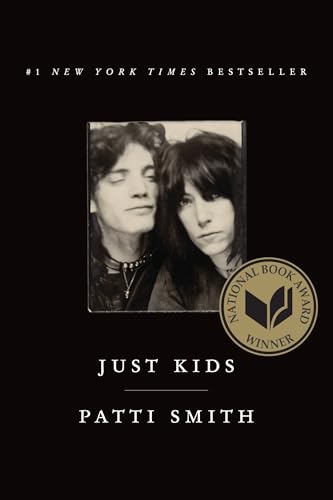
Smith's account of her years in New York with photographer Robert Mapplethorpe is part love story, part artistic manifesto, part elegy. She writes in prose that feels like poetry, which is fitting for someone who is both.
This autobiography captures artistic hunger at a specific moment in history. It's about the possibility that art could matter absolutely, that creativity could sustain you through poverty and uncertainty. It's also about the friendship that kept both Smith and Mapplethorpe alive through the years that shaped them.
https://www.amazon.com/dp/0060936223?tag=31813-20
8. Open by Andre Agassi
Tennis player Andre Agassi's autobiography is unusual because he was so carefully managed and controlled throughout his career. In Open, he reveals how much of his public persona was constructed by his father, his coaches, and the demands of his sport.
What makes it honest is that Agassi examines how he internalized these controls, how he became complicit in limiting his own freedom. He writes about his marriage to Brooke Shields, his drug use, and his eventual escape from the pressure that nearly destroyed him. The book is about reclaiming agency in a life lived on someone else's terms.
9. A Heartbreaking Work of Staggering Genius by Dave Eggers
Eggers raises his young brother after their parents' deaths and writes an autobiography that's also a meditation on grief, responsibility, and what it means to create meaning. The book is formally experimental, which might seem like self-indulgence, but it's actually a reflection of how experience feels. Grief is not linear. Eggers' form matches his content.
This autobiography refuses the neat ending. The book is about being young and grieving and still laughing, still making mistakes, still trying to create something. It's about the ongoing work of becoming a functional person after catastrophe.
10. In Cold Blood by Truman Capote

Capote's account of his investigation into a rural Kansas murder and his relationship with one of the killers blurs the line between autobiography and true crime. What makes it his autobiography is how deeply his own obsession with the story becomes the subject.
Capote wanted to understand evil. He spent years investigating, building a relationship with the murderer Perry Smith, trying to comprehend what made someone capable of what Smith had done. The book is as much about Capote's hunt for understanding as it is about the crime itself.
The Thread That Runs Through All of Them
The best autobiographies have something in common. The writers aren't trying to justify themselves completely. They're trying to understand themselves. That's what makes you want to read them. You're not being sold on a narrative. You're being given access to someone else's process of making sense of what happened.
Pick one that matches your moment. If you're building something, Franklin. If you're grieving, Eggers. If you're trying to reclaim your voice, Angelou. Each of these books offers not just a story but a model of how to live with the contradictions that make you human.
Your next good book, in your inbox
We only write when we find a book worth your time. Hand-picked recommendations across history, mythology, true crime and more.
Are you an author?
Get your book in front of readers like these, for free.
- Free book listing →Your own book page with an Amazon button
- Author page →Photo, bio and links to your site
- Featured placement →A spot in our best-of lists, from €29
Free tools we recommend
Get free honest reviewsReview exchange on iWrity, free to join
Books You Might Like

It Ends with Us: A Novel
Colleen Hoover

The Seven Husbands of Evelyn Hugo: A Novel
Taylor Jenkins Reid

The Song of Achilles
Madeline Miller

Educated: A Memoir
Tara Westover