Best Books About Behavioral Psychology in 2026: Understanding Why We Do What We Do
Best Books About Behavioral Psychology in 2026
You think you know why you do things. You make decisions based on conscious reasoning. You're rational, autonomous, in control. Then you read behavioral psychology and realize how much of your behavior is automatic, influenced by context, shaped by unconscious patterns you never chose. This is uncomfortable knowledge. It's also liberating, because once you understand why you act the way you do, you have a chance to change.
The Gap Between Self-Image and Reality
Here's the thing: people are terrible at understanding their own motivations. We construct post-hoc explanations for decisions we actually made unconsciously. We think we're immune to social pressure while simultaneously being shaped by it. We believe we're rational while being swayed by how information is presented. Behavioral psychology has spent decades cataloging these gaps. The research is consistent: we're far less in control of our behavior than we imagine.
"Thinking, Fast and Slow" by Daniel Kahneman
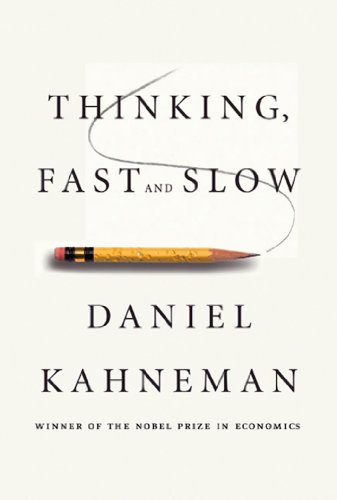
This is the standard reference, and for good reason. Kahneman spent his career studying how humans think, the mistakes we make, the systematic biases built into human cognition. He distinguishes between fast thinking (intuitive, automatic, associative) and slow thinking (deliberate, logical, analytical). Most of our daily behavior relies on fast thinking, which works well most of the time but creates predictable errors.
The book covers biases like anchoring (being influenced by irrelevant numbers), availability heuristic (assuming easy-to-recall events are common), and representativeness (judging probability by similarity to stereotypes). After reading it, you'll see these patterns everywhere, in yourself and others.
Find it here: https://www.amazon.com/dp/B00555X8OA?tag=31813-20
"Atomic Habits" by James Clear
Clear takes the science of habit formation and makes it practical. Habits are a behavioral psychology phenomenon: automatic patterns of action triggered by context, reinforced by reward. Clear explains how habits work at a neurological level and then shows how to design your environment to create good habits and break bad ones.
What's powerful about Clear's approach is that it doesn't rely on willpower. Instead, it relies on understanding how behavior actually works. Make the desired behavior easy, make the undesired behavior hard, and you change behavior more effectively than through willpower alone.
Find it here: https://www.amazon.com/dp/B01N5D0DYE?tag=31813-20
Influence and Persuasion
One of the most disturbing discoveries in behavioral psychology is how easy it is to influence human behavior without awareness. Social pressure, environmental cues, subtle suggestion all shape what we do. Understanding this is crucial for recognizing manipulation and, hopefully, being less vulnerable to it.
"Influence: The Psychology of Persuasion" by Robert Cialdini
Cialdini identifies six universal principles of influence: reciprocity (we feel obligated to return favors), commitment (we stick to choices we've made publicly), social proof (we do what we see others doing), authority (we obey perceived experts), liking (we comply with people we like), and scarcity (we value rare things). These aren't manipulative tricks; they're built into human psychology. Salespeople, politicians, and advertisers exploit them relentlessly.
The book is simultaneously an education in persuasion and a defense against it. By recognizing these principles, you become resistant to unconscious influence.
Find it here: https://www.amazon.com/dp/B002V5BZ4C?tag=31813-20
Emotion and Rationality
One persistent myth is that emotions are the opposite of rational thought. Behavioral psychology shows the reality is more complex. Emotions aren't interference in rational decision-making; they're integral to it. People with emotional deficits (from brain injuries) can't make good decisions, even on simple matters. This suggests that emotion and reason are deeply intertwined.
"Emotional Intelligence" by Daniel Goleman

Goleman argues that how well you manage your emotions and understand others' emotions is more predictive of life success than IQ. The book covers self-awareness, self-regulation, motivation, empathy, and social skills. These are behavioral patterns shaped by experience, and they're trainable.
Goleman's work connects individual psychology to organizational behavior, showing how emotional intelligence affects everything from leadership to relationships.
Decision-Making Under Uncertainty
Most important decisions happen under uncertainty, without perfect information. Behavioral psychology has shown that humans are systematically poor at assessing probability and managing risk. We overestimate our knowledge, underestimate uncertainty, and make emotional rather than probabilistic decisions.
"Predictably Irrational" by Dan Ariely
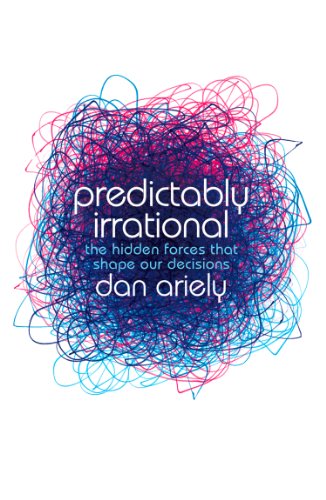
Ariely runs experiments revealing how people behave when making economic decisions. We're not rational actors maximizing utility; we're influenced by defaults, anchors, sunk costs, and loss aversion. Ariely shows that our irrationality is predictable. The same errors show up across populations and contexts. This means understanding behavioral psychology can help anticipate what people will actually do.
The book's experiments are engaging and often funny. You'll recognize yourself in the mistakes Ariely documents.
Find it here: https://www.amazon.com/dp/B002RI9QJE?tag=31813-20
Context and Behavior
One revolutionary insight from behavioral psychology: behavior is far more dependent on context than on personality or intention. The same person acts completely differently in different situations. This shouldn't be surprising, but it contradicts the idea that behavior reflects stable internal traits.
Social Influence and Conformity
Social forces shape behavior in ways we barely recognize. Conformity isn't just weakness; it's a fundamental human tendency. Groups have norms, and group members align with them, often unconsciously. This explains everything from fashion trends to political polarization to why people go along with obviously unjust systems.
"The Lucifer Effect" by Philip Zimbardo
Zimbardo's work is famous for the Stanford Prison Experiment, where ordinary students assigned to guard roles began behaving abusively toward prisoner subjects. His thesis: the situation creates the behavior more than disposition does. This challenges the idea that evil comes from evil people. More often, good people behave badly because situations encourage it.
The book examines how ordinary systems and institutions can corrupt behavior, and how to recognize and resist that process.
Find it here: https://www.amazon.com/dp/B00JD5EDSQ?tag=31813-20
Personal Transformation
Understanding behavioral psychology shouldn't be just intellectual. The point is to change how you act. If you know about anchoring bias, you can notice when numbers are influencing you unnecessarily. If you understand habit formation, you can design better routines. If you recognize social pressure, you can choose which influences to accept.
These aren't guaranteed changes. Knowledge alone isn't sufficient. But knowledge combined with deliberate practice can reshape behavior. That's the real value of reading behavioral psychology: not just understanding humans in general but understanding yourself specifically.
Ready to apply this? Start with designing your environment. Behavioral psychology shows that changing your situation is often more effective than changing your mind.
Your next good book, in your inbox
We only write when we find a book worth your time. Hand-picked recommendations across history, mythology, true crime and more.
Are you an author?
Get your book in front of readers like these, for free.
- Free book listing →Your own book page with an Amazon button
- Author page →Photo, bio and links to your site
- Featured placement →A spot in our best-of lists, from €29
Free tools we recommend
Get free honest reviewsReview exchange on iWrity, free to join
Books You Might Like

It Ends with Us: A Novel
Colleen Hoover

The Seven Husbands of Evelyn Hugo: A Novel
Taylor Jenkins Reid

The Song of Achilles
Madeline Miller

Educated: A Memoir
Tara Westover