Best Books About the Fall of Ancient Rome: 10 Essential Reads
THEY SAID it was the greatest empire the world had ever seen. They said it would last forever. And then, across roughly three centuries, it unraveled in ways that historians still argue about. Was it barbarian invasion? Economic collapse? Christianity? Climate change? Political dysfunction? The answer is all of them and none of them alone. These 10 books are the best guide to what actually happened.
Why the Fall of Rome Still Matters
Every civilization that has come after Rome has measured itself against it and wondered if it faced the same vulnerabilities. The question of why Rome fell is also the question of how complex societies collapse. That is why it is never just a historical question.
The 10 Best Books
1. The Fall of the Roman Empire by Peter Heather
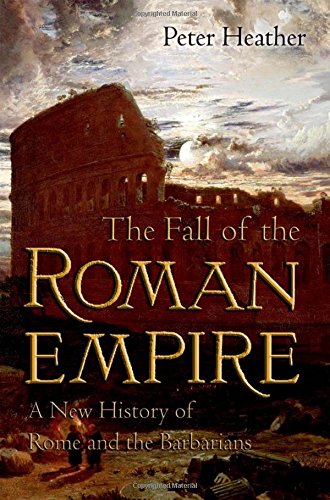
Heather argues that external pressure from the Huns and subsequent Germanic migrations was the primary cause of Rome's collapse, against the grain of scholars who emphasize internal decay. His case is built on archaeological and documentary evidence and challenges Edward Gibbon's famous Decline and Fall narrative. Well-argued and accessible to non-specialists.
2. The Fate of Rome by Kyle Harper

Harper brings climate science and disease history to bear on Rome's decline. He argues that climate shifts in the second and third centuries CE and a series of catastrophic plagues (including what may have been the first pandemic of Ebola-like hemorrhagic fever) weakened Rome's population and economy well before the military crisis of the fifth century. A genuinely new argument supported by ice core data and ancient DNA evidence.
3. The Decline and Fall of the Roman Empire by Edward Gibbon
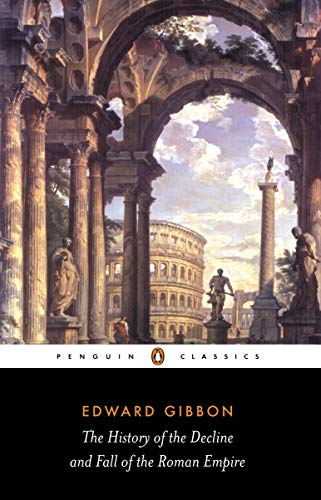
The founding text of the genre, written in the 18th century. Gibbon's six-volume work attributed Rome's decline partly to Christianity's otherworldly focus and partly to moral decay. Modern historians largely disagree with his framing, but Gibbon's prose is remarkable and the work remains the intellectual baseline against which all subsequent scholarship defines itself. An abridged one-volume edition is the most practical entry point.
4. How Rome Fell by Adrian Goldsworthy

Goldsworthy places internal political dysfunction at the center of his account. The third century CE saw over 50 emperors in 50 years, most of whom came to power through military coup and died the same way. This political instability destroyed the administrative continuity needed to run a complex empire. Goldsworthy writes accessibly and the argument is persuasive.
5. The Roman Revolution by Ronald Syme
Syme's classic 1939 analysis of how the Roman Republic became the Principate under Augustus. Understanding Rome's transformation into autocracy is essential context for understanding its eventual collapse. Syme writes with a sceptical, almost cynical eye that has not aged. He sees the Augustan settlement as a carefully constructed fiction.
6. Empires and Barbarians by Peter Heather
A companion to his Fall book, this covers the broader migration period from around 400 to 900 CE. Heather argues the barbarian groups were not simple raiders but complex societies moving under the pressure of the Hunnic disruption of the Eurasian steppe. Essential for understanding what replaced Rome.
7. The Fall of Rome and the End of Civilization by Bryan Ward-Perkins

Ward-Perkins uses archaeological evidence, particularly pottery distributions and building material analysis, to argue that the fall of Rome was a genuine civilizational collapse, not just a political transition. Literacy fell, long-distance trade collapsed, and material complexity declined sharply. A pointed response to revisionist historians who argue Rome merely transformed.
8. Rome and the Barbarians by Thomas S. Burns
Burns examines Roman-barbarian relations from the perspective of frontier management and mutual accommodation rather than pure conflict. For much of Rome's history, barbarian groups served in the Roman army, traded with Roman merchants, and lived peacefully near the frontier. The collapse was not inevitable, and Burns traces how it became so.
9. The Last Pagan by Adrian Murdoch
The story of the emperor Julian (361-363 CE), the last emperor to try to reverse Christianity's spread and restore traditional Roman religion. Julian's brief reign is a window into a Rome that might have developed differently. Murdoch writes an accessible biography of an underappreciated figure whose failure shaped what came after.
10. Late Antiquity: A Guide to the Postclassical World edited by Peter Brown
A reference volume covering the period from roughly 250 to 800 CE. Essays by leading scholars cover every aspect of the late Roman and early medieval world. Not a narrative but the best single resource for understanding the period in full. Peter Brown's own contributions are among the finest things written about late antique Christianity.
Where to Start
For the most accessible starting point: How Rome Fell by Goldsworthy. For the most original recent scholarship: The Fate of Rome by Harper. For the broadest historical context: The Fall of the Roman Empire by Heather.
Your next good book, in your inbox
We only write when we find a book worth your time. Hand-picked recommendations across history, mythology, true crime and more.
Are you an author?
Get your book in front of readers like these, for free.
- Free book listing →Your own book page with an Amazon button
- Author page →Photo, bio and links to your site
- Featured placement →A spot in our best-of lists, from €29
Free tools we recommend
Get free honest reviewsReview exchange on iWrity, free to join
Books You Might Like

It Ends with Us: A Novel
Colleen Hoover

The Seven Husbands of Evelyn Hugo: A Novel
Taylor Jenkins Reid

The Song of Achilles
Madeline Miller

Educated: A Memoir
Tara Westover