Best Books About the Roman Republic: Power, Politics, and the Fall of a Senate
FIVE HUNDRED YEARS of republic, and it destroyed itself. The Roman Republic invented the Senate, the consul, the veto, and the triumph. Then it produced Caesar, Sulla, and a century of civil wars. These books dig into how a system built to prevent tyranny created the conditions for exactly that.
Top Picks
 1. Rubicon: The Last Years of the Roman Republic by Tom Holland
The gold standard narrative of the Republic's fall. Holland writes history like a thriller: Sulla's march on Rome, Crassus bankrolling Caesar, Pompey and Caesar circling each other until they collide at Pharsalus. You will not put this down.
Buy on Amazon
1. Rubicon: The Last Years of the Roman Republic by Tom Holland
The gold standard narrative of the Republic's fall. Holland writes history like a thriller: Sulla's march on Rome, Crassus bankrolling Caesar, Pompey and Caesar circling each other until they collide at Pharsalus. You will not put this down.
Buy on Amazon
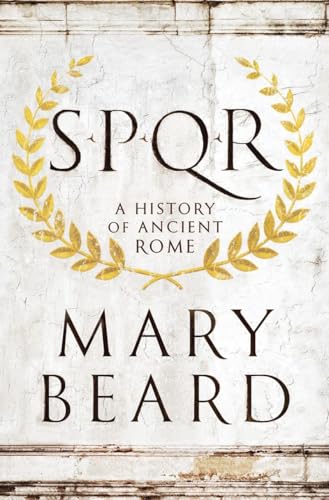 2. SPQR: A History of Ancient Rome by Mary Beard
Beard asks a different question: who were the Romans beyond the emperors and generals? A bottom-up history that shows the Republic's messy, contested, contradictory reality rather than the marble-polished myth.
Buy on Amazon
2. SPQR: A History of Ancient Rome by Mary Beard
Beard asks a different question: who were the Romans beyond the emperors and generals? A bottom-up history that shows the Republic's messy, contested, contradictory reality rather than the marble-polished myth.
Buy on Amazon
 3. Caesar by Adrian Goldsworthy
The most thorough modern biography of Julius Caesar. Goldsworthy separates what we actually know from what later writers invented. Essential for understanding why crossing the Rubicon was not a gamble but a calculated decision.
Buy on Amazon
3. Caesar by Adrian Goldsworthy
The most thorough modern biography of Julius Caesar. Goldsworthy separates what we actually know from what later writers invented. Essential for understanding why crossing the Rubicon was not a gamble but a calculated decision.
Buy on Amazon
4. The Storm Before the Storm by Mike Duncan Duncan covers the generation before Caesar: the Gracchi brothers, Marius, Sulla. This is where the norms that held the Republic together first started breaking. Indispensable context for understanding why Caesar could do what he did. Buy on Amazon
5. Cicero: The Life and Times of Rome's Greatest Politician by Anthony Everitt Cicero saw the Republic die and could not stop it. Everitt's biography is a brilliant portrait of a man brilliant enough to see clearly what was happening and powerless to prevent it. Buy on Amazon
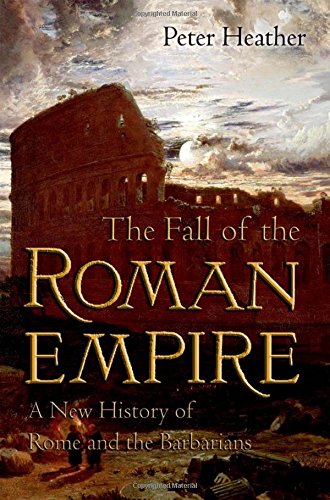 6. The Fall of the Roman Empire by Peter Heather
Heather argues the fall began not with the emperors but with structural pressures already visible in the late Republic. Controversial thesis, rigorously argued.
Buy on Amazon
6. The Fall of the Roman Empire by Peter Heather
Heather argues the fall began not with the emperors but with structural pressures already visible in the late Republic. Controversial thesis, rigorously argued.
Buy on Amazon
7. Masters of Rome series by Colleen McCullough Six-novel series starting with The First Man in Rome. McCullough did years of primary-source research to reconstruct the Republic's final century. Historical fiction at its most meticulous. Buy on Amazon
8. Catiline's War, The Jugurthine War, Histories by Sallust Sallust wrote as a contemporary. His Catiline's War is the closest thing to a first-hand account of the Republic's crisis. Short, sharp, opinionated, essential. Buy on Amazon
9. The Roman Revolution by Ronald Syme Published in 1939, still required reading. Syme treats Augustus's rise as a political revolution in the modern sense: the replacement of one ruling class by another. Unsettling and brilliant. Buy on Amazon
 10. How Rome Fell by Adrian Goldsworthy
A companion to the Caesar biography: Goldsworthy traces the structural decay from Augustus onward. Useful for understanding why the Republic's replacement also eventually failed.
Buy on Amazon
10. How Rome Fell by Adrian Goldsworthy
A companion to the Caesar biography: Goldsworthy traces the structural decay from Augustus onward. Useful for understanding why the Republic's replacement also eventually failed.
Buy on Amazon
Your next good book, in your inbox
We only write when we find a book worth your time. Hand-picked recommendations across history, mythology, true crime and more.
Are you an author?
Get your book in front of readers like these, for free.
- Free book listing →Your own book page with an Amazon button
- Author page →Photo, bio and links to your site
- Featured placement →A spot in our best-of lists, from €29
Free tools we recommend
Get free honest reviewsReview exchange on iWrity, free to join
Books You Might Like

It Ends with Us: A Novel
Colleen Hoover

The Seven Husbands of Evelyn Hugo: A Novel
Taylor Jenkins Reid

The Song of Achilles
Madeline Miller

Educated: A Memoir
Tara Westover