Best Books About Ancient Rome Society and Daily Life
The emperors get most of the attention, but Rome was built and sustained by millions of ordinary people. Merchants, slaves, soldiers, priests, and shopkeepers left traces in the archaeological record and in Roman literature. These books follow those traces.
1. Daily Life in Ancient Rome by Florence Dupont
Dupont reconstructs Roman life from the ground up: how people slept, what they ate, how they conducted business, and what they found funny. Written for general readers without sacrificing accuracy. One of the best starting points for anyone curious about how Rome actually functioned day to day.
2. SPQR: A History of Ancient Rome by Mary Beard

Mary Beard approaches Rome through what we can actually verify rather than romantic legend. She challenges cherished assumptions about Roman greatness and asks what the city's rise meant for the people living through it. Accessible, intellectually sharp, and often surprising.
3. How Rome Fell by Adrian Goldsworthy
Goldsworthy argues that Rome's fall was less about external pressure than internal decay: civil wars, short-reigning emperors, and an army increasingly focused on politics rather than defense. A rigorous reassessment of one of history's most debated questions.
4. The Roman Revolution by Ronald Syme
Syme's 1939 classic analyzes how Augustus transformed the Republic into an autocracy. He reads Roman history the way a political scientist reads a modern coup: who held real power, who lost it, and how the change was managed and disguised. Still considered essential reading in classical studies.
5. Rubicon by Tom Holland

Holland writes narrative history that reads like a thriller. Rubicon covers the last decades of the Republic from the Gracchi through Caesar's assassination, focusing on the human drama behind the constitutional collapse. One of the most gripping introductions to the late Republic available.
6. The Roman Empire by Colin Wells
A comprehensive survey of the imperial period from Augustus to Diocletian. Wells covers provincial administration, the economy, the army, and the role of cities. A clear academic overview for readers who want the full picture beyond Rome itself.
7. Pompeii: The Life of a Roman Town by Mary Beard
Pompeii's sudden burial preserved details that no other Roman site offers. Beard uses the archaeological evidence to reconstruct what life was like for ordinary townspeople: their graffiti, their menus, their election posters. Highly readable and visually detailed.
8. Roman Social History by Susan Treggiari
Treggiari examines Roman marriage, family structure, the position of women, and freedmen navigating a society built on slave labor. An academic text but written accessibly enough for serious general readers interested in the structure of Roman life.
9. The Fall of the Roman Empire by Peter Heather

Heather pushes back against internal-decline theories and argues that external pressure from the Huns and Germanic peoples overwhelmed even a functioning empire. A detailed military and political history of the last century of Roman rule in the West.
10. The History of the Decline and Fall of the Roman Empire by Edward Gibbon
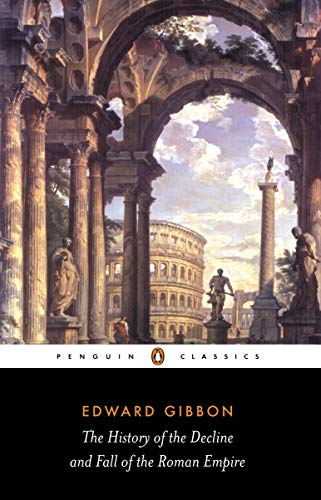
Gibbon's 18th-century masterwork remains in print for a reason. Six volumes written with wit and authority, covering Rome from its height through Constantinople's fall in 1453. Read the abridged Womersley edition if you want the argument without the full apparatus.
Start with Beard's SPQR for the overview, then Dupont for the texture of daily life. From there, follow whichever thread holds you.
Your next good book, in your inbox
We only write when we find a book worth your time. Hand-picked recommendations across history, mythology, true crime and more.
Are you an author?
Get your book in front of readers like these, for free.
- Free book listing →Your own book page with an Amazon button
- Author page →Photo, bio and links to your site
- Featured placement →A spot in our best-of lists, from €29
Free tools we recommend
Get free honest reviewsReview exchange on iWrity, free to join
Books You Might Like

It Ends with Us: A Novel
Colleen Hoover

The Seven Husbands of Evelyn Hugo: A Novel
Taylor Jenkins Reid

The Song of Achilles
Madeline Miller

Educated: A Memoir
Tara Westover