Best Books About Behavioral Economics (2026)
PICTURE THIS: you walk into a grocery store convinced you make rational choices, and you leave with three things you didn't plan to buy and a coupon you'll never use. Behavioral economics exists to explain exactly that gap between how we think we behave and how we actually behave. These seven books, written by the researchers who built the field and the writers who made it readable, will change how you see your own decisions.
1. Thinking, Fast and Slow by Daniel Kahneman

Kahneman, who won the Nobel Prize for work that founded behavioral economics, lays out his System 1 and System 2 model of thinking here. He walks through decades of research on biases like anchoring, loss aversion, and the planning fallacy, often using his own experiments with Amos Tversky as the backbone. The chapters on prospect theory and the "experiencing self" versus the "remembering self" are especially sharp. It's long and occasionally dense, but it's the book every other title on this list builds on, so read it if you want the full theory, not just the highlights. Find Thinking, Fast and Slow on Amazon.
2. Nudge by Richard Thaler and Cass Sunstein
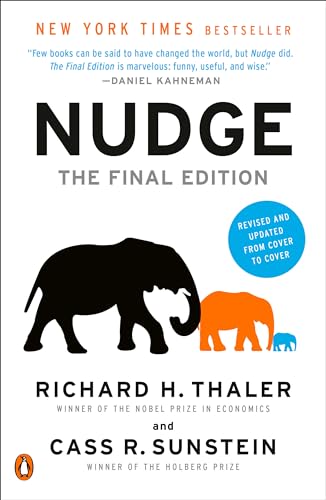
Thaler and Sunstein take the psychology from Kahneman's research and turn it into a practical argument: you can design systems that help people make better choices without taking away their freedom to choose badly. They cover retirement savings, organ donation, school lunch layouts, and credit card design, showing how small changes in "choice architecture" produce outsized results. The book coined the term libertarian paternalism and shaped real government policy in the UK and US. Read this if you work in policy, product design, or management and want tools, not just theory. Find Nudge on Amazon.
3. Misbehaving by Richard Thaler

This is Thaler's own account of how behavioral economics became a legitimate field, told partly as memoir. He describes his early fights with traditional economists who insisted people were rational, and walks through the experiments on mental accounting, the endowment effect, and fairness that eventually won him the Nobel Prize. The NFL draft chapter, where he shows teams systematically overvalue high picks, is a highlight. It's funny and personal in a way academic books rarely are, and it works well as a history of the field as much as an introduction to it. Find Misbehaving on Amazon.
4. Predictably Irrational by Dan Ariely

Ariely, a psychologist at Duke, structures this book around his own lab experiments, each one built to isolate a specific bias. He covers why we overvalue free things, how the presence of a decoy option skews our choices, and why we behave differently when money is involved versus when it isn't, using a dorm-room experiment with Oreo cookies as one memorable example. The tone is breezy and the chapters are short, making this one of the easiest entry points into the field. Good for readers who want concrete, memorable experiments rather than heavy theory. Find Predictably Irrational on Amazon.
5. The Undoing Project by Michael Lewis
Lewis tells the story of the decades-long collaboration and friendship between Daniel Kahneman and Amos Tversky, the two psychologists whose joint work created behavioral economics as a discipline. He traces their partnership from Israel in the 1970s through their famous papers on heuristics and biases, and into the eventual strain that came between them. It reads like a character study more than a textbook, with real tension and loss in it. Pick this up if you already know the concepts from Kahneman's own book and want to understand the human story and the science that produced them. Find The Undoing Project on Amazon.
6. Influence by Robert Cialdini
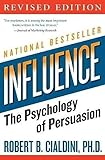
Cialdini, a social psychologist, focuses less on individual decision biases and more on the tactics other people and institutions use to exploit them. He identifies six principles, including reciprocity, social proof, authority, and scarcity, and shows how salespeople, charities, and cult recruiters apply them in practice. The chapter on how door-to-door fundraisers use small initial requests to secure bigger later ones is a classic example of foot-in-the-door tactics in action. This book sits at the edge of behavioral economics and marketing, and it's especially useful for anyone in sales, negotiation, or anyone who wants to recognize when these tactics are being used on them. Find Influence on Amazon.
7. Animal Spirits by George Akerlof and Robert Shiller
Akerlof and Shiller, both Nobel laureates, apply behavioral economics to the big questions in macroeconomics: why recessions happen, why bubbles form, and why markets don't correct themselves the way classical theory predicts. They borrow Keynes's term "animal spirits" to describe the confidence, fairness norms, and stories that drive aggregate economic behavior, applying the idea to the 2008 financial crisis and historical bubbles. This is less about personal decisions and more about how irrationality moves through entire economies. Read it if you want to connect behavioral economics to finance, housing markets, and monetary policy rather than just individual psychology. Find Animal Spirits on Amazon.
Where to Start
Start with Thinking, Fast and Slow if you want the full foundation, but if that feels too academic, start with Predictably Irrational instead. Ariely's short, experiment-driven chapters get you hooked on the ideas fast, and once you're interested, Kahneman's deeper theory will make a lot more sense.
Your next good book, in your inbox
We only write when we find a book worth your time. Hand-picked recommendations across history, mythology, true crime and more.
Are you an author?
Get your book in front of readers like these, for free.
- Free book listing →Your own book page with an Amazon button
- Author page →Photo, bio and links to your site
- Featured placement →A spot in our best-of lists, from €29
Free tools we recommend
Get free honest reviewsReview exchange on iWrity, free to join
Books You Might Like

It Ends with Us: A Novel
Colleen Hoover

The Seven Husbands of Evelyn Hugo: A Novel
Taylor Jenkins Reid

The Song of Achilles
Madeline Miller

Educated: A Memoir
Tara Westover