Best Books About Greek Mythology (2026)
PICTURE THIS: a world where gods throw lightning bolts over petty grudges, heroes wrestle their own fate, and every river, star, and flower has a story behind it. Greek mythology has survived three thousand years because it still explains something true about human nature, jealousy, ambition, love, and fear of death. Whether you want a clear reference book or the raw ancient text, these seven books will get you there.
1. Mythology by Edith Hamilton
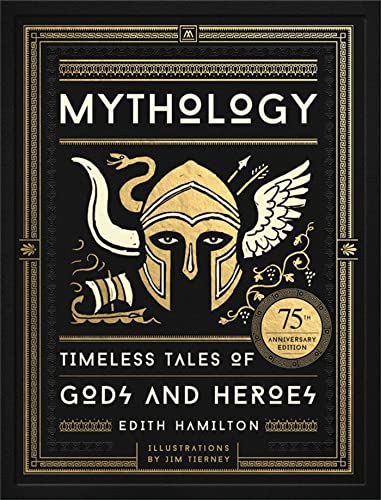
First published in 1942, this is still the book most people reach for first, and for good reason. Hamilton organizes the sprawling world of Greek (and some Roman and Norse) myth into clean, readable chapters: the creation stories, the major gods, the Trojan War, the house of Atreus, and more. Her prose is plain and confident, drawing directly on Homer, Ovid, and the playwrights without burying you in footnotes. If you want one book that gives you the whole picture before you dig deeper into any single story, start here. Students and general readers both lean on this one for a reason. Find Mythology on Amazon.
2. The Greek Myths by Robert Graves
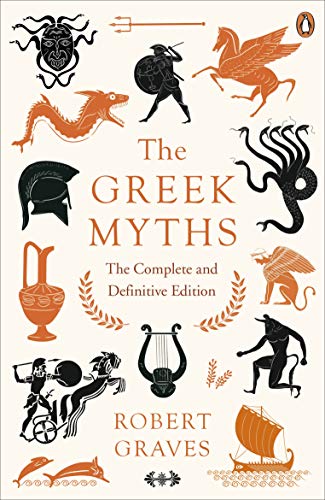
Graves, better known for his historical fiction, spent years compiling nearly every surviving Greek myth into one systematic collection. He retells each story and then adds notes on variant versions, ancient sources, and his own (sometimes controversial) theories about ritual and symbolism behind the tales. The result is denser and more scholarly than Hamilton's book, but far more complete. It works well as a reference you keep nearby, flipping to the index when you want to check who exactly Pasiphae was married to. Pick this one if you want depth and variety rather than a smooth narrative read. Find The Greek Myths on Amazon.
3. Mythos by Stephen Fry
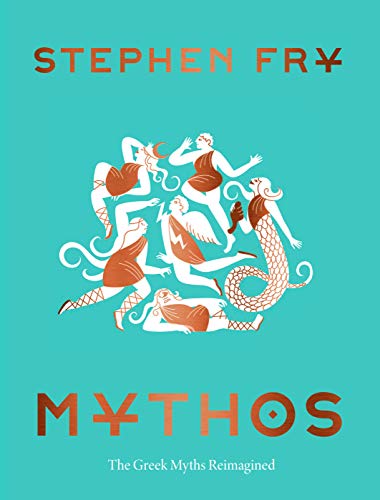
Fry takes the same material as Hamilton and Graves and makes it genuinely funny. He walks through the Greek creation myths, the Titans, the Olympians, and the early human heroes with asides, jokes, and modern comparisons that never feel forced. The book respects the source material while refusing to take itself too seriously, which makes it a great entry point if the subject has always felt stiff or academic to you. It is the first of a trilogy (followed by Heroes and Troy), so if you like this one there is more waiting. Good for teenagers and adults alike who want mythology to feel alive again. Find Mythos on Amazon.
4. The Iliad by Homer, translated by Robert Fagles

At some point you have to read the actual ancient text, and Fagles' 1990 translation is the one most people recommend for a first encounter with Homer. It covers the final weeks of the Trojan War, centered on Achilles' rage after Agamemnon insults him, and builds to the deaths of Patroclus and Hector. Fagles keeps the poetry moving with strong, muscular English that reads well aloud, and Bernard Knox's long introduction gives you the historical and literary context you need before diving in. This is not a summary of the myth, it is the myth, in something close to its original force. Find The Iliad on Amazon.
5. The Odyssey by Homer, translated by Emily Wilson

Wilson's 2017 translation became famous for being the first by a woman, but it earns its reputation on the writing alone. She renders Odysseus' ten-year journey home from Troy, past the Cyclops, the Sirens, and Circe's island, in clean, fast verse that avoids the archaic stiffness of older translations. Her introduction also does a careful job laying out the poem's treatment of slavery, gender, and hospitality, questions that older translations tended to smooth over. If you read only one translated epic this year, this is the one to pick, especially if previous attempts at Homer left you cold. Find The Odyssey on Amazon.
6. Theogony and Works and Days by Hesiod
Hesiod wrote around the same era as Homer, but his focus is different: the Theogony lays out the actual family tree of the Greek gods, from Chaos and Gaia through the Titans to Zeus's final victory over his father Cronus. It is the closest thing the Greeks had to an official cosmology, and it answers questions Homer never bothers to explain, like where the gods actually came from. M.L. West's Oxford translation is the standard choice, with introductions that explain the poem's place in archaic Greek religion. Read this once you already know the major stories and want to see how they were first organized into a system. Find Theogony and Works and Days on Amazon.
7. Circe by Madeline Miller
Miller's 2018 novel retells the life of Circe, the witch who turns Odysseus' men into pigs in the Odyssey, but gives her a full backstory, exile, and voice of her own. It draws on Hesiod, Homer, and Ovid while filling in the gaps with real emotional weight, following Circe from her unhappy childhood among the Titans to her long solitude on the island of Aiaia. This is fiction, not a reference book, but it sends readers back to the original myths with new curiosity about minor characters they had overlooked. Good for readers who want mythology to feel like a novel rather than a textbook, and a nice palate cleanser between denser reads on this list. Find Circe on Amazon.
Where to Start
Start with Edith Hamilton's Mythology. It gives you the full map of gods, heroes, and major stories in plain language, so that when you move on to Fry's Mythos for fun or Fagles' Iliad for the real thing, you already know who everyone is and why they are angry at each other.
Your next good book, in your inbox
We only write when we find a book worth your time. Hand-picked recommendations across history, mythology, true crime and more.
Are you an author?
Get your book in front of readers like these, for free.
- Free book listing →Your own book page with an Amazon button
- Author page →Photo, bio and links to your site
- Featured placement →A spot in our best-of lists, from €29
Free tools we recommend
Get free honest reviewsReview exchange on iWrity, free to join
Books You Might Like

It Ends with Us: A Novel
Colleen Hoover

The Seven Husbands of Evelyn Hugo: A Novel
Taylor Jenkins Reid

The Song of Achilles
Madeline Miller

Educated: A Memoir
Tara Westover