Best Books About Greek Mythology for Adults 2026: Six Reads That Actually Deliver
Greek mythology never really went away. It just changed disguises. The gods who manipulated Troy are the same archetypes showing up in every political thriller and family drama you read today. The monsters Odysseus fought have cleaner names now, but the psychology is identical. Once you see that, the ancient stories stop feeling like homework and start feeling personal.
The problem is that most people don't know where to enter. The mythology shelf is enormous: academic texts, children's retellings, literary novels, modern retellings by novelists who actually care about the source material. This guide cuts through that and gives you six books worth your time as an adult reader, from the foundational reference to the most recent literary reinvention.
Edith Hamilton's Mythology: Still the Starting Point
If you want one book that covers the full sweep of Greek (and Roman) mythology in plain, readable prose, Edith Hamilton's Mythology is the answer. Published in 1942 and still in print for good reason, it reads nothing like a textbook. Hamilton was a classicist who actually loved the material, and that shows on every page.
She covers the Olympian gods, the great hero myths (Perseus, Heracles, Theseus, Jason), the Trojan War, and the Norse myths as a bonus. The writing is confident and direct. She doesn't hedge or qualify constantly. When she thinks a myth is beautiful, she says so. When she thinks a version of a story is inferior, she says that too.
The weakness is that Hamilton takes sides in mythology debates that scholars still argue about. She favors the Greek ideal of beauty and reason over darker, stranger material. You won't get the full weirdness of the Dionysus myths or the political violence buried in the creation stories. But as an introduction, nothing beats it for clarity and range.
Stephen Fry's Mythos: The Modern Retelling That Works
Stephen Fry's Mythos does something very specific: it takes the creation myths and the stories of the Olympian gods and retells them in contemporary language without dumbing them down. Fry is a genuine classicist who spent years on this, and the result is mythology that reads like a novelist wrote it rather than a professor summarized it.
The voice is unmistakably Fry: wry, parenthetical, fond of digressions that turn out to matter. He catches the comedy in the myths, which most retellings miss. Greek mythology is full of gods behaving petulantly, making catastrophic decisions out of wounded pride, and getting spectacularly outmaneuvered by mortals. Fry leans into that.
Heroes, the follow-up volume, covers the great hero myths with the same approach. Perseus, Heracles, Bellerophon, Jason: all of them get the full treatment. Between Mythos and Heroes, you get a solid grounding in the major stories told by someone who genuinely enjoys them.
Rick Riordan's Percy Jackson: The Gateway Book (Yes, Really)
Percy Jackson is technically a children's series, but it earns a place on this list because it is the most effective gateway to serious mythology interest for adults who come to this fresh. The Lightning Thief is fast, funny, and sneakily accurate about the actual myths. Riordan does his research.
More importantly, if you have any resistance to ancient mythology feeling remote or irrelevant, Percy Jackson dissolves it. The premise, that the Olympian gods are alive and operating in contemporary America, makes the stories feel immediate. Readers who start here consistently move on to Hamilton and Fry with much more appetite than they would have had otherwise.
It is not a book for someone who already loves mythology. It is a book for someone who thinks mythology is probably not for them.
Natalie Haynes' A Thousand Ships: Troy from the Women's Side
A Thousand Ships by Natalie Haynes is the best recent literary retelling of the Trojan War, and it corrects something the ancient sources mostly refused to do: it tells the story from the perspective of the women involved. Penelope, Hecuba, Cassandra, Briseis, Clytemnestra, Calypso: the women who were traded, taken, mourned, and ignored in Homer's version all get chapters here.
Haynes is a classicist who has presented BBC radio programs on ancient history. She knows the source material inside out, which means her reinventions are grounded, not arbitrary. The book doesn't rewrite the myths to suit contemporary sensibilities; it illuminates what was already in the original stories if you read carefully enough.
The structure is non-linear and takes a few chapters to settle into. Some readers find the Calliope sections (in which the muse narrates directly) slightly jarring at first. Push through: the book repays patience.
Homer's Odyssey in the Fagles Translation: The Original at Its Best
There is no substitute for reading the actual Homer. The Odyssey is a ten-year journey home, a study in cunning versus brute force, and one of the first road novels ever written. The question is which translation.
Robert Fagles' translation (Penguin Classics, 1996) is the consensus choice for adult readers who want a literary experience rather than a scholarly one. Fagles translates for rhythm and forward momentum. The lines feel like they were meant to be read aloud. The introduction by Bernard Knox alone is worth the price of the book: it places the Odyssey in context in a way that makes the whole thing richer.
The Iliad in the same Fagles translation is equally strong, but the Odyssey is the better starting point for readers who are new to Homer. Achilles's rage is one note; Odysseus has more angles.
Madeline Miller's Circe: The Best Novel to Come Out of Greek Mythology in Years
Circe by Madeline Miller is what happens when a classicist who can actually write fiction turns her full attention to a minor character in the Odyssey. The witch-goddess Circe appears in Homer for a few books, does memorable things, and then disappears. Miller takes that character and builds a complete life for her across three thousand years of mythology.
The novel covers the birth of the Minotaur, Daedalus and Icarus, Scylla, Jason and Medea, and the events of the Odyssey, all seen through Circe's eyes. What makes it work is that Miller doesn't write mythology as allegory or as a vehicle for contemporary commentary. She writes it as if these events actually happened and these people actually felt things.
The prose is clean and precise. The pacing is novelistic, not episodic. If you've read Hamilton and want to see what the myths feel like when given full literary treatment, Circe is the place to go.
Miller's earlier novel The Song of Achilles covers the Iliad from Patroclus's perspective and is equally strong, though tonally different. Start with Circe if you're new to her work.
Where to Start Depending on What You Want
You want a complete overview: Start with Edith Hamilton's Mythology. Read it cover to cover. It takes a weekend and gives you the full map.
You want something modern and enjoyable: Start with Stephen Fry's Mythos, then Heroes. They're the most pleasant introduction to the major stories.
You're coming in completely cold: Start with Percy Jackson's The Lightning Thief, then move to Fry or Hamilton once the world feels familiar.
You want literary fiction that takes mythology seriously: Start with Madeline Miller's Circe. It assumes no prior knowledge but rewards people who have some.
You want the actual Homer: The Odyssey in the Fagles translation. Plan for two to three weeks of reading. The opening books are slow; the middle third is the payoff.
You want the feminist reread: Natalie Haynes' A Thousand Ships. Best read after you know the basic shape of the Trojan War.
Greek mythology rewards repeated engagement. The same stories look different when you come back to them in a new translation, through a different character's eyes, or at a different point in your life. The six books here cover the spectrum from reference to literary fiction, and they all take the material seriously. Start anywhere on this list, and you won't waste your time.
Your next good book, in your inbox
We only write when we find a book worth your time. Hand-picked recommendations across history, mythology, true crime and more.
Are you an author?
Get your book in front of readers like these, for free.
- Free book listing →Your own book page with an Amazon button
- Author page →Photo, bio and links to your site
- Featured placement →A spot in our best-of lists, from €29
Free tools we recommend
Get free honest reviewsReview exchange on iWrity, free to join
Books You Might Like

The Song of Achilles
Madeline Miller

Circe
Madeline Miller
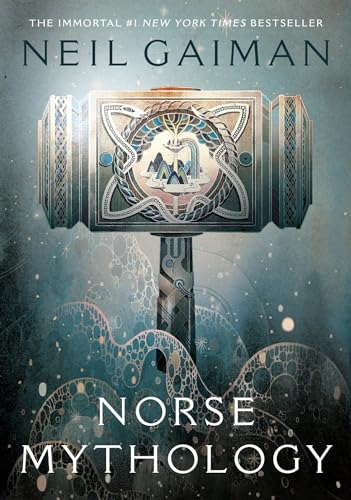
Norse Mythology
Neil Gaiman

Heroes
Unknown Author