Best Books About Japanese History: 6 That Actually Explain the Country
Japan is one of the most written-about countries in the world, and also one of the most misrepresented. The samurai era gets romanticized, the Meiji transformation gets reduced to a slogan, and the twentieth century often gets told from outside rather than inside. The books below fix that. They cover different periods and use different methods, but each one gives you a genuine grip on how Japan became what it is.
1. Musashi by Eiji Yoshikawa
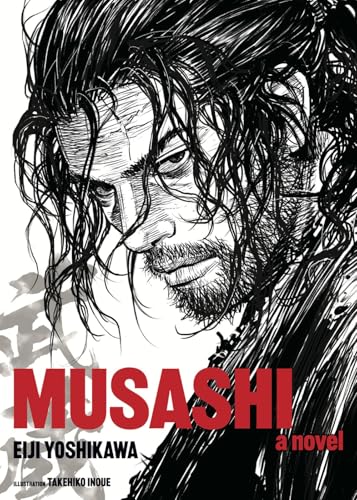
Yoshikawa's novel about the swordsman Miyamoto Musashi is the starting point for most Western readers who want to feel their way into feudal Japan. First serialized in the 1930s, it follows Musashi from a reckless young fighter through decades of training, wandering, and philosophical growth. The battles are vivid and the landscapes are specific, but what makes the book last is its portrait of a society structured around loyalty, discipline, and the weight of personal honor.
Musashi is fiction, but it is grounded fiction. Yoshikawa researched the period carefully, and the social world he builds, the village politics, the class tensions, the role of Buddhism and Shinto in everyday life, reflects genuine historical conditions. Many historians of Japan use it as a way to talk about the Edo-era values that shaped the country for two centuries.
2. Shogun by James Clavell
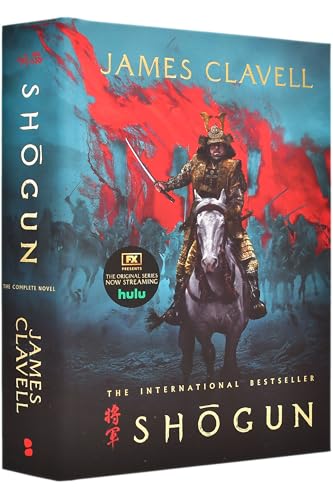
Clavell's 1975 novel is not history in any strict sense. The characters are composites, the timeline is compressed, and the English navigator at the center of the story is a stand-in for William Adams rather than a direct portrait. None of that has stopped Shogun from launching more Western readers into serious Japanese history than almost any academic work.
What Clavell gets right is the texture of the encounter. His English navigator arrives in Japan understanding nothing about the social order around him, and the reader learns alongside him. The power dynamics between daimyo, the role of the Jesuits, the meaning of face and shame, the absolute precision of protocol: these come through clearly. Many readers who pick up Donald Keene or Ian Buruma after Shogun report that the fiction made the history legible.
3. Emperor of Japan: Meiji and His World by Donald Keene
Keene is the foremost Western scholar of Japanese literature and culture, and this 900-page biography of Emperor Meiji is his most ambitious work. It covers the period from 1852 to 1912, the years when Japan dismantled its feudal structure, adopted Western institutions, fought two major wars, and emerged as an imperial power in its own right.
The book follows Meiji's life year by year, using court diaries, imperial poetry, and official records to reconstruct both the public events and the private world of the emperor. Keene is careful about what he can and cannot know: the emperor was a ceremonial figure for much of his reign, and the real decision-making happened around him rather than through him. But that structural ambiguity is itself historically important, and Keene explains why the Meiji figure mattered even when he was constrained.
For anyone who wants to understand how Japan transformed itself in the nineteenth century without losing its sense of continuity with the past, this is the essential book.
4. Inventing Japan by Ian Buruma
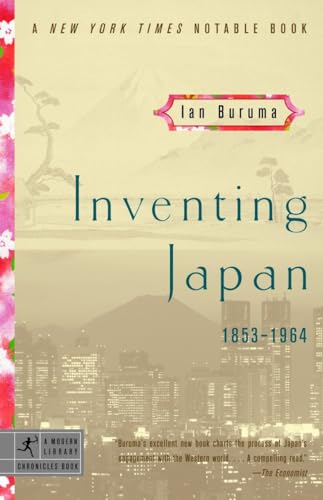
Buruma's short book covers the period from 1853 to 1964, from the forced opening of Japan by Commodore Perry to the Tokyo Olympics that announced Japan's postwar recovery. In under 200 pages, he traces how a series of groups, nationalists, militarists, American occupiers, and postwar reformers, each invented their own version of what Japan was and should be.
The book is not comprehensive. It does not attempt a full account of any single period. What it does instead is show how Japanese identity has been constructed and contested, often violently, across more than a century. The chapters on the 1930s and the decision to go to war with the United States are particularly sharp: Buruma does not reduce the militarist period to madness or aberration but shows how it grew from forces that were present in Japanese society from the Meiji period onward.
For readers who want an analytical framework rather than a chronological narrative, Inventing Japan is the best short introduction to modern Japanese history available in English.
5. Japan's Colonization of Korea by Alexis Dudden
This book examines one of the most contested episodes in East Asian history: Japan's annexation of Korea in 1910 and the fifty years of colonial rule that followed. Dudden's focus is not on the colonial period itself but on how Japan built the legal and diplomatic framework that made the annexation possible and internationally acceptable.
The argument is that the annexation was not simply a military fait accompli but a carefully constructed legal event, one that Japan presented to the world as a modernizing mission. Dudden shows how international law was selectively applied and how the language of civilization and progress was used to justify what was in practice a system of extraction and suppression.
The book is important for understanding both Japanese imperial history and the ongoing disputes between Japan and Korea over history, apology, and reparations. Those disputes still shape Northeast Asian politics today, and Dudden explains their origins more clearly than any other English-language work.
6. The Culture of the Meiji Period by Daikichi Irokawa
Where Keene gives you the institutional history of Meiji Japan, Irokawa gives you the ground-level experience. Irokawa was a Japanese historian who spent his career recovering the voices of ordinary people in the Meiji period: farmers, village intellectuals, local activists, the people who were transformed by modernization without being consulted about it.
The book draws on local records, diaries, and petition documents to show what the Meiji transformation looked like from below. The chapters on the Freedom and People's Rights Movement, the grassroots democratic activism of the 1870s and 1880s that was eventually suppressed by the Meiji state, are particularly valuable. Most Western histories of Meiji Japan focus on the state's successful modernization. Irokawa is interested in what it cost and who paid.
This is the most demanding book on the list but also one of the most rewarding. It is the kind of history that makes you revise what you thought you already understood.
These six books do not agree with each other on everything. That is part of the point. Japanese history is contested, and the best way to understand any contested history is to read across different perspectives, different periods, and different methods. Start with Yoshikawa or Clavell if you want narrative momentum. Move to Keene or Buruma for analytical depth. Add Dudden and Irokawa when you want to understand what Japanese power actually did and whom it affected.
Your next good book, in your inbox
We only write when we find a book worth your time. Hand-picked recommendations across history, mythology, true crime and more.
Are you an author?
Get your book in front of readers like these, for free.
- Free book listing →Your own book page with an Amazon button
- Author page →Photo, bio and links to your site
- Featured placement →A spot in our best-of lists, from €29
Free tools we recommend
Get free honest reviewsReview exchange on iWrity, free to join
Books You Might Like

It Ends with Us: A Novel
Colleen Hoover

The Seven Husbands of Evelyn Hugo: A Novel
Taylor Jenkins Reid

The Song of Achilles
Madeline Miller

Educated: A Memoir
Tara Westover