Best Books About Korean History and Culture in 2026: 10 That Go Far Beyond K-Pop and K-Dramas
Korea sits between China and Japan, and much of its history has been shaped by that geography. Invaded, colonized, divided, and rebuilt, the peninsula has been at the center of some of the twentieth century's most consequential events. The Korean War killed more than three million people and never officially ended. The partition that followed it produced one of history's most radical experiments in contrasting political systems: the South became one of the world's wealthiest democracies; the North became one of its most closed and brutal dictatorships.
Outside Asia, most Western readers know Korea primarily through its cultural exports: K-pop, K-dramas, Parasite, BTS, Korean skincare. These are real and interesting phenomena, but they sit on top of a much deeper history that most Westerners never encounter. The ten books below offer that history.
1. Korea Old and New: A History by Carter Eckert et al.
This is the standard academic survey of Korean history for English-language readers, covering the full span from the Three Kingdoms period through modern times. Eckert and his co-authors write clearly and comprehensively, covering the Joseon dynasty, the Japanese colonial period, the Korean War, and the divergent paths of North and South Korea. It is scholarly but accessible, and it is the most complete single-volume treatment of Korean history in English. Start here if you want a solid foundation.
2. Korea's Place in the Sun: A Modern History by Bruce Cumings
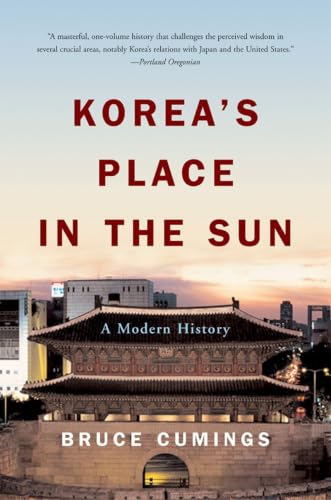
Cumings is the most prominent American historian of modern Korea, and this book, first published in 1997, remains the essential account of Korea's twentieth century. He is particularly strong on the colonial period under Japan, the origins of the Korean War (which he argues must be understood as a civil war, not just a Cold War proxy conflict), and the political economies of South Korean development. Cumings writes with real conviction, which has generated controversy, but the depth of his engagement with Korean sources and Korean perspectives is unmatched in English-language scholarship.
3. The Birth of Korean Cool by Euny Hong
Hong grew up in the United States and moved to South Korea as a teenager in the 1990s, just as the country was beginning its deliberate cultural export strategy. Her book is the best account of how Hallyu, the Korean Wave, was deliberately engineered: government investment in cultural industries, the K-pop training system, the export of Korean food, fashion, and drama. She is funny and sharp, and she explains what is genuinely new about Korean cultural influence and what is continuous with older Korean traditions. Essential for understanding why Korean culture landed globally with such force.
4. Constructing Korean Origins by Hyung Il Pai
Pai's book is a critical examination of how Korean national identity was constructed through archaeology and historiography, particularly during the Japanese colonial period. She argues that both Japanese colonial scholars and Korean nationalists used archaeological evidence to build competing narratives of Korean origins, and that much of what passes as settled Korean prehistory is actually deeply ideological. It is a sophisticated work of academic historiography that raises important questions about how ancient history is mobilized for modern political purposes.
5. The Vegetarian by Han Kang
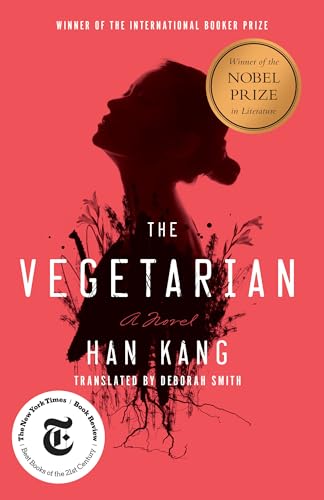
Han Kang won the Nobel Prize in Literature in 2024, and The Vegetarian is the novel that established her internationally. It is not a history book, but it operates as a precise literary dissection of South Korean society: the pressures placed on women, the conformity demanded by family and workplace, the violence that lies beneath the surface of a highly ordered society. The novel's protagonist stops eating meat after a dream, and the consequences of that single refusal unravel her entire life. It is disturbing and extraordinarily written.
6. The Accusation by Bandi
Bandi is the pen name of a North Korean writer who smuggled a manuscript of short stories out of the country in the 1990s. The Accusation, published in South Korea in 2014 and in English translation in 2017, is the only work of dissident fiction published by a writer who was still living inside North Korea at the time of publication. The stories depict ordinary life under the Kim regime with specificity and moral clarity. They are not polemic; they are fiction written by someone who knew the consequences of being caught writing them.
7. The Koreans by Michael Breen
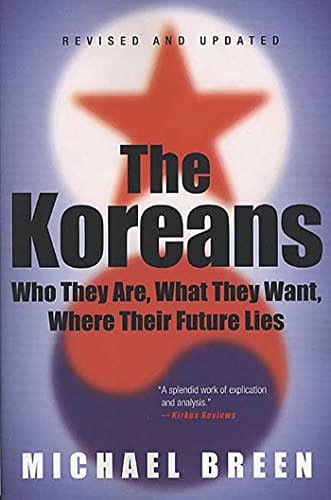
Breen has been a journalist in Korea since the 1980s and his book is the most readable general introduction to Korean society and culture for Western readers. He covers national character, attitudes to hierarchy and age, the culture of education, business culture, and the complex relationship between North and South Korea. He is sympathetic but not sycophantic, and he explains Korean social dynamics in ways that genuinely help outsiders understand what they are observing. A good companion to more historical accounts.
8. The Birth of Korea: The Forgotten History of the Kingdom of Goryeo by Jae-Joon Yoo
Goryeo, the medieval Korean kingdom from which the name "Korea" derives, ruled the peninsula from 918 to 1392 CE. It was invaded by the Mongols, produced some of the finest celadon ceramics ever made, and printed the Tripitaka Koreana, the most complete surviving collection of Buddhist scriptures in East Asia, on 80,000 wooden blocks. Yoo's book is the most accessible English-language account of this underrepresented period, covering the dynasty's founding, its relationship with China and Japan, and the culture it produced.
9. Social History of Modern Korea by Park Noja (Vladimir Tikhonov)
Park Noja is the Korean name of Vladimir Tikhonov, a Russian-born Korean studies scholar who writes in Korean for Korean audiences. His work on Korean social history from below, covering laborers, women, ethnic minorities, and colonial subjects rather than kings and generals, fills a significant gap in English-language scholarship. Tikhonov brings a comparative perspective informed by Russian and European social history, and his willingness to engage with uncomfortable aspects of Korean historical memory sets him apart from many Korean academic historians.
10. A Brief History of Korea by Mark Peterson
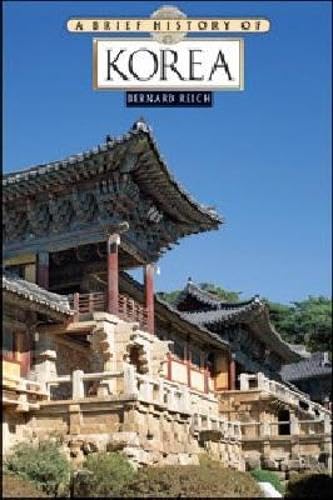
Peterson's survey is the most compact and accessible single-volume introduction to Korean history in English, covering the full span from prehistoric times through the early twenty-first century. It is intended for general readers who want a quick orientation before reading more specialized works. Peterson writes clearly, avoids jargon, and gives appropriate weight to both ancient and modern periods. His treatment of the Joseon dynasty, which governed Korea for five centuries, is particularly clear.
Korean history is not a footnote to Chinese or Japanese history, and it is not simply the backstory to Korean pop culture. It is the story of a civilization that survived invasion, colonization, and division, and emerged from all of it with a distinct identity intact. These books are the place to start.
Your next good book, in your inbox
We only write when we find a book worth your time. Hand-picked recommendations across history, mythology, true crime and more.
Are you an author?
Get your book in front of readers like these, for free.
- Free book listing →Your own book page with an Amazon button
- Author page →Photo, bio and links to your site
- Featured placement →A spot in our best-of lists, from €29
Free tools we recommend
Get free honest reviewsReview exchange on iWrity, free to join
Books You Might Like

It Ends with Us: A Novel
Colleen Hoover

The Seven Husbands of Evelyn Hugo: A Novel
Taylor Jenkins Reid

The Song of Achilles
Madeline Miller

Educated: A Memoir
Tara Westover