Best Books About Labor History in 2026: 10 That Show How Workers Won (and Lost) Their Rights
The things most workers in wealthy countries take for granted — the eight-hour day, the weekend, paid sick leave, minimum wage, the prohibition on child labor, safe working conditions — were not given. They were extracted from employers and governments through strikes, boycotts, organizing campaigns, legal battles, and sometimes open violence. Many of the people who won those rights were beaten, jailed, or killed for the effort.
Labor history is one of the most underrepresented fields in popular history. School curricula cover wars and political leaders in detail; the history of workers organizing to change the conditions of their own lives rarely gets the same attention. The ten books below fill that gap, covering American labor history in depth and connecting it to the broader global story of capitalism and the people who built it.
1. A History of America in Ten Strikes by Erik Loomis
Loomis, a labor historian at the University of Rhode Island, organizes American labor history around ten defining strikes, from the 1877 railroad strike through the 2012 Chicago teachers strike. Each strike serves as a window into a broader moment in American history: the growth of industrial capitalism, the Red Scare, the civil rights movement, the decline of manufacturing, and the rise of public-sector unions. The structure makes the book genuinely readable, and Loomis is not shy about his own politics while remaining committed to the evidence.
2. The Labor Wars by Sidney Lens
Lens wrote this in 1973, and it remains one of the most vivid narrative accounts of American labor conflict from the 1870s through the 1930s. He covers the Great Railroad Strike of 1877, the Haymarket affair, the Homestead Strike, the Pullman Strike, the IWW, and the CIO organizing drives of the 1930s with the specificity and moral clarity of someone who participated in the labor movement himself. It is not a dispassionate academic account; it is a committed account by someone who thought this history mattered and wrote accordingly.
3. There Is Power in a Union by Philip Dray
Dray's comprehensive history of the American labor movement covers the full arc from the earliest trade unions in the colonial period through the decline of organized labor at the end of the twentieth century. He is particularly strong on the personalities: Samuel Gompers, Eugene Debs, Mother Jones, John L. Lewis, Walter Reuther. The book connects union history to broader American political history, showing how labor's fortunes tracked the progressive and conservative cycles of American politics. At nearly 700 pages, it is the most thorough single-volume treatment available.
4. The Autobiography of Mother Jones by Mary Harris Jones
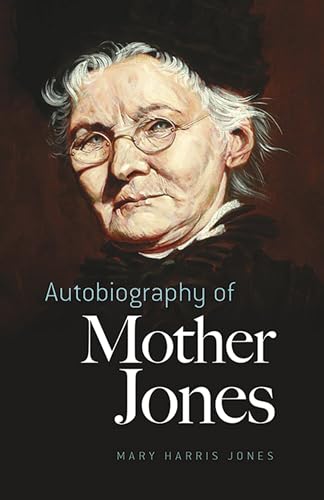
Mother Jones was an Irish-born labor organizer who became, in her eighties, the most recognizable face of the American labor movement. She organized coal miners in West Virginia and Pennsylvania, marched children from mills to Theodore Roosevelt's house to protest child labor, and was jailed multiple times for her activism. Her autobiography, first published in 1925, is both a personal memoir and a first-hand account of the battles of late nineteenth and early twentieth century American labor. The prose is plain and fierce.
5. The Jungle by Upton Sinclair
Sinclair wrote The Jungle in 1905 after spending seven weeks in Chicago's meatpacking district, and it is the most consequential work of fiction in American labor history. He intended it as an exposé of the exploitation of immigrant workers; what it actually changed was food safety law, after readers reacted more strongly to the descriptions of contaminated meat than to the descriptions of worker exploitation. ("I aimed at the public's heart, and by accident I hit it in the stomach.") The labor conditions it describes are the real subject, and they are as disturbing as anything in the book.
6. Fight Like Hell: The Untold History of American Labor by Kim Kelly
Kelly, a labor journalist and organizer, published this in 2022, and it is the most up-to-date comprehensive account of American labor history for general readers. Her distinctive contribution is to center workers who are often left out of traditional labor history: women, Black workers, immigrants, sex workers, domestic workers, and prisoners. The result is a labor history that looks different from the standard white male union leader narrative while covering the same essential events. It is energetic, well-sourced, and timely.
7. Workers in Industrial America: Essays on the Twentieth Century Struggle by David Brody
Brody's essay collection is the most analytically rigorous work on this list. He examines the structural forces shaping American labor relations: the development of welfare capitalism in the 1920s, the logic of industrial unionism, the significance of the New Deal labor legislation, and the reasons for labor's post-1970s decline. For readers who want to understand not just what happened but why, Brody provides the analytical framework that the narrative histories assume.
8. A People's History of the United States by Howard Zinn

Zinn's famous survey of American history from the perspective of workers, the poor, women, and minorities rather than presidents and generals is not exclusively a labor history book, but labor history is its spine. The chapters on industrialization, the robber barons, the IWW, and the Depression-era labor organizing are some of the strongest in the book. Whatever its limitations as scholarship, it was the first place millions of American readers encountered the history of working-class resistance, and it remains one of the most widely read American history books ever written.
9. Empire of Cotton: A Global History by Sven Beckert
Beckert's 2014 book is the most important work of global labor history published in the last decade. He traces the history of cotton from the pre-industrial era through the twentieth century, showing how the global cotton trade was built on enslaved labor in the Americas, colonized labor in Asia and Africa, and industrial wage labor in Europe and New England. The book's great contribution is to show how these different labor systems were not separate phenomena but parts of a single global economic structure. It won the Bancroft Prize and reshaped how historians think about capitalism and labor.
10. Unsheltered by Barbara Kingsolver
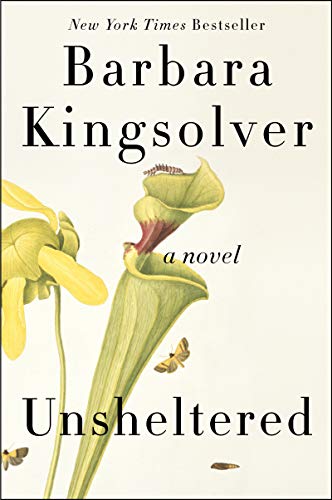
Kingsolver's 2018 novel is not a labor history but it belongs on this list because it dramatizes the specific precarity of American working life at the moment when labor's protections have eroded furthest. Two parallel storylines, one set in 2016 and one in the 1870s, examine characters trying to hold together lives in which the economic ground keeps shifting beneath them. The historical storyline involves the early labor movement and the origins of American capitalism; the contemporary storyline is its direct heir. Kingsolver is a serious novelist with serious politics, and the book earns its ambitions.
The gains workers made in the twentieth century are the product of specific struggles by specific people who paid real costs to win them. Understanding that history is not just an academic exercise; it is the precondition for understanding how those gains have been eroded and what it would take to expand them again.
Your next good book, in your inbox
We only write when we find a book worth your time. Hand-picked recommendations across history, mythology, true crime and more.
Are you an author?
Get your book in front of readers like these, for free.
- Free book listing →Your own book page with an Amazon button
- Author page →Photo, bio and links to your site
- Featured placement →A spot in our best-of lists, from €29
Free tools we recommend
Get free honest reviewsReview exchange on iWrity, free to join
Books You Might Like

It Ends with Us: A Novel
Colleen Hoover

The Seven Husbands of Evelyn Hugo: A Novel
Taylor Jenkins Reid

The Song of Achilles
Madeline Miller

Educated: A Memoir
Tara Westover