Best Books About Medieval Europe: 10 That Bring the Middle Ages to Life
Medieval Europe lasted roughly a thousand years, from the fall of the Western Roman Empire in 476 to the fall of Constantinople in 1453. That is a long time, and the Middle Ages were anything but uniform: the world of Charlemagne's Franks was radically different from the world of the Black Death, which was radically different from the world of the Hundred Years' War. These ten books cover the breadth of that span.
1. The Time Traveler's Guide to Medieval England by Ian Mortimer
Mortimer writes history as a practical guide for an imaginary visitor to 14th-century England. What would you eat? How much would you pay for lodging? What diseases might kill you? What would people smell like? This is one of the most vivid and readable introductions to medieval daily life ever written. It covers a specific century in depth rather than skimming a thousand years.
2. The Pillars of the Earth by Ken Follett
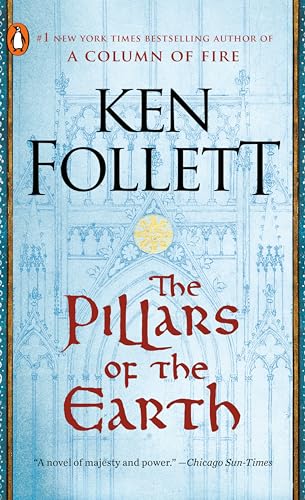
This is a novel, not a history book, but it belongs on this list because no other work captures the texture of medieval life as well. Set in 12th-century England during the construction of a cathedral, it covers everything from the technical details of Gothic architecture to the violence of baronial warfare to the political power of the Church. Read it as historical fiction with serious research behind it.
3. The Autumn of the Middle Ages by Johan Huizinga
First published in 1919, this is one of the great works of cultural history. Huizinga examines the culture of 14th- and 15th-century France and the Low Countries: the chivalric ideal, the obsession with death, the emotional intensity of medieval religious life. His argument is that the later Middle Ages were not the birth of the Renaissance but the twilight of a civilization that had exhausted itself.
4. The Black Death by Philip Ziegler
The plague of 1347-1351 killed between a third and half of Europe's population. Ziegler's account remains one of the best single-volume histories of the event: how it spread, what contemporaries thought caused it, how communities responded, and what changed afterward. The Black Death did not end the Middle Ages, but it accelerated almost every trend that would.
5. A World Lit Only by Fire by William Manchester
Manchester's account of the transition from the medieval world to the Renaissance is controversial among historians (some find it too impressionistic) but enormously readable for general audiences. It covers the corruption of the medieval Church, the ignorance and superstition that coexisted with great learning, and the moment when the old world began to crack. A good entry point if you are new to medieval history.
6. The Medieval World by Friedrich Heer
Heer's broad survey covers the whole of medieval European civilization: theology, philosophy, social structure, art, and political history. It is comprehensive rather than deep, and better read as a reference than from cover to cover. If you want a single volume that maps the entire period, this is one of the most useful.
7. Life in a Medieval City by Joseph and Frances Gies
The Gies wrote a series of accessible social histories of medieval life. This one focuses on the city of Troyes in the 13th century: the merchant class, the guilds, the daily routines, the markets, the churches. It is short, readable, and grounded in specific detail rather than generalization.
8. The Crusades Through Arab Eyes by Amin Maalouf
Almost all popular history of the Crusades is written from the Western perspective. Maalouf's book tells the story from the Arab sources: how Muslim rulers experienced the Crusader invasions, what they thought of the Franks, and how the wars changed the political landscape of the Middle East. An essential corrective to the usual Crusades narrative.
9. Cathedrals of the Sky by Jan Schenau
Medieval Gothic cathedrals were the most ambitious engineering projects of their era. This book traces how the great cathedrals of France and England were designed and built, what engineering problems their builders solved, and what the finished structures meant to the communities that built them. Architecture as a window into medieval thought and ambition.
10. The Plantagenets by Dan Jones

Dan Jones is the most readable popular historian of medieval England currently writing. This book covers the Plantagenet dynasty from Henry II through Richard II: the Magna Carta, the Black Prince, the Hundred Years' War, and the internal conflicts that would eventually produce the Wars of the Roses. Fast-paced and grounded in primary sources.
The Middle Ages are one of the most misrepresented periods in popular culture: too dark in some accounts, too romanticized in others. These ten books give you a more honest picture of a thousand years of European history.
Your next good book, in your inbox
We only write when we find a book worth your time. Hand-picked recommendations across history, mythology, true crime and more.
Are you an author?
Get your book in front of readers like these, for free.
- Free book listing →Your own book page with an Amazon button
- Author page →Photo, bio and links to your site
- Featured placement →A spot in our best-of lists, from €29
Free tools we recommend
Get free honest reviewsReview exchange on iWrity, free to join
Books You Might Like

It Ends with Us: A Novel
Colleen Hoover

The Seven Husbands of Evelyn Hugo: A Novel
Taylor Jenkins Reid

The Song of Achilles
Madeline Miller

Educated: A Memoir
Tara Westover