Best Books About Neuroscience (2026)
PICTURE THIS: a man who lost a chunk of his frontal lobe in an accident becomes a completely different person, yet still walks and talks like nothing happened. Neuroscience is full of stories like that, where a single injury or quirk of biology rewrites what we thought we knew about the mind. These seven books cover the field from clinical case studies to the biology of violence, and they are a good way into a subject that can otherwise feel locked behind journal paywalls.
1. Behave by Robert Sapolsky
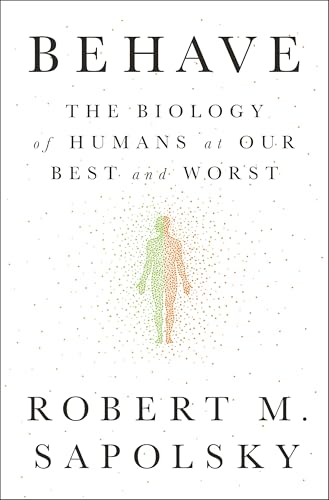
Sapolsky, a Stanford neurobiologist, builds one long argument about why humans do what they do, working backward from the second before an action to the genes and environments that shaped it over millions of years. He covers hormones like testosterone and oxytocin, the amygdala's role in fear and aggression, and how culture and hierarchy bend biology. Chapters on war, peace, and moral judgment are dense but written with real humor. This is the book for readers ready to commit to 700 pages for the most complete picture available of behavior and brain. Find Behave on Amazon.
2. The Man Who Mistook His Wife for a Hat by Oliver Sacks
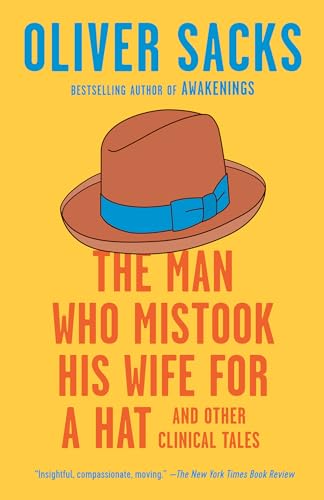
Sacks tells the stories of patients with strange neurological conditions: a man who cannot recognize faces or objects, a sailor stuck in 1945 due to amnesia, twins who perceive numbers as landscapes. Each case becomes a short, humane essay on what the disorder reveals about ordinary brain function. Sacks writes with warmth rather than clinical distance, treating his patients as people first. It is the best starting point for anyone new to neuroscience, since each chapter stands alone and reads like a short story rather than a textbook. Find The Man Who Mistook His Wife for a Hat on Amazon.
3. Phantoms in the Brain by V.S. Ramachandran and Sandra Blakeslee
Ramachandran explains phantom limb pain, the mirror box he invented to treat it, and strange conditions like anosognosia, where patients deny their own paralysis. Working from his lab at UC San Diego, he turns each unusual case into a detective story about how the brain builds a model of the body and the world. The writing is playful and full of thought experiments you can try yourself. Readers who liked Sacks but want more explanation of the underlying mechanisms should pick this up next. Find Phantoms in the Brain on Amazon.
4. Incognito by David Eagleman

Eagleman argues that conscious awareness is a small, late-arriving part of what the brain does, and most of the real work, from vision to decision-making, happens below awareness. He covers blindsight, addiction, and the legal questions raised when brain damage changes behavior, including courtroom cases where biology complicates ideas about guilt. The tone is conversational and often funny, built around quick examples rather than long argument. Good for readers interested in free will debates and how much control we really have over our own choices. Find Incognito on Amazon.
5. The Brain That Changes Itself by Norman Doidge

Doidge profiles patients and researchers working on neuroplasticity, including a woman who rebuilt her sense of balance after a damaged inner ear, blind people learning to see through a device on the tongue, and stroke survivors who regained movement decades after injury. He also covers Michael Merzenich's lab work remapping the brains of monkeys and humans alike. The stories are genuinely hopeful without overselling what plasticity can do. Recommended for anyone dealing with brain injury, rehabilitation, or just curious how adaptable the brain stays into old age. Find The Brain That Changes Itself on Amazon.
6. Descartes' Error by Antonio Damasio

Damasio takes on the old idea that reason works best when it is separated from emotion. Using the historical case of Phineas Gage and his own patient Elliot, both of whom lost the ability to feel appropriate emotion after brain damage and then made terrible decisions, he builds the somatic marker hypothesis: that gut feelings guide good judgment rather than corrupt it. The book sits closer to philosophy of mind than straight science writing. Best for readers who want to think seriously about decision-making, not just read case studies. Find Descartes' Error on Amazon.
7. The Tale of the Dueling Neurosurgeons by Sam Kean
Kean tells the history of neuroscience through its strangest episodes: early lobotomies, duels between 19th-century scientists, and patients like Henry Molaison, known as H.M., whose surgery for epilepsy erased his ability to form new memories and taught researchers how memory actually works. Each chapter ties a brain region to a historical case, so you learn anatomy almost by accident. It reads like popular history more than a science book, with Kean's usual eye for the odd detail. A great pick for readers who want the story of the field alongside the science. Find The Tale of the Dueling Neurosurgeons on Amazon.
Where to Start
Start with The Man Who Mistook His Wife for a Hat. Sacks' case studies are short, human, and need no background in biology, and they will get you hooked on the kind of questions the rest of these books spend hundreds of pages answering. Once you are drawn in, move to Phantoms in the Brain or Sam Kean's book for more context, then save Sapolsky's Behave for when you want the full, demanding synthesis of everything neuroscience and biology can tell you about why people act the way they do.
Your next good book, in your inbox
We only write when we find a book worth your time. Hand-picked recommendations across history, mythology, true crime and more.
Are you an author?
Get your book in front of readers like these, for free.
- Free book listing →Your own book page with an Amazon button
- Author page →Photo, bio and links to your site
- Featured placement →A spot in our best-of lists, from €29
Free tools we recommend
Get free honest reviewsReview exchange on iWrity, free to join
Books You Might Like

It Ends with Us: A Novel
Colleen Hoover

The Seven Husbands of Evelyn Hugo: A Novel
Taylor Jenkins Reid

The Song of Achilles
Madeline Miller

Educated: A Memoir
Tara Westover