Best Books About Neuroscience and the Brain (2026)
PICTURE THIS: three pounds of tissue inside your skull somehow produces every thought, memory, and panic attack you've ever had, and scientists are still arguing about how. The brain is the closest thing we have to a final frontier, and the best books on it manage to explain hard science without losing the wonder. Here are seven books that get you there, whether you want clinical case studies, hard behavioral science, or a history of how we figured any of this out in the first place.
1. The Brain That Changes Itself by Norman Doidge

Doidge, a psychiatrist, built this book around the idea of neuroplasticity, the brain's ability to rewire itself after injury or through practice. He tells stories of stroke patients who relearned to move, a woman born with half a brain who functions normally, and researchers like Michael Merzenich who upended the old belief that the adult brain is fixed. Each chapter reads like a medical mystery with a clear payoff. This is the right starting point for anyone new to neuroscience who wants proof that the field has real, human stakes. Find The Brain That Changes Itself on Amazon.
2. Phantoms in the Brain by V.S. Ramachandran and Sandra Blakeslee
Ramachandran is one of the most inventive neurologists alive, and this book collects his work on phantom limb pain, body image disorders, and patients who deny their own paralysis. He explains how mirrors can trick the brain into relieving pain that has no physical cause, and how damage to specific brain regions produces oddly specific delusions. The writing is playful and full of odd details, like the man who thought his mother was an impostor. Read this if you want neuroscience that feels like detective work rather than a lecture. Find Phantoms in the Brain on Amazon.
3. The Man Who Mistook His Wife for a Hat by Oliver Sacks
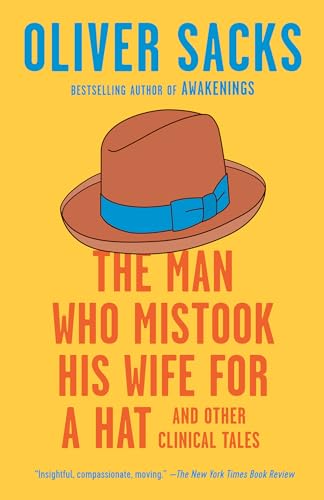
Sacks was a neurologist who spent his career writing case studies that read like short stories. This collection covers patients with visual agnosia, Tourette's syndrome, musical hallucinations, and memory loss so severe that one man lived permanently in 1945. Sacks never treats his patients as specimens. He is curious about what their conditions reveal about ordinary consciousness. This is the book to hand someone who thinks neuroscience sounds cold or clinical, because Sacks proves it is really about what makes a person who they are. Find The Man Who Mistook His Wife for a Hat on Amazon.
4. Behave by Robert Sapolsky
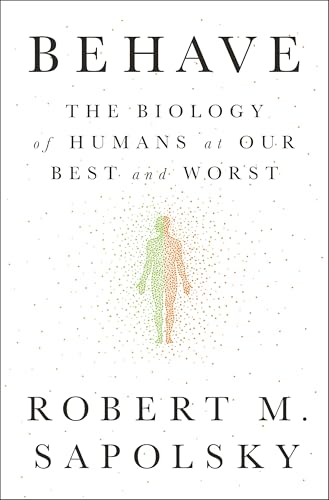
Sapolsky, a Stanford neurobiologist, asks why humans do the things they do, good and bad, and answers it by zooming out in stages. He starts with what happens in your brain one second before an action, then pulls back to hormones, childhood development, culture, and evolutionary history. The chapters on testosterone, warfare, and the biology of in-group hostility are especially sharp. It is a long book, over seven hundred pages, but Sapolsky's humor keeps it moving. Pick this up if you want the full picture of how biology shapes behavior, not just the brain in isolation. Find Behave on Amazon.
5. Incognito by David Eagleman

Eagleman argues that most of what your brain does happens outside your awareness, and he spends the book showing how much of your personality, decisions, and perception run on autopilot. He covers blindsight, the unreliability of eyewitness memory, and why your brain edits reality before you ever notice. The tone is breezy and the chapters are short, built around one idea at a time. This is a good match for readers who liked pop psychology books like Thinking, Fast and Slow and want the neuroscience version. Find Incognito on Amazon.
6. How Emotions Are Made by Lisa Feldman Barrett

Barrett, a psychologist and neuroscientist, takes on the old idea that emotions are hardwired, universal reactions sitting in specific brain regions waiting to be triggered. Instead she argues your brain constructs emotions in the moment, based on prediction and past experience, which is why the same event can make two people feel completely different things. The book draws on her own lab's research and challenges a century of assumptions about fear, anger, and joy. It asks more of the reader than the others on this list, but it rewards people who want to question what they think they already know about feelings. Find How Emotions Are Made on Amazon.
7. The Tale of the Dueling Neurosurgeons by Sam Kean
Kean tells the history of neuroscience through its strangest and most gruesome case studies, from the railroad worker Phineas Gage, who survived a metal rod through his skull, to Soviet-era brain surgeries and botched lobotomies. Each chapter uses a real historical incident to explain a piece of brain function, like language, memory, or morality. Kean writes with a journalist's eye for a good story and never loses the science underneath it. This is the pick for history buffs who want to see how brain science actually developed, mistakes and all. Find The Tale of the Dueling Neurosurgeons on Amazon.
Where to Start
Start with The Brain That Changes Itself. It gives you the clearest, most hopeful introduction to how the brain actually works, through real patients and real recoveries, without requiring any background in biology. Once you have that foundation, Oliver Sacks and Sam Kean will deepen your sense of how strange and specific brain science can get, and Sapolsky and Barrett will take you into the harder questions about behavior and emotion once you're ready for them.
Your next good book, in your inbox
We only write when we find a book worth your time. Hand-picked recommendations across history, mythology, true crime and more.
Are you an author?
Get your book in front of readers like these, for free.
- Free book listing →Your own book page with an Amazon button
- Author page →Photo, bio and links to your site
- Featured placement →A spot in our best-of lists, from €29
Free tools we recommend
Get free honest reviewsReview exchange on iWrity, free to join
Books You Might Like

It Ends with Us: A Novel
Colleen Hoover

The Seven Husbands of Evelyn Hugo: A Novel
Taylor Jenkins Reid

The Song of Achilles
Madeline Miller

Educated: A Memoir
Tara Westover