Best Books About Pandemics and Epidemics: From Plague to COVID
Pandemics are not rare anomalies. They are recurring features of human history. The Black Death killed a third of Europe. Smallpox reshaped the Americas. The Spanish Flu infected a third of the world. COVID-19 shut down civilization. Each epidemic reveals something about how diseases spread, how societies break down under pressure, and how humans respond to invisible threats. The best books on this subject are detective stories, combining history, science, and human drama into narratives that feel urgent and relevant.
Understanding How Epidemics Actually Work
Most of what you think you know about pandemics comes from movies and headlines. Real epidemiology is more complex and more interesting. It involves transmission rates, immunity thresholds, asymptomatic carriers, and the strange feedback loops that make some diseases explode while others burn out quickly. Books about pandemics teach you not just what happened but why. They explain the decisions that saved lives and the ones that cost them. In a world where the next pandemic could emerge tomorrow, this knowledge matters.
The Plague: The 30-Year Quest to Stop an Epidemic by Terence Ranger
Terence Ranger examines the handling of bubonic plague in colonial Africa, focusing on Zimbabwe from the 1890s onward. The British colonial authorities implemented quarantines and movement restrictions that seemed logical but were devastating to the African population. Ranger shows how disease control becomes political control, and how epidemiology gets twisted to serve colonial interests. The book reads like a detective story uncovering hidden archives and forgotten documents.
This is history that challenges easy assumptions. It shows how public health measures can be weaponized, and how the same tools that contain disease can also be tools of oppression. Ranger writes with clarity and moral force, making distant history feel immediate and relevant.
Buy The Plague: The 30-Year Quest to Stop an Epidemic on Amazon
Spillover by David Quammen
David Quammen is one of the world's best science writers. Spillover traces the emergence of new viruses that jump from animals to humans, from Ebola to SARS to bird flu. Quammen interviews the scientists who track these diseases, visits caves where bats carry unknown viruses, and explains why the modern world keeps producing new pandemics. The book is a gripping narrative that reads like an adventure story, yet covers serious epidemiology with accuracy.
Quammen's central insight is that we live in a world where human activity (urbanisation, deforestation, bushmeat hunting, factory farming) is constantly creating opportunities for animal viruses to jump to humans. We are not unlucky. We have engineered the conditions for pandemics. This book explains why and what we could do differently.
The Great Mortality by John Kelly
John Kelly reconstructs the Black Death in vivid, almost poetic prose. He takes you to 14th-century Europe as the plague arrives, spreads, and kills maybe 75 million people. Kelly balances big numbers with intimate human stories. He shows what it was like to watch people die, how social order broke down, how some societies organized quarantines while others blamed Jews or divine punishment. The Black Death reshaped Europe in ways that ripple to today: it reduced the feudal system's control over labour, shifted power, and triggered religious upheaval.
Kelly writes history as narrative, not summary. You will not just learn facts about the Black Death. You will feel what it was like to live through it. The prose is beautiful and the research is deep. This is one of the great works of historical writing.
Buy The Great Mortality on Amazon
Pale Rider: The Spanish Flu of 1918 by Laura Spinney
Laura Spinney covers the Spanish Flu pandemic that infected a third of the world and killed at least 50 million people, yet faded from collective memory quickly after World War I ended. Spinney asks why such a massive catastrophe was so thoroughly forgotten. She traces the flu across continents, showing how it spread differently in different regions, who died (surprisingly, it killed healthy young adults more than the elderly), and how inadequate reporting left massive gaps in our historical understanding.
The book is narrative history combined with epidemiology. Spinney explains what the flu virus actually was, how it spread, and why the 1918 pandemic was so different from other flu seasons. She also shows how governments minimized death counts and suppressed information during wartime, a lesson that resonates today.
What History Teaches Us About the Next Pandemic
Pandemics follow patterns. They spread exponentially, overwhelm institutions, produce panic and false information, trigger both cooperation and conflict, and reshape society in ways no one predicted. Leaders face impossible decisions with incomplete information. Communities either hold together or fracture. Some diseases burn themselves out. Others become endemic. Reading the history of pandemics teaches you not just what happened but how to think clearly when the next one arrives.
The Disease Is Not the Only Killer
The most important lesson from books about pandemics is this: the disease itself is only part of what kills you. Panic, poverty, poor decisions, inadequate institutions, and failures of coordination all magnify the death toll. A competent response can cut deaths dramatically. An incompetent or malicious one can make everything worse. Understanding how pandemics have unfolded historically gives you perspective on how current and future crises might be better managed.
Your next good book, in your inbox
We only write when we find a book worth your time. Hand-picked recommendations across history, mythology, true crime and more.
Books You Might Like

Sapiens: A Brief History of Humankind
Yuval Noah Harari

The Body Keeps the Score
M.D. Bessel van der Kolk
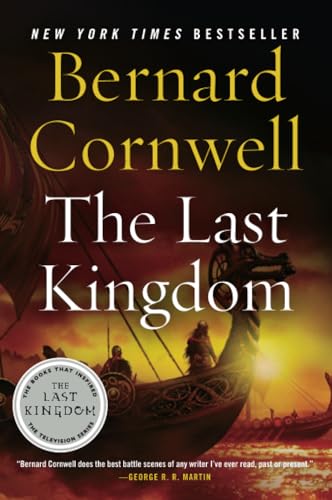
The Last Kingdom (The Saxon Stories, Book 1)
Bernard Cornwell

Meditations
Marcus Aurelius