Best Books About Philosophy of Science in 2026: 10 That Question How We Know What We Know
Science is the most reliable method humans have ever developed for distinguishing what is true from what merely feels true. But the method itself has a history, and that history is stranger and more contentious than most science education lets on. The books on this list are not hostile to science. Most of them were written by scientists or by people who think science is one of the greatest achievements in history. What they share is a willingness to ask the harder question: how does science actually work, as opposed to how we think it works?
1. The Structure of Scientific Revolutions by Thomas Kuhn
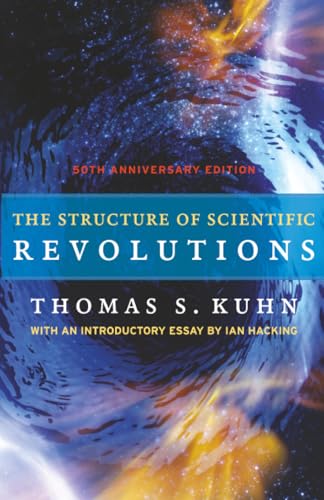
Published in 1962, this is the book that introduced the word "paradigm" into common usage, in its modern sense. Kuhn's argument is that science does not progress smoothly through the accumulation of facts. Instead, it operates within frameworks, sets of assumptions so fundamental that they are largely invisible to the people working inside them. Science advances by periods of normal work punctuated by occasional revolutions, moments when the anomalies pile up fast enough to force a framework change. The shift from Newtonian physics to relativity is the canonical example. Difficult in places, but no other book has more reshaped how scientists and historians think about scientific progress.
Find The Structure of Scientific Revolutions on Amazon
2. The Logic of Scientific Discovery by Karl Popper
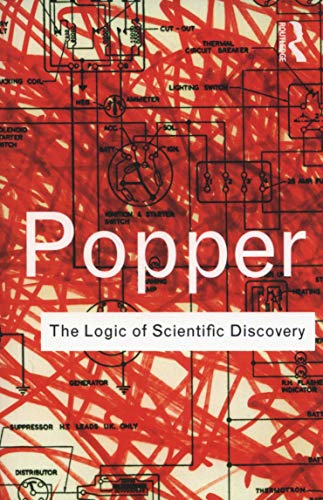
Popper's central contribution is the idea of falsifiability: a claim is scientific only if it can, in principle, be proven wrong. This sounds simple but its implications are radical. It means that no amount of confirming evidence can ever prove a theory. It means that a theory which cannot be tested is not science, whatever its supporters say. And it means that the history of science is not a story of truths accumulating but of theories surviving increasingly severe attempts to destroy them. First published in German in 1934, The Logic of Scientific Discovery remains the most influential single work in the philosophy of science.
Find The Logic of Scientific Discovery on Amazon
3. The Demon-Haunted World by Carl Sagan

Sagan wrote this in 1995 as a defence of skeptical thinking at a time when he felt pseudoscience was gaining ground. It is the most readable entry on this list and also, in some ways, the most urgent. The chapters move through UFO abductions, faith healing, witch trials, and political propaganda, using each to illustrate a principle from the skeptical toolkit Sagan called the "baloney detection kit." The book is not a collection of debunking. It is a serious argument for why the habits of mind that make science work should be more widely distributed. Its central concern, that a society which cannot distinguish evidence from assertion is in serious danger, has not aged out.
Find The Demon-Haunted World on Amazon
4. The Pleasure of Finding Things Out by Richard Feynman
This is a collection of interviews, lectures, and short pieces from one of the twentieth century's most original physicists. Feynman was constitutionally incapable of pretending to understand something he did not understand, which made him an unusually reliable guide to where the real edges of knowledge were. The title piece is a conversation about what it actually feels like to do science, the curiosity, the dead ends, the moments when a calculation suddenly clarifies. His appendix to the Challenger disaster report, a single page explaining why NASA's safety estimates were wrong by a factor of roughly a thousand, is one of the great documents in the history of scientific communication.
5. Advice to a Young Scientist by Peter Medawar
Medawar won the Nobel Prize in Medicine in 1960 and spent the rest of his career writing about what science is and how it is actually done. This short book, addressed to students considering a scientific career, is more honest about the sociology and psychology of research than most textbooks dare to be. Medawar discusses how scientists actually generate hypotheses, why some wrong theories are more productive than correct ones, and what distinguishes a good scientific problem from a bad one. His earlier essay "Is the Scientific Paper a Fraud?" which argues that published papers systematically misrepresent the process that produced them, should be required reading alongside it.
6. Chaos by James Gleick
Gleick's history of chaos theory covers the period from the early 1960s through the mid-1980s when a group of scientists across multiple disciplines, meteorology, biology, mathematics, physics, began to recognize that apparently random behavior in natural systems was often the product of deterministic rules that were simply very sensitive to initial conditions. The butterfly effect is the famous shorthand. What Gleick captures is how this discovery felt like a revolution to the people inside it: a sense that they were seeing something the previous generation of scientists had been constitutionally unable to see. The book is also a subtle argument about how scientific communities form, communicate, and resist new ideas.
7. Thinking, Fast and Slow by Daniel Kahneman

Kahneman's book belongs here because it is, underneath the psychology, a philosophy of evidence and error. His career-long program with Amos Tversky documented the systematic ways in which human reasoning departs from the rational models that economists and scientists had assumed. We are overconfident in our predictions. We weight losses more heavily than equivalent gains. We construct narratives that feel compelling and resist statistical correction. These are not character flaws in bad thinkers; they are reliable features of how human cognition works. For anyone trying to understand why scientific knowledge is hard to produce and harder to transmit, Kahneman's account of the machinery underneath reasoning is essential.
Find Thinking, Fast and Slow on Amazon
8. The Mismeasure of Man by Stephen Jay Gould
Gould's critique of intelligence testing and the history of biological determinism is a case study in how scientific methods can be applied in the service of prior conclusions rather than genuine inquiry. He traces the history of craniometry, IQ testing, and related fields, showing how the numbers were repeatedly produced, interpreted, and reframed to confirm what the researchers already believed. The book is controversial in some of its specific claims, which have been challenged by subsequent historians, but as an illustration of how social assumptions infiltrate scientific practice it remains one of the most instructive texts in the field.
9. The Scientific Attitude by Lee McIntyre
Published in 2019, McIntyre's book takes a fresh angle on the demarcation problem, the question of what separates science from non-science. His answer is less about methodology and more about disposition: what distinguishes science is not a specific set of procedures but a willingness to follow evidence wherever it leads and to revise beliefs when evidence demands it. He applies this to case studies from science denial, climate change, vaccines, evolution, and asks why some communities resist scientific consensus and what, if anything, can be done about it. One of the most practically useful books on this list for understanding contemporary disputes about expertise.
10. What Is This Thing Called Science? by A.F. Chalmers
The standard introductory text in philosophy of science. Chalmers covers inductivism, falsificationism, Kuhn, Lakatos, Feyerabend, and the major debates in a way that is genuinely accessible to readers with no prior philosophy background. It does not preach a single answer, which is one of its strengths. After reading it, you will be familiar with the major positions in the field and in a better position to evaluate the more polemical books. If you are new to this subject and want a map before diving into the primary texts, start here.
The Common Thread
Every book on this list pushes toward the same uncomfortable recognition: knowledge is not just out there waiting to be collected. It is produced by human beings working inside institutions, shaped by assumptions, incentives, and cognitive limits. That does not make science unreliable. It makes understanding how science works more important, not less. For related reading, browse our science collection and the wider non-fiction shelf.
Your next good book, in your inbox
We only write when we find a book worth your time. Hand-picked recommendations across history, mythology, true crime and more.
Are you an author?
Get your book in front of readers like these, for free.
- Free book listing →Your own book page with an Amazon button
- Author page →Photo, bio and links to your site
- Featured placement →A spot in our best-of lists, from €29
Free tools we recommend
Get free honest reviewsReview exchange on iWrity, free to join
Books You Might Like

Sapiens: A Brief History of Humankind
Yuval Noah Harari

The Body Keeps the Score
M.D. Bessel van der Kolk

Why We Sleep
Matthew Walker

Astrophysics for People in a Hurry
Neil deGrasse Tyson