Best Books About Political Science (2026)
POWER IS EVERYWHERE, but most people never read a single book that explains how it actually works. Political science gives you the tools to see why democracies survive or collapse, why states succeed or fail, and why leaders behave the way they do. These seven books, old and new, will change how you read the news.
1. How Democracies Die by Steven Levitsky and Daniel Ziblatt
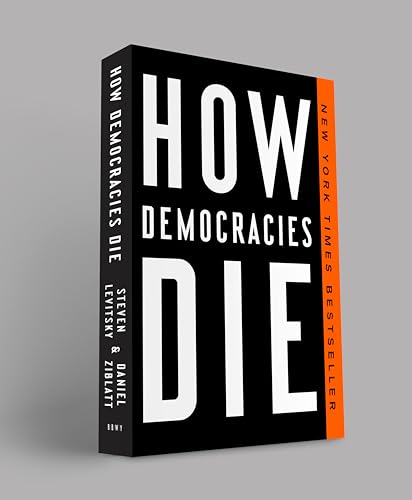
Two Harvard political scientists compare the slow collapse of democracies in Europe and Latin America to warn about the United States. They lay out clear warning signs, such as leaders who deny the legitimacy of opponents or encourage violence, and show how these patterns played out in Hungary, Venezuela, and Weimar Germany. The writing is clean and the argument never feels alarmist, just evidence based. This is the book to hand someone who thinks democratic collapse only happens through coups and tanks, not through courts, elections, and media capture. Find How Democracies Die on Amazon.
2. The Origins of Totalitarianism by Hannah Arendt
Arendt's 1951 study traces how Nazi Germany and Stalinist Russia grew out of anti-Semitism, imperialism, and the breakdown of the nation state system. She argues totalitarian regimes need mass loneliness and the collapse of traditional class structures to take hold, not just a charismatic dictator. The book is dense and demands patience, especially the sections on imperialism and bureaucracy, but the final chapters on terror and ideology remain some of the sharpest political writing of the last century. Read this if you want the deepest, most serious account of how total domination actually functions. Find The Origins of Totalitarianism on Amazon.
3. Why Nations Fail by Daron Acemoglu and James Robinson
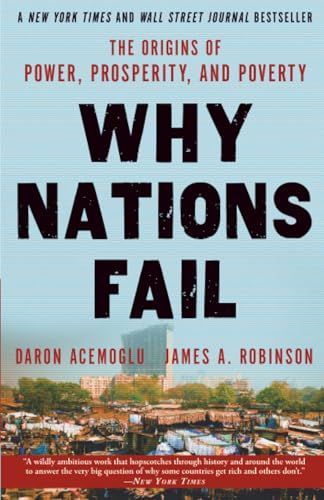
This book asks a simple question: why are some countries rich and others poor, and the answer has little to do with geography or culture. The authors argue it comes down to institutions, whether a country has inclusive systems that spread power and opportunity or extractive ones that concentrate wealth among elites. They move from Roman Britain to the Congo to North and South Korea to make the case. It reads fast for a book built on decades of research, and it works well for readers who want political theory connected directly to economic outcomes. Find Why Nations Fail on Amazon.
4. Politics Among Nations by Hans Morgenthau
First published in 1948, this is the founding text of realist international relations theory. Morgenthau argues states act to secure power and survival, not moral ideals, and that foreign policy built on wishful thinking gets people killed. He lays out his famous six principles of political realism and applies them to balance of power politics, alliances, and diplomacy. Later editions can feel dated in their Cold War framing, but the core argument still shapes how diplomats and scholars think about war and peace. This one suits readers who want the theoretical backbone behind modern foreign policy debates. Find Politics Among Nations on Amazon.
5. Democracy in America by Alexis de Tocqueville
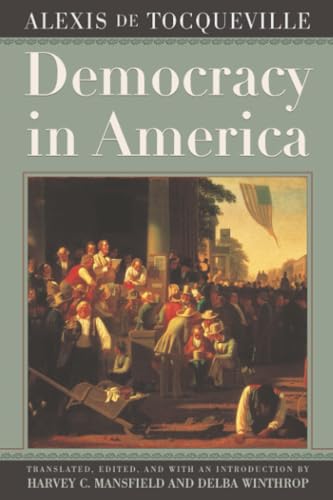
A French aristocrat travels through the United States in the 1830s and writes the single most quoted account of American democracy ever produced. Tocqueville is fascinated by voluntary associations, local self-government, and what he calls the tyranny of the majority, the risk that democratic equality can crush individual dissent and independent thought. His chapters on civic associations and the dangers of a soft, comfortable despotism still get cited in debates about polarization today. The prose is older and occasionally slow, but the insights hold up. Anyone studying American political culture needs to read this at some point. Find Democracy in America on Amazon.
6. The Prince by Niccolò Machiavelli
Written in 1513 as a short, blunt guide for rulers, Machiavelli strips away moral pretense and tells princes how power actually gets won and kept. He argues it is better to be feared than loved if you cannot have both, and he studies case after case of rulers who succeeded or failed based on cunning rather than virtue. The book is short, maybe 100 pages depending on the edition, and reads more like a manual than an academic treatise. It works as a fast entry point into political theory and as the clearest explanation of why his name became an adjective. Find The Prince on Amazon.
7. Political Order and Political Decay by Francis Fukuyama
This is the second half of Fukuyama's two volume history of political institutions, covering the period from the French Revolution to the present day. He traces how strong, accountable states get built in places like Prussia and Japan, and why they stay weak or fall apart in places like Nigeria or post Soviet Russia. The chapters on American political decay, where interest groups and courts have hollowed out the capacity of government, are the sharpest part of the book. It runs long and covers a lot of ground, so give yourself time, but it rewards readers who want the full sweep of how states rise and rot. Find Political Order and Political Decay on Amazon.
Where to Start
Start with How Democracies Die. It is short, well argued, and written for general readers rather than specialists, and it will get you thinking about institutions and norms right away. Once you have that foundation, Why Nations Fail and The Prince give you two very different but equally useful angles on power, one focused on economic institutions and one on the raw mechanics of rule. Save Arendt and Fukuyama for when you want to go deeper, since both reward a second read.
Your next good book, in your inbox
We only write when we find a book worth your time. Hand-picked recommendations across history, mythology, true crime and more.
Are you an author?
Get your book in front of readers like these, for free.
- Free book listing →Your own book page with an Amazon button
- Author page →Photo, bio and links to your site
- Featured placement →A spot in our best-of lists, from €29
Free tools we recommend
Get free honest reviewsReview exchange on iWrity, free to join
Books You Might Like

It Ends with Us: A Novel
Colleen Hoover

The Seven Husbands of Evelyn Hugo: A Novel
Taylor Jenkins Reid

The Song of Achilles
Madeline Miller

Educated: A Memoir
Tara Westover