Best Books About Sociology (2026)
SOCIETY FEELS invisible until something breaks it open for you, a pattern you cannot unsee once a sociologist points it out. These seven books do exactly that, turning ordinary life into evidence and showing you the hidden machinery behind class, race, gender, and power. Whether you want a quick entry point or a book that will change how you read a room, there is something here for you.
1. The Sociological Imagination by C. Wright Mills

Published in 1959, this short book is still the best doorway into sociological thinking. Mills argues that personal troubles are almost always tied to larger social and historical forces, and he shows you how to connect your own biography to the structure of your society. He also takes aim at academic jargon and abstract theory that forgets the real world. Read this first if you want the mindset behind sociology before you get into specific topics like class or crime. It is short, sharp, and still feels urgent. Find The Sociological Imagination on Amazon.
2. Evicted by Matthew Desmond
Desmond spent years following eight families in Milwaukee as they faced housing instability and eviction. The book reads like narrative nonfiction, but it is built on rigorous fieldwork and data about how the rental housing market traps poor families in cycles of debt and displacement. You meet landlords, tenants, and caseworkers, and you see how eviction itself, not just poverty, drives further poverty. This is the book to hand someone who thinks sociology is all theory and no people. Anyone interested in poverty, housing policy, or urban life should start here. Find Evicted on Amazon.
3. Bowling Alone by Robert D. Putnam
Putnam tracks the decline of American civic life across the twentieth century, from bowling leagues and church groups to PTA meetings and neighborhood gatherings. He builds a case that social capital, the networks and trust that hold communities together, has been eroding for decades, with consequences for democracy, health, and happiness. The book is dense with data but written for a general audience, and later chapters on causes like television and suburban sprawl still spark debate. Read it if you want to understand why community life feels thinner than it used to. Find Bowling Alone on Amazon.
4. The Presentation of Self in Everyday Life by Erving Goffman
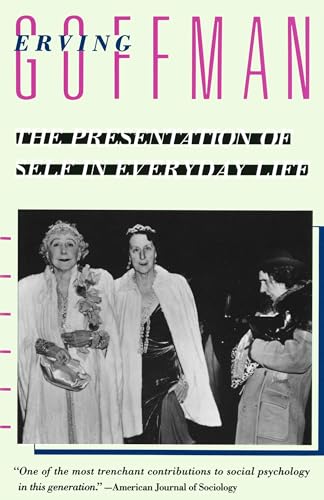
Goffman compares social life to a theater, where you are always performing a version of yourself for whoever is watching. Using the language of front stage and back stage, he explains how people manage impressions, hide flaws, and coordinate with others to keep social interactions running smoothly. First published in 1959, it reads less like a textbook and more like a close study of manners, roles, and small deceptions you perform without noticing. Pick this up if you are curious about social psychology and the small rituals of daily interaction. Find The Presentation of Self in Everyday Life on Amazon.
5. Distinction by Pierre Bourdieu
Bourdieu's 1979 study of French society argues that taste in art, food, and leisure is never just personal preference, it is a marker of class position that gets passed down and reinforced through education and upbringing. He introduces concepts like cultural capital and habitus, showing how people learn to feel at home in some social spaces and like outsiders in others. This is a demanding read, heavy with survey data and dense argument, but it rewards patience with a framework you will keep using long after you finish. Best for readers who already have some sociology under their belt. Find Distinction on Amazon.
6. The Protestant Ethic and the Spirit of Capitalism by Max Weber
Weber's classic from 1905 asks why modern capitalism took root first and most forcefully in Protestant parts of Europe. His answer centers on the idea that certain Protestant beliefs, especially around work, thrift, and salvation through diligence, created a cultural mindset suited to capital accumulation. The book is short but written in dense, old fashioned prose, so give yourself time with it. It remains a foundational text for anyone studying the relationship between religion, culture, and economic systems, and it set the agenda for a century of debate that continues today. Find The Protestant Ethic and the Spirit of Capitalism on Amazon.
7. Discipline and Punish by Michel Foucault
Foucault traces the shift from public torture and execution to modern prisons, schools, hospitals, and other institutions built around surveillance and discipline. His central image, the panopticon, a prison designed so inmates never know when they are being watched, becomes a lens for understanding how power operates in modern society without needing visible force. This is the most philosophically demanding book on this list, drawing on history, philosophy, and social theory at once. Read it once you are comfortable with theoretical writing and want to see how institutions shape behavior from the inside out. Find Discipline and Punish on Amazon.
Where to Start
If you are new to sociology, start with The Sociological Imagination. It gives you the basic way of thinking that every other book on this list assumes you already have, and it does so in under 250 pages without demanding prior background. Once you have that framework, Evicted or Bowling Alone will show you sociology in action, grounded in real communities and real data, before you move on to the denser theoretical work from Bourdieu, Weber, and Foucault.
Your next good book, in your inbox
We only write when we find a book worth your time. Hand-picked recommendations across history, mythology, true crime and more.
Are you an author?
Get your book in front of readers like these, for free.
- Free book listing →Your own book page with an Amazon button
- Author page →Photo, bio and links to your site
- Featured placement →A spot in our best-of lists, from €29
Free tools we recommend
Get free honest reviewsReview exchange on iWrity, free to join
Books You Might Like

It Ends with Us: A Novel
Colleen Hoover

The Seven Husbands of Evelyn Hugo: A Novel
Taylor Jenkins Reid

The Song of Achilles
Madeline Miller

Educated: A Memoir
Tara Westover