Best Books About the American Civil War: 10 That Go Beyond the Battlefield
THE CIVIL WAR killed more Americans than any other conflict in the nation's history: 620,000 to 750,000 soldiers dead, plus tens of thousands of civilians. It destroyed one economic system, freed four million people, and left questions about race and national identity that are still contested today. These books explain what happened and why it still matters.
What Makes a Good Civil War Book?
The Civil War is one of the most written-about events in American history. There are more books published about Abraham Lincoln than any other historical figure except Jesus Christ and Napoleon. The challenge is finding books that add something new rather than repeating established narratives.
The best Civil War books fall into three categories: comprehensive single-volume histories that cover the whole conflict, focused studies of specific campaigns or personalities, and books that examine what the war meant for the people who lived through it. This list includes all three types.
10 Best Books About the Civil War
1. Battle Cry of Freedom: The Civil War Era (James McPherson)
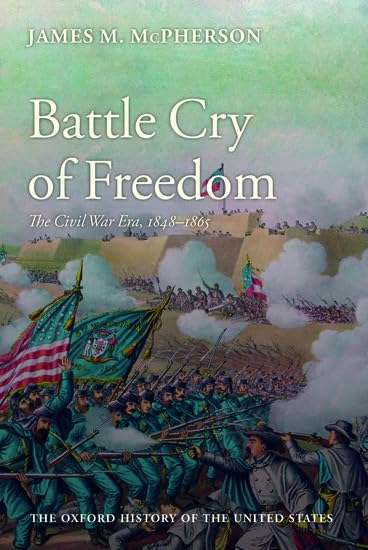
The definitive single-volume history of the Civil War and the era that produced it. McPherson starts in the 1840s with the debates over slavery's expansion into new territories, covers the political collapse of the 1850s, the secession crisis, and every major phase of the war through Appomattox. Winner of the Pulitzer Prize for History.
What makes this book exceptional: McPherson refuses to separate the military and political stories. He shows constantly how battlefield developments shaped political decisions and vice versa. Lincoln's re-election in 1864, which effectively sealed the Confederacy's fate, becomes comprehensible only if you understand what Sherman's army was doing in Georgia at the time.
2. Team of Rivals: The Political Genius of Abraham Lincoln (Doris Kearns Goodwin)
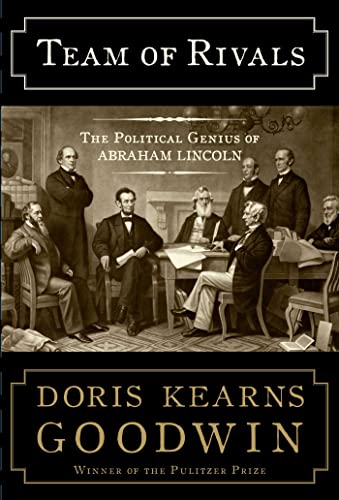
Lincoln won the 1860 Republican nomination by defeating three more prominent and better-known rivals: William Seward, Salmon Chase, and Edward Bates. Then he put all three in his cabinet. Team of Rivals explains why this was a masterstroke and traces how Lincoln managed these ego-driven, ambitious men throughout the war.
Goodwin's Lincoln is not the marble statue of monuments but a working politician of exceptional emotional intelligence. He absorbed insults without responding, gave rivals credit for successes, and kept his coalition together by understanding what each person needed. The book is as much a study in leadership as it is Civil War history.
3. Confederates in the Attic (Tony Horwitz)
Published in 1998, this is the most unusual book on the list. Horwitz, a journalist, travels through the South to understand why the Civil War is still emotionally alive for so many Southerners. He attends reenactments, meets hardcore reenactors who diet to replicate the gaunt look of Confederate soldiers, visits battlefields, and talks to people for whom the Confederate cause is still a living identity.
The book is not partisan and does not argue a thesis. It presents a complicated portrait of historical memory, regional identity, and the ways a losing side mythologizes its defeat. Essential reading for understanding why Civil War debates remain so heated in American culture.
4. The Personal Memoirs of Ulysses S. Grant (Ulysses S. Grant)
Grant wrote his memoirs in 1885 while dying of throat cancer, racing to finish before his money ran out and leave something for his family. He finished four days before his death. The result is one of the greatest military memoirs in any language and the best first-person account of the Civil War's western and final campaigns.
Grant writes with unusual directness about his failures as well as his successes. He is honest about the mistakes at Cold Harbor, clear-eyed about the costs of his grinding strategy, and generous to his opponents. Mark Twain, who published the memoirs, considered Grant's prose the equal of Julius Caesar's.
5. Sherman: Soldier, Realist, American (B.H. Liddell Hart)
William Tecumseh Sherman invented modern warfare. His March to the Sea in 1864-65 was the first major example of total war in the modern sense: targeting the civilian infrastructure that sustained the Confederate military rather than just the armies in the field. Liddell Hart, the British military historian who developed the theory of the indirect approach, saw Sherman as the Civil War's most important strategic thinker.
This biography covers Sherman's full career, but the Civil War chapters are the core. Hart explains Sherman's strategic logic with clarity: by breaking the South's economic will and demonstrating that the Confederacy could not protect its own citizens, Sherman's campaign did more to end the war than any number of frontal assaults on Confederate armies.
6. The Civil War: A Narrative, 3 vols (Shelby Foote)
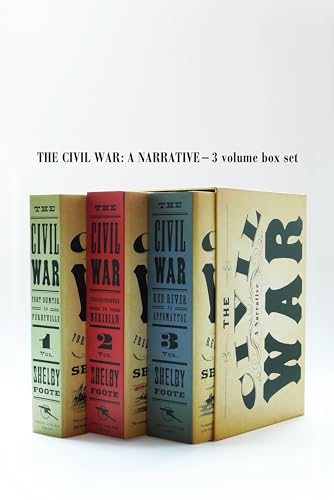
Foote's three-volume narrative history is the most widely read Civil War series in American history. Ken Burns's 1990 documentary series made Foote a household name, and for good reason: he writes Civil War history like a novelist, with vivid character portraits, tense battle narration, and a storytelling rhythm that makes a 3,000-page series feel fast.
The caveat: Foote writes from a Southern perspective and has been criticized for romanticizing the Confederacy. Read him for the narrative quality and the incomparable detail, but pair him with McPherson for the harder political and moral analysis. The two together give you a more complete picture than either alone.
7. For Cause and Comrades: Why Men Fought in the Civil War (James McPherson)
A different kind of Civil War book. McPherson read 25,000 letters and 249 diaries from Union and Confederate soldiers to understand why men who were being killed at rates that would shock modern sensibilities kept fighting. The answer is more complex than "the North fought to free the slaves" or "the South fought for states' rights."
Men fought for ideology, for their comrades, for their own honor and self-image, out of fear of shame, out of genuine patriotism (on both sides), and occasionally from the kind of combat addiction that war produces in some people. This is the best account of the Civil War soldier's experience from the inside.
8. Lincoln (David Herbert Donald)
The most scholarly single-volume Lincoln biography. Donald spent years in Lincoln's papers and correspondence and presents a Lincoln who was more reactive and less strategically calculating than the legend suggests. His Lincoln is a man of exceptional intelligence who nonetheless often waited for events to force decisions, and whose political instincts were as impressive as his moral ones.
The Reconstruction section is particularly valuable: Donald traces Lincoln's plans for bringing the Southern states back into the Union, which were more lenient than those of the Radical Republicans, and speculates on how the post-war period might have differed if Lincoln had survived.
9. The Half Has Never Been Told: Slavery and the Making of American Capitalism (Edward Baptist)
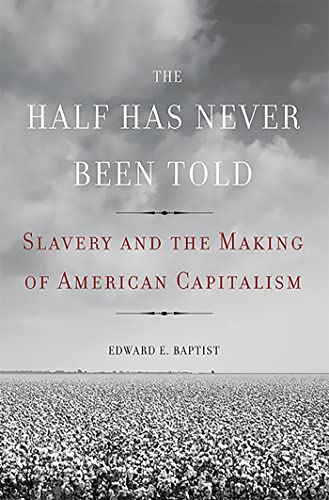
Not strictly a Civil War book but essential context. Baptist argues that the violence of slavery was not incidental to American capitalism but foundational to it: the productivity gains that made cotton king came from brutal and systematic torture, and the wealth generated fueled the industrial expansion of the North as well as the plantation economy of the South.
The book has been criticized by some historians for its sourcing and methodology, but its central claim (that the slave economy was not a premodern remnant but an expanding, modernizing system driving American growth when the Civil War began) is compelling and changes how you understand what the war was about.
10. This Republic of Suffering: Death and the American Civil War (Drew Gilpin Faust)

The Civil War introduced death on a scale Americans had never experienced and had no institutions ready to handle. Bodies were left on battlefields. Soldiers died of disease in camps. Families received news of deaths weeks or months later, with no remains to bury. Faust examines how American culture, religion, and government changed in response to mass death on an industrial scale.
The modern national cemetery system, the practice of embalming, the concept of veterans' care and the pension system, and specific changes in Protestant theology about death and the afterlife all emerged from the Civil War experience. This is history at its most fundamental: how a society processes its own trauma.
Where to Start
If you want the complete history: McPherson's Battle Cry of Freedom is the only book you need for a comprehensive introduction.
If you want the human story: For Cause and Comrades for soldiers, This Republic of Suffering for the home front and aftermath.
If you want the strategic story: Grant's Memoirs for the Western theater, Liddell Hart's Sherman for the final campaigns.
Browse more history reading lists or explore best books about the Cold War for the next chapter in American history.
Your next good book, in your inbox
We only write when we find a book worth your time. Hand-picked recommendations across history, mythology, true crime and more.
Are you an author?
Get your book in front of readers like these, for free.
- Free book listing →Your own book page with an Amazon button
- Author page →Photo, bio and links to your site
- Featured placement →A spot in our best-of lists, from €29
Free tools we recommend
Get free honest reviewsReview exchange on iWrity, free to join
Books You Might Like

It Ends with Us: A Novel
Colleen Hoover

The Seven Husbands of Evelyn Hugo: A Novel
Taylor Jenkins Reid

The Song of Achilles
Madeline Miller

Educated: A Memoir
Tara Westover