Best Books About Cold War Espionage: 10 Essential Reads
PICTURE THIS: two superpowers, each with thousands of nuclear warheads pointed at the other, choosing to fight their war in the shadows. Spies recruited at universities, defectors handed over on bridges in Berlin, moles buried inside the CIA and MI6 for decades. Cold War espionage was not Hollywood fiction. It was the actual policy of governments. These 10 books tell the real story.
Why Cold War Spy Books Still Matter
The intelligence failures and successes of 1947 to 1991 shaped the agencies, methods, and assumptions that govern intelligence work today. Reading these books is not nostalgia. It is context for understanding how governments actually operate when they think no one is watching.
The 10 Best Books
1. The Spy and the Traitor by Ben Macintyre
The story of Oleg Gordievsky, a KGB officer who became the most valuable British asset of the Cold War. Macintyre had unparalleled access and writes it like a thriller because it was one. Gordievsky spent years reporting to MI6 while rising through KGB ranks, then needed a defection plan so perfect that the Russians still do not fully understand how he escaped. Essential reading.
2. The Main Enemy by Milton Bearden and James Risen
Written by a former CIA station chief, this covers the final decade of the CIA-KGB battle from inside the agency. The Afghan operation, the hunt for moles, and the collapse of the Soviet Union from an operational perspective. Bearden ran actual operations described in the book, which makes the detail unusual.
3. Spymaster by Tennent Bagley
Bagley was a CIA officer who spent years trying to determine whether Yuri Nosenko, a KGB defector, was genuine or a plant. The book is a forensic argument that Nosenko was sent to mislead the CIA about the JFK assassination and Lee Harvey Oswald's time in the USSR. Whether you accept his conclusion or not, the inside view of counterintelligence paranoia is remarkable.
4. A Spy Among Friends by Ben Macintyre
The Kim Philby story, told through his friendship with Nicholas Elliott, the MI6 officer who finally confronted him. Philby was the highest-ranking British spy ever to defect to the Soviet Union, and he was closest friends with the men he was betraying. A study in how charm and social confidence can override institutional skepticism for decades.
5. The Billion Dollar Spy by David Hoffman
Adolf Tolkachev was an electronics engineer who walked into the US Embassy in Moscow in 1977 and offered to sell the Soviets' entire radar and avionics program. He was motivated not by money but by hatred of the Soviet system after it destroyed his family. The CIA's handling of Tolkachev over several years is a case study in tradecraft under surveillance in a police state.
6. The Confessions of a Spy by Pete Earley
Based on extensive interviews with Aldrich Ames, the CIA officer who sold the identities of dozens of US agents inside the Soviet Union to the KGB. At least ten were executed. Ames explains his motivations, his methods, and how he passed polygraphs for years. Alarming in what it reveals about institutional failure.
7. Operation Mincemeat by Ben Macintyre
Macintyre appears three times on this list for good reason. This one covers Operation Mincemeat, the British deception plan to convince Germany that the 1943 Allied invasion would target Greece rather than Sicily. The operation used a corpse, a fake identity, and fabricated documents. It worked. The invasion of Sicily succeeded largely because the Germans had moved troops to Greece.
8. The Spy Who Came in from the Cold by John le Carre
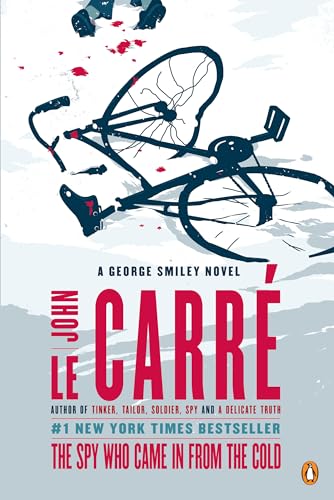
The novel that permanently changed how people think about Cold War espionage. Le Carre's fictional world is morally ambiguous, bureaucratically compromised, and nothing like James Bond. When it was published in 1963, Graham Greene called it the best spy novel he had ever read. It holds up because the institutional cynicism it describes was based on le Carre's own time in British intelligence.
9. Circle of Treason by Sandra Grimes and Jeanne Vertefeuille
Written by two CIA officers who spent years hunting the mole who turned out to be Aldrich Ames. The inside account of a counterintelligence investigation where the subject worked in the same office as the investigators. A detailed, methodical account of how the CIA finally identified Ames after a decade of losses.
10. Battleground Berlin by David Murphy, Sergei Kondrashev, and George Bailey
A rare collaboration between a CIA officer and a KGB officer who were adversaries during the Berlin operations of the 1950s. Both sides contributed documents and perspective. The Berlin Tunnel, the double agents, and the intelligence picture from both sides of the same operations. Nothing quite like it exists for any other Cold War intelligence episode.
Where to Start
If you have never read Cold War espionage history, start with The Spy and the Traitor. If you want the CIA operational perspective, start with The Main Enemy. If you want fiction that captures the moral reality better than most non-fiction, read The Spy Who Came in from the Cold first.
Your next good book, in your inbox
We only write when we find a book worth your time. Hand-picked recommendations across history, mythology, true crime and more.
Are you an author?
Get your book in front of readers like these, for free.
- Free book listing →Your own book page with an Amazon button
- Author page →Photo, bio and links to your site
- Featured placement →A spot in our best-of lists, from €29
Free tools we recommend
Get free honest reviewsReview exchange on iWrity, free to join
Books You Might Like

It Ends with Us: A Novel
Colleen Hoover

The Seven Husbands of Evelyn Hugo: A Novel
Taylor Jenkins Reid

The Song of Achilles
Madeline Miller

Educated: A Memoir
Tara Westover