Best Books About the Cold War: 10 That Explain the Superpower Struggle That Shaped the World
The Cold War was not cold. Proxy wars in Korea, Vietnam, Angola, and Afghanistan killed millions. The nuclear standoff held the entire world hostage for four decades. The CIA and KGB subverted governments on every continent. Understanding this conflict requires more than knowing the big events. It requires understanding the ideologies, the personalities, and the paranoia on both sides. These ten books provide that understanding.
1. The Cold War: A New History by John Lewis Gaddis
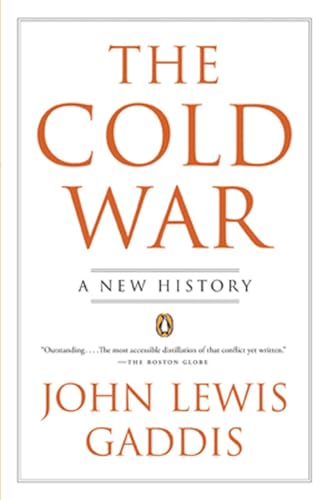
Gaddis is the foremost American historian of the Cold War, and this 2005 synthesis draws on archives from both sides opened after 1991. He covers the entire conflict from Yalta to the fall of the Soviet Union with clarity and authority. If you read one comprehensive overview, make it this one.
2. The Spy and the Traitor by Ben Macintyre
Macintyre's account of Oleg Gordievsky, the KGB colonel who became Britain's most valuable Cold War spy, reads like a thriller but is entirely true. It is the best book about Cold War intelligence for general readers, revealing how both sides operated and how personal conviction drove individuals to act against their own governments.
3. We Now Know: Rethinking Cold War History by John Lewis Gaddis
Gaddis's earlier work, published in 1997 as the first Soviet archives were being opened, revised the standard American narrative in important ways. He shows how both sides bear responsibility for the conflict's escalation and how ideology drove decisions that seemed irrational from a pure power-politics perspective.
4. The Dead Hand by David Hoffman
Hoffman's account of the Soviet nuclear weapons program and the secret Perimeter doomsday system reveals how close the world came to catastrophe not through intentional war but through bureaucratic dysfunction and misunderstanding. The Able Archer exercises in 1983, when NATO war games nearly convinced the Soviet leadership that a real attack was beginning, are the centerpiece.
5. Thirteen Days by Robert F. Kennedy
Kennedy's memoir of the Cuban Missile Crisis is the best firsthand account of what the thirteen days in October 1962 felt like from inside the White House. The world came closer to nuclear war during those days than at any other point in the Cold War, and Kennedy's account captures both the decision-making process and the human stakes.
6. The Prize by Daniel Yergin
Yergin's Pulitzer Prize-winning history of oil is essential Cold War reading because oil drove so many of the conflict's proxy struggles. The Middle East, the Gulf, and Central Asia were Cold War battlefields in large part because of their hydrocarbon reserves. You cannot understand American and Soviet foreign policy in these regions without understanding oil.
7. Legacy of Ashes by Tim Weiner
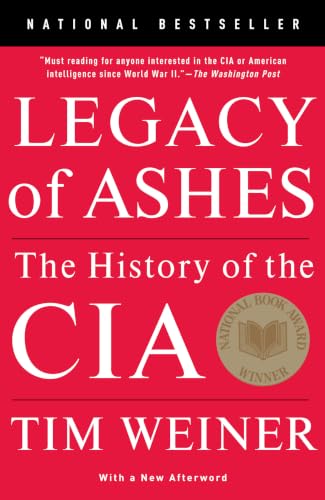
Weiner's Pulitzer Prize-winning history of the CIA, based on tens of thousands of declassified documents, is a devastating account of failure and excess. It covers the CIA's history from its founding through the post-9/11 era and shows how the Cold War's demands for covert action created an institution that routinely harmed American interests while intending to protect them.
8. The Unwinding: An Inner History of the New America by George Packer
Packer's account of America's internal transformation connects the Cold War's end and the disappearance of the Soviet threat to the domestic crises that followed. When the unifying purpose of anticommunism disappeared, what held American society together? His answer is uncomfortable but necessary.
9. Berlin: The Downfall 1945 by Antony Beevor
Berlin was the symbolic heart of the Cold War, divided for 44 years by the Wall. Beevor's account of the battle that created that division, the Soviet assault on Berlin in April and May 1945, is essential context for understanding why the Cold War began where and how it did.
10. The Fate of the West by Bill Emmott
Emmott's analysis of the institutions the Cold War built and the threats they now face closes the list. NATO, the EU, and the liberal international order were Cold War products. Understanding what they were designed to do, and why they are now under strain, is the essential lesson of the Cold War for the present.
The Cold War ended in 1991 but its consequences are still playing out. These ten books explain why that is and give you the historical foundation to understand a world still shaped by those forty-four years.
Your next good book, in your inbox
We only write when we find a book worth your time. Hand-picked recommendations across history, mythology, true crime and more.
Are you an author?
Get your book in front of readers like these, for free.
- Free book listing →Your own book page with an Amazon button
- Author page →Photo, bio and links to your site
- Featured placement →A spot in our best-of lists, from €29
Free tools we recommend
Get free honest reviewsReview exchange on iWrity, free to join
Books You Might Like

It Ends with Us: A Novel
Colleen Hoover

The Seven Husbands of Evelyn Hugo: A Novel
Taylor Jenkins Reid

The Song of Achilles
Madeline Miller

Educated: A Memoir
Tara Westover