Best Books About the Enlightenment in 2026: 10 That Show How Reason Rewired the Western World
THE ENLIGHTENMENT was the 18th century's attempt to apply reason to everything: government, religion, economics, history, human nature, and happiness. The results included the American Constitution, the French Revolution, modern science, and the abolition of slavery. These 10 books explain how a handful of European intellectuals changed the terms of political and moral life for the next 300 years.
What Makes the Enlightenment Difficult to Read About
The Enlightenment is a contested term. Historians argue about when it started, whether it was one movement or several, whether its consequences were liberating or destructive, and whether the 21st century is better understood as the Enlightenment's heir or its failure.
The books on this list represent the main positions in that argument. Peter Gay and Jonathan Israel disagree about which strand of the Enlightenment mattered most. Steven Pinker argues the Enlightenment project is unfinished and worth defending. Anthony Pagden shows how Enlightenment ideas still shape international law and global governance. Reading them together gives you a much more complete picture than any single account can offer.
10 Best Books About the Enlightenment in 2026
1. The Enlightenment: An Interpretation (2 vols) — Peter Gay
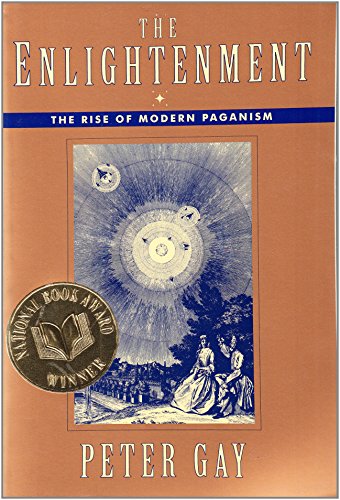
The standard scholarly account of the Enlightenment, published in 1966-1969 and still the starting point for serious study. Gay's argument: the Enlightenment was a family of minds united by a commitment to criticism of traditional authority, a belief in the power of reason and observation, and an agenda for reform of law, politics, and religion. The movement was not anti-religious in a crude sense but critical of organized religion's claim to define what human beings could know and do.
The two volumes (The Rise of Modern Paganism and The Science of Freedom) cover the intellectual context in the first and the specific programs of reform in the second. Dense but rewarding. Nothing else on this list gives you the same foundation.
2. Radical Enlightenment — Jonathan Israel
Israel's major argument, developed across three enormous volumes (this is the first): that modern liberal democracy did not come from Locke, Newton, and Voltaire (the moderate Enlightenment) but from Spinoza, Bayle, and d'Holbach (the radical Enlightenment). The moderates wanted reform within existing institutions. The radicals wanted to replace the institutions entirely with something built on reason, democracy, and equality.
Israel's thesis is controversial among historians, but it forces a reckoning with the question of which Enlightenment ideas actually produced the world we live in. The book is long and demanding. The argument is worth the effort.
3. Enlightenment Now — Steven Pinker
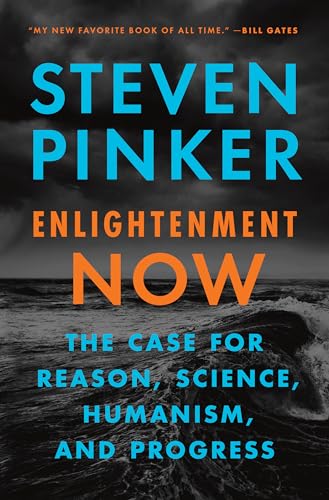
The most widely read contemporary defense of Enlightenment values. Pinker's argument: human life has improved by almost every measurable metric over the past 200 years, and the reason is the Enlightenment program of reason, science, and humanism. Crime, violence, poverty, disease, and war are all down. Literacy, health, life expectancy, and political freedom are all up.
The book is polemical and the statistics are sometimes oversimplified. But Pinker's basic point, that progress is real and that the Enlightenment produced it, is a useful corrective to both conservative nostalgia and progressive pessimism. It is also the most readable book on this list by a wide margin.
4. The Enlightenment: And Why It Still Matters — Anthony Pagden
Pagden's argument is different from Gay's and Israel's: the Enlightenment mattered primarily because it created the concept of a shared humanity that transcended national, religious, and cultural boundaries. Cosmopolitanism, human rights, international law, the idea that all people have claims on each other's sympathy and justice: these are Enlightenment ideas, and they are still the best intellectual tools we have for thinking about global politics.
The book is written for general readers and covers Enlightenment thought from Diderot's Encyclopedie through the American and French revolutions to the present. Strong on how Enlightenment ideas traveled and transformed as they moved across Europe and the Atlantic.
5. The Enlightenment (Cambridge Introduction) — Dorinda Outram
The best short introduction to the period. Outram covers the major figures, the key debates, the geographic spread from France and Scotland to Germany and the Americas, and the contested legacy of the movement in under 200 pages. Clear writing, no jargon, and good on the parts of the Enlightenment that other introductions skip: women's roles, colonialism, and the relationship between Enlightenment universalism and European expansion.
Start here if you want a map of the terrain before going deeper.
6. Candide — Voltaire
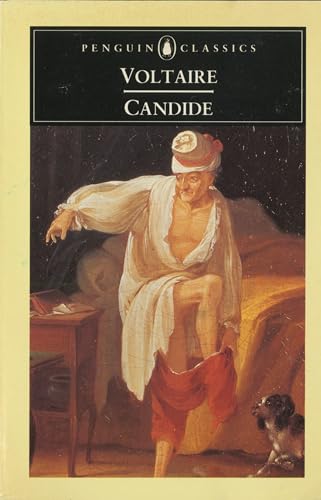
Published in 1759, this is the Enlightenment's most readable primary source. Voltaire's short satirical novel follows the naive Candide through a series of disasters (earthquake, war, Inquisition, slavery) that comprehensively demolish the philosophical optimism of Leibniz, who had argued that we live in the best of all possible worlds. The target is not optimism as such but complacency: the idea that suffering is part of a divine plan and therefore not our responsibility to change.
Candide is funny, fast, and still sharp after 265 years. It captures what the Enlightenment was against better than any secondary account.
7. Rameau's Nephew — Denis Diderot
Diderot's most unusual work, written in the 1760s and not published until 1805. A dialogue between a philosopher ("Me") and a morally unscrupulous musician (the nephew of composer Jean-Philippe Rameau), it is also the Enlightenment's most searching self-critique. The nephew argues that social conventions are hypocritical all the way down, that virtue and vice are performances, and that the philosopher's commitment to reason is just another form of vanity.
Diderot, who spent decades editing the Encyclopedie as the Enlightenment's great collective project, apparently found it necessary to put the best arguments against his own project in writing. The result is one of the most interesting texts in Western philosophy.
8. The Decline and Fall of the Roman Empire — Edward Gibbon
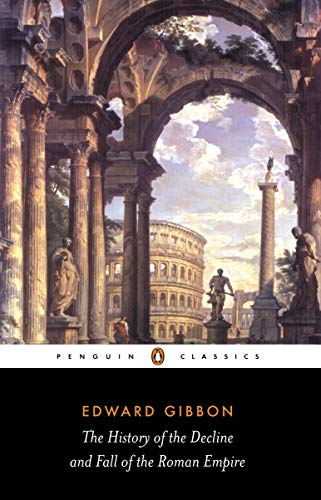
Gibbon published the first volume in 1776, the same year as the American Declaration of Independence, and the work is one of the major achievements of Enlightenment historical writing. His method: apply reason and evidence to the historical record without deference to tradition or theology. His argument: Rome fell partly because Christianity diverted the energies of the empire inward toward theological disputes and away from the civic and military virtues that had made Rome great.
The argument was scandalous in 1776. The prose is some of the finest in the English language. Most readers today focus on the first two volumes, which cover the height and decline of the Western Empire.
9. The Ends of Life: Roads to Fulfilment in Early Modern England — Keith Thomas
Not strictly an Enlightenment text but essential context: Thomas's history of what English men and women in the 16th and 17th centuries believed gave life meaning. Military prowess, personal religion, friendship, nature, posterity, and fame all feature. The book shows the world the Enlightenment was transforming: one where meaning came from inherited social roles and divine order rather than individual choice.
Thomas is the author of 'Religion and the Decline of Magic', one of the great works of social history. The Ends of Life is shorter, more personal, and a perfect complement to any Enlightenment history because it shows what the Enlightenment was departing from.
10. Happiness: A History — Darrin McMahon
The Enlightenment invented the modern concept of happiness as something attainable in this life through human effort and good institutions, rather than something earned in the next life through obedience and suffering. McMahon traces that idea from ancient Greece through the Enlightenment to the present, showing how the promise of happiness became both the central claim of modern politics and one of its most persistent disappointments.
The chapter on the Enlightenment philosophers who made happiness a political goal (Jefferson's "pursuit of happiness" is directly from this tradition) is the best short account of why the concept mattered and where it went wrong.
Where to Start in 2026
No background in the period: Outram's Cambridge introduction for orientation, then Voltaire's Candide to feel the movement from the inside.
Want the big scholarly argument: Peter Gay's two-volume history is the foundation; Israel's Radical Enlightenment is the challenge to it.
Want the contemporary argument: Pinker's Enlightenment Now is the most readable case for why the period still matters.
Browse more history reading lists or see the best books about the Renaissance for the intellectual movement the Enlightenment was building on.
Your next good book, in your inbox
We only write when we find a book worth your time. Hand-picked recommendations across history, mythology, true crime and more.
Are you an author?
Get your book in front of readers like these, for free.
- Free book listing →Your own book page with an Amazon button
- Author page →Photo, bio and links to your site
- Featured placement →A spot in our best-of lists, from €29
Free tools we recommend
Get free honest reviewsReview exchange on iWrity, free to join
Books You Might Like

It Ends with Us: A Novel
Colleen Hoover

The Seven Husbands of Evelyn Hugo: A Novel
Taylor Jenkins Reid

The Song of Achilles
Madeline Miller

Educated: A Memoir
Tara Westover