Best Books About the Inca Empire: 10 That Reveal the World's Largest Pre-Columbian State
At its height, the Inca Empire stretched 4,000 miles along the western edge of South America, from modern Colombia to central Chile. It was the largest empire in the pre-Columbian Americas, and it built it without the wheel, without a written language, and without iron tools. Within two years of Francisco Pizarro's arrival in 1532, it was gone. These ten books explain how the Inca built their empire and why it fell so fast.
1. The Last Days of the Incas by Kim MacQuarrie
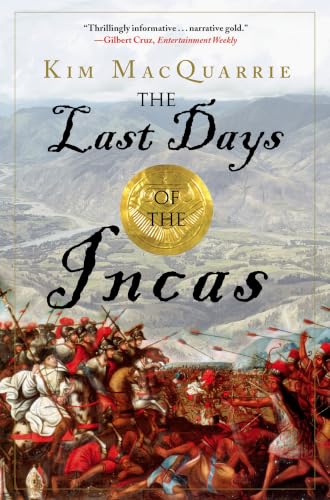
MacQuarrie's narrative account of the Spanish conquest is the most readable English-language history of the Inca collapse. He draws on both Spanish colonial sources and Andean oral traditions to reconstruct the events of 1532-1572. The book does not treat the conquest as inevitable: he shows how close the Inca came to repelling the Spanish several times, and what decisions, on both sides, changed the outcome.
2. The Incas by Terence D'Altroy
D'Altroy is one of the leading archaeologists specializing in the Inca period. This is a comprehensive scholarly overview that covers Inca governance, economics, religion, and material culture, drawing extensively on archaeological evidence rather than just Spanish colonial accounts. It is the most reliable single-volume overview currently available.
3. Inca Land by Hiram Bingham III
Bingham was the Yale historian who brought Machu Picchu to international attention in 1911. His account of the expedition reads like an adventure story and gives a vivid picture of the physical landscape of the Inca heartland. Bingham was not an archaeologist in the modern sense, and some of his interpretations are outdated, but as primary source exploration narrative this is indispensable.
4. Turn Right at Machu Picchu by Mark Adams
Adams retraced Bingham's expedition in the early 21st century, alternating between Bingham's 1911 account and his own experience. This is travel writing about the Inca landscape rather than academic history, but it is very good at explaining what Machu Picchu was actually for (nobody knows for certain) and why the various theories differ.
5. The Conquest of the Incas by John Hemming
Hemming's 1970 classic remains the definitive account of the Spanish conquest of Peru. It is more scholarly than MacQuarrie's book and covers the longer aftermath of the conquest through the 1560s and 1570s. If you want a thorough understanding of how the Spanish colonial system dismantled Inca institutions, this is the essential reference.
6. At the Crossroads of the Earth and Sky by Gary Urton
Urton examines Inca cosmology and astronomy, specifically how the Inca conceptualized the sky (through dark cloud constellations rather than star patterns), the earth, and the relationships between them. The book is scholarly but important for understanding how Inca religion shaped everything from city planning to the agricultural calendar.
7. The Shape of Inca History by Susan Niles
Niles focuses on how the Inca understood and represented their own history. The Inca had no writing, but they maintained complex oral traditions and physical records through quipus (knotted strings). This book examines how historical memory worked in the Inca system and what was lost when the quipus were destroyed or became unreadable.
8. 1491 by Charles Mann

Mann's broader overview of pre-Columbian America devotes substantial attention to the Inca. His argument that the Americas before Columbus were more populated, more sophisticated, and more ecologically managed than previously assumed applies with particular force to the Inca, who transformed the Andes through terraced agriculture and managed the largest road network in the ancient world.
9. Machu Picchu: A Civil Engineering Marvel by the National Geographic Society
This illustrated volume covers the engineering of Machu Picchu specifically: how the Inca designed the drainage system, why the site has not collapsed despite 600 years of earthquakes, how the stone fitting was achieved without mortar, and what recent archaeological work has revealed about who lived there and why. A good complement to the more narrative histories.
10. The Peru Reader: History, Culture, Politics edited by Orin Starn
This anthology covers Peru from the Inca period through the 20th century, including primary sources, academic essays, and literary pieces. For readers who want to understand modern Peru in relation to its Inca past, this collection provides the historical continuity that single-period books miss.
The Inca built the largest empire in the Americas without a writing system, with stone tools, and at altitudes that would challenge modern mountaineers. These ten books explain how they did it and why it ended so suddenly.
Your next good book, in your inbox
We only write when we find a book worth your time. Hand-picked recommendations across history, mythology, true crime and more.
Are you an author?
Get your book in front of readers like these, for free.
- Free book listing →Your own book page with an Amazon button
- Author page →Photo, bio and links to your site
- Featured placement →A spot in our best-of lists, from €29
Free tools we recommend
Get free honest reviewsReview exchange on iWrity, free to join
Books You Might Like

It Ends with Us: A Novel
Colleen Hoover

The Seven Husbands of Evelyn Hugo: A Novel
Taylor Jenkins Reid

The Song of Achilles
Madeline Miller

Educated: A Memoir
Tara Westover