Best Books About the Industrial Revolution: 10 That Explain How It Changed Everything
THE INDUSTRIAL REVOLUTION did not feel like progress to the people living through it. Children worked 14-hour days in cotton mills. Handloom weavers watched their livelihoods collapse in a decade. Cities that had been market towns grew into smoke-choked industrial centers faster than anyone could manage them. These books explain how it happened, who it destroyed, and why the world that came out the other side looks like ours.
What Makes a Good Industrial Revolution Book?
The Industrial Revolution is often taught as a story of invention: Watt's steam engine, Hargreaves's spinning jenny, Stephenson's rocket. That framing makes it feel inevitable and triumphant. The best books on this list take a different approach. They ask who paid the cost of industrialization and whether the benefits were worth it, or at least, worth it to whom.
The period runs roughly 1760 to 1850 in Britain, though industrialization spread to continental Europe and America across the 19th century. A good book picks a focus: technology, economics, labor, social structure, or the spread of industrial methods abroad.
10 Best Books About the Industrial Revolution
1. The Making of the English Working Class — E.P. Thompson
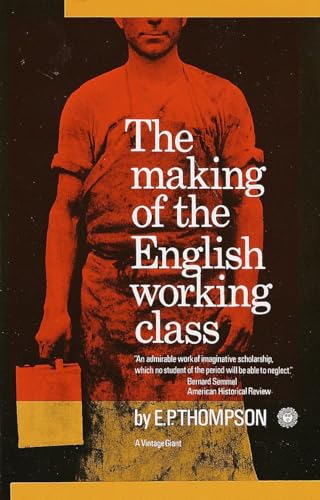
The essential text on industrialization from below. Thompson was a historian at the University of Warwick who spent years in the primary sources: pamphlets, trial records, parliamentary testimonies, letters from workers who could barely read and write. The result is 900 pages that put faces on the people who operated the looms, dug the canals, and got smashed when the machinery of production ground them down.
Thompson's central argument is that the working class was not simply produced by industrialization. Workers made themselves a class through collective action, culture, and shared experience of exploitation. The Luddites, for instance, were not anti-technology primitives. They were skilled craftsmen making a rational economic argument that machinery was destroying their trade without sharing the gains.
2. The Enlightened Economy: An Economic History of Britain 1700-1850 — Joel Mokyr
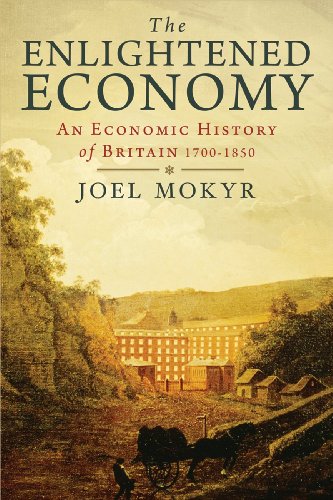
The best answer to "why Britain?" Mokyr is an economic historian who argues that the Industrial Revolution was ultimately a product of the Enlightenment: a culture that valued practical knowledge, linked it to economic application, and had the institutional infrastructure to let inventors profit from their ideas.
He goes through every competing explanation and weighs the evidence: coal geography, trade routes, colonial markets, Protestant work ethic, enclosure of common land. None of these alone explains why Britain industrialized when it did. The combination of Enlightenment culture and specific British institutions is his answer.
Dense but readable. Best for readers who want the economic argument rather than narrative history.
3. Albion's Seed: Four British Folkways in America — David Hackett Fischer
Technically about colonial America rather than Britain, but essential context for understanding how the Industrial Revolution's social tensions crossed the Atlantic. Fischer traces four distinct migration streams from Britain to colonial America and shows how different regions of England sent different cultures: Puritan New England, Cavalier Virginia, Quaker Delaware, and Scots-Irish Appalachia.
The industrial era brought new waves of migration, and the social conflicts of industrializing Britain played out again in American factory towns and labor struggles. This book explains why those conflicts took different forms in different places.
4. Coal: A Human History — Barbara Freese
Coal powered the Industrial Revolution. Freese's book follows coal from its first use in medieval Britain through the age of steam, the labor movement, and into the 20th century. It reads like a biography of an energy source that made modern civilization possible and may yet undo it.
The chapter on 19th-century coal mining conditions is as shocking as anything in E.P. Thompson. Children as young as six worked as "trappers," sitting alone in underground passages for 12-hour shifts to open ventilation doors when coal wagons passed. Freese draws the line between those conditions and the labor movements that eventually changed them.
5. The Victorian Internet — Tom Standage
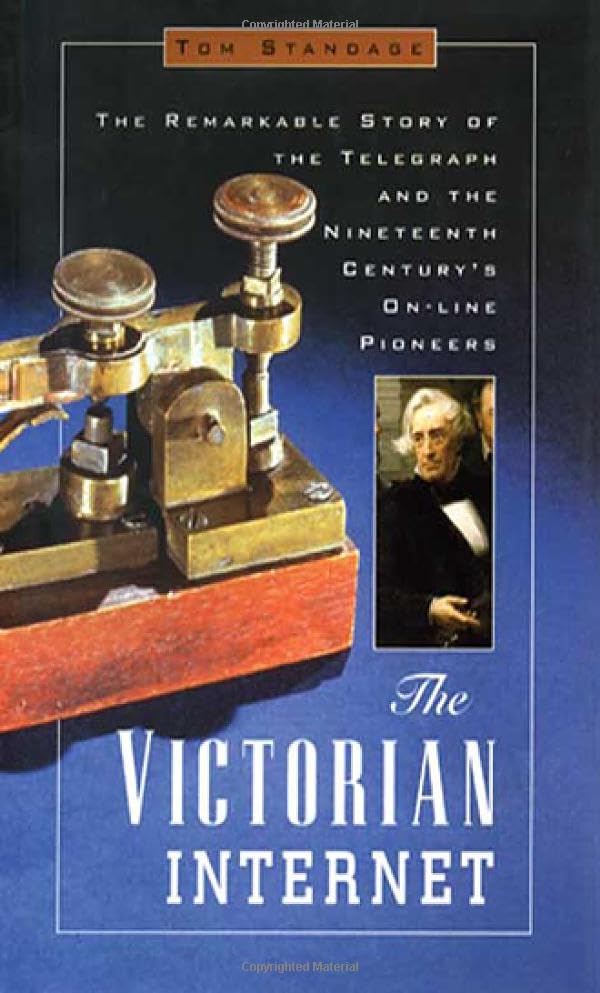
The telegraph was to the 1840s what the internet was to the 1990s: a disruptive technology that transformed how information moved, how businesses operated, and what people thought was possible. Standage's short, sharp book draws the parallel explicitly and uses it to make the Industrial Revolution feel immediately relevant.
This is history writing at its most accessible: fast-paced, full of individual stories, and structured around a compelling argument. The chapters on stock market fraud enabled by telegraphs and the moral panics about women talking to strangers via the new technology will feel very familiar.
6. Spinning the Web: The Story of the Cotton Industry — Peter Kirby
Cotton was the first industry to mechanize at scale. The Lancashire cotton mills were where the factory system was invented, where child labor was first systematically organized, and where the first labor movements emerged. Kirby follows the industry from its origins in domestic production through mechanization and the eventual decline of the Lancashire mills in the 20th century.
Particularly good on the economic geography of industrialization: why cotton mills clustered in Lancashire (water power from Pennine streams, damp climate that prevented thread breakage, existing wool industry providing skills and merchant networks). The accident of geography that made Lancashire the birthplace of industrial capitalism.
7. The Worse There Is, the Better — Asa Briggs
Briggs was one of the leading historians of Victorian Britain, and this collection of essays covers the social history of industrialization with clarity and depth. Topics include the origins of public health reform (cholera epidemics in industrial cities), the development of the press, the relationship between industrial wealth and the arts, and the transformation of urban life.
Each essay stands alone, making this a good book to read in pieces. The essay on Edwin Chadwick and the sanitary reform movement is especially good: Chadwick's statistical investigation of disease in industrial towns was the first systematic public health survey in Britain and directly led to the Public Health Act of 1848.
8. The Lunar Men: Five Friends Whose Curiosity Changed the World — Jenny Uglow
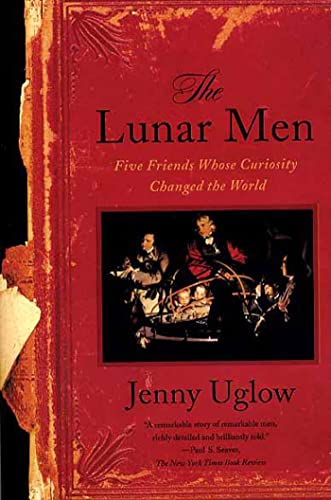
The story of the Lunar Society of Birmingham, an informal group of manufacturers, scientists, and intellectuals who met monthly (on the night of the full moon, for the light to travel home by) and collectively drove many of the key innovations of the early Industrial Revolution.
Members included James Watt, Josiah Wedgwood (the pottery industrialist), Joseph Priestley (who discovered oxygen), and Erasmus Darwin (Charles Darwin's grandfather). Uglow writes about them as a friendship group rather than a historical abstraction, and the result is a book about how ideas spread and how scientific curiosity connects to industrial application. One of the most human accounts of how the Industrial Revolution actually happened.
9. Hard Times — Charles Dickens
The only novel on this list. Dickens published Hard Times in 1854, at the height of industrialization, and it is the most pointed attack on the factory system ever written in fiction. Set in the fictional mill town of Coketown (widely understood to be Preston, Lancashire), it follows the Gradgrind family and the mill workers whose lives are ground down by the combination of industrial labor and utilitarian philosophy.
Dickens is not subtle. Gradgrind's philosophy of pure fact and utility, applied to education and work, is presented as a machine for destroying human feeling. The mill owner Bounderby is a fraud and a bully. But Dickens was not wrong about the conditions he describes, and the novel's emotional power is grounded in careful observation of actual mill towns.
10. The Second Machine Age — Erik Brynjolfsson and Andrew McAfee
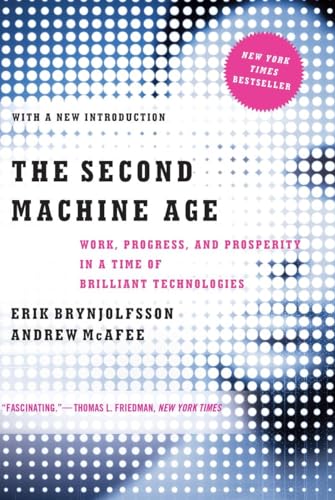
The most useful book for understanding the Industrial Revolution is sometimes a book about right now. Brynjolfsson and McAfee argue that the digital revolution is the second machine age: a period of rapid technological transformation comparable to the original Industrial Revolution, producing similar disruptions to labor markets, similar concentrations of wealth, and similar social conflicts.
Reading this alongside E.P. Thompson makes the 19th century feel very present. The Luddites' complaint that technological gains were not being shared with workers looks a lot like the arguments being made today about automation and inequality. The Industrial Revolution did not end well for the first generation of people it transformed. The second machine age may not either.
Where to Start
If you know nothing about the Industrial Revolution: start with Uglow's Lunar Men for the human story of how it happened, then move to E.P. Thompson for what it did to ordinary people.
If you want the economic argument: Mokyr's Enlightened Economy is the most rigorous single-volume answer to why Britain, why then.
If you want the technological story: Coal by Barbara Freese and The Victorian Internet by Standage, read back to back.
Browse more history reading lists or jump to best books about the British Empire for the global context of what industrialization produced.
Your next good book, in your inbox
We only write when we find a book worth your time. Hand-picked recommendations across history, mythology, true crime and more.
Are you an author?
Get your book in front of readers like these, for free.
- Free book listing →Your own book page with an Amazon button
- Author page →Photo, bio and links to your site
- Featured placement →A spot in our best-of lists, from €29
Free tools we recommend
Get free honest reviewsReview exchange on iWrity, free to join
Books You Might Like

It Ends with Us: A Novel
Colleen Hoover

The Seven Husbands of Evelyn Hugo: A Novel
Taylor Jenkins Reid

The Song of Achilles
Madeline Miller

Educated: A Memoir
Tara Westover