Best Books About the Mongols: 10 That Show How They Built the World's Largest Empire
The Mongol Empire was the largest contiguous land empire in history. Within 80 years of Genghis Khan's first campaigns, the Mongols controlled territory from Korea to Hungary. What makes this so remarkable is not just the scale of the conquest but what came after it: a period of trade, cultural exchange, and plague that reshaped the medieval world. These ten books take you through all of it.
What are the best books about the Mongols?
The best books about the Mongols are Jack Weatherford's Genghis Khan and the Making of the Modern World for the big-picture case, The Secret History of the Mongols for the only Mongolian-language primary source, John Man's The Mongol Empire for accessible narrative history, and Morris Rossabi's The Mongols: A Very Short Introduction for a scholarly overview. Start with Weatherford.
1. Genghis Khan and the Making of the Modern World by Jack Weatherford

Weatherford's argument is provocative: Genghis Khan was one of the most important civilizational forces in history, not just a destroyer. He broke down the walls that separated the Mediterranean from China, established trade routes, introduced paper money to conquered territories, and created religious tolerance as official policy. This book changed how millions of people think about the Mongols.
2. The Secret History of the Mongols
This is the only Mongolian-language account of Genghis Khan's life and the early Mongol Empire, written shortly after his death. It reads like an epic poem and a genealogy combined. The translation by Igor de Rachewiltz is considered the most scholarly; Urgunge Onon's translation is more readable. This is the source that every other book about the Mongols draws on.
3. The Mongol Empire: Genghis Khan, His Heirs and the Founding of Modern China by John Man
John Man writes accessible, fact-driven history. This book covers the full arc from Temujin's youth as a slave to the collapse of the empire and the founding of the Yuan Dynasty in China. Man is particularly good at explaining the military innovations that made the Mongol cavalry so effective.
4. The Mongols: A Very Short Introduction by Morris Rossabi
If you want a short, scholarly overview before diving deeper, Rossabi's introduction is excellent. At around 160 pages, it covers the rise, peak, and decline of the empire with strong attention to the non-military aspects: governance, trade, and cultural legacy.
5. Genghis Khan: Life, Death, and Resurrection by John Man
A more focused biography of Genghis Khan himself. Man draws on recent archaeological work, including the ongoing search for Genghis Khan's tomb, to fill in details that older biographies missed. This is one of the more up-to-date accounts of his life.
6. The Mongol Conquests in World History by Timothy May
May focuses on the military and political history of the conquests in a way that is more analytical than narrative. If you want to understand how the Mongols actually defeated much larger armies repeatedly, this is the book to read. It covers campaigns in China, the Middle East, and Europe with careful attention to tactics.
7. Empires of the Silk Road by Christopher I. Beckwith
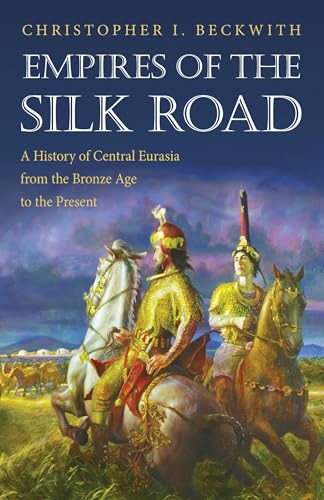
Beckwith's thesis is that the steppe empires, including the Mongols, were not peripheral to world history but central to it. The Silk Road was not a Chinese or Roman road; it was a steppe road maintained by nomadic confederacies. This is a challenging, revisionist work that rewards careful reading.
8. The Great Mortality by John Kelly
This book is about the Black Death, which spread along the Mongol trade routes in the mid-14th century. Kelly argues that Mongol globalization created the conditions for the plague to move from Central Asia to Europe within years. The book is about the plague itself, but the Mongol context is essential to understanding how it spread.
9. Marco Polo: The Journey by Paolo Novaresio
Marco Polo's account of his journey to Kublai Khan's court is the most famous first-person document from the Mongol Empire. This illustrated edition presents the text alongside maps and historical context. It is a primary source that feels both contemporary and completely alien.
10. Tamerlane by Justin Marozzi
Tamerlane (Timur) was not a Mongol but claimed to rule in the tradition of Genghis Khan. His campaigns in the late 14th century effectively ended what remained of Mongol political power. This biography is worth reading as the epilogue to the Mongol story.
The Mongols are one of the most misunderstood forces in world history. These ten books give you the destruction, the trade, the culture, and the legacy that lasted centuries after the empire collapsed.
Your next good book, in your inbox
We only write when we find a book worth your time. Hand-picked recommendations across history, mythology, true crime and more.
Are you an author?
Get your book in front of readers like these, for free.
- Free book listing →Your own book page with an Amazon button
- Author page →Photo, bio and links to your site
- Featured placement →A spot in our best-of lists, from €29
Free tools we recommend
Get free honest reviewsReview exchange on iWrity, free to join
Books You Might Like

It Ends with Us: A Novel
Colleen Hoover

The Seven Husbands of Evelyn Hugo: A Novel
Taylor Jenkins Reid

The Song of Achilles
Madeline Miller

Educated: A Memoir
Tara Westover