Best Books About the Fall of the Ottoman Empire: Empire's End and the Modern Middle East
The Ottoman Empire ruled for over 600 years. At its height it controlled southeastern Europe, Anatolia, the Levant, North Africa, and much of Arabia. By 1922 it was gone, replaced by the Republic of Turkey and a Middle East carved up by European powers in ways that planted seeds for conflicts still unresolved today.
Understanding the empire's fall requires understanding what it was, and these books do both.
Top Picks
1. A Peace to End All Peace by David Fromkin
The essential book on how the modern Middle East was created from the wreckage of the Ottoman Empire after World War One. Fromkin traces the decisions made by British and French officials that drew borders and created states with little regard for local populations.
2. The Ottoman Endgame by Sean McMeekin
McMeekin's military and diplomatic history of the Ottoman Empire's final decade, from the Balkan Wars through World War One. He argues that the Ottomans were more strategically sophisticated than they are usually credited, and that their alliance choices were rational given the alternatives.
3. Fall of the Ottomans by Eugene Rogan
Rogan covers the Ottoman experience of World War One from the inside: the campaigns, the military decisions, the home front, and the catastrophic consequences for civilians, including the Armenian genocide. Comprehensive and authoritative.
4. The Ottoman Empire by Donald Quataert
A scholarly overview of the empire from its founding to its dissolution, placing its fall in the context of the long decline of the 19th century. Essential background for understanding why the empire collapsed so quickly once World War One began.
5. Ataturk by Andrew Mango
The biography of Mustafa Kemal Ataturk, the man who defeated the post-war partition of Anatolia and founded modern Turkey. Understanding Ataturk is essential for understanding what the Ottoman Empire became and what it left behind.
6. The Ottoman Age of Exploration by Giancarlo Casale
A counterintuitive look at Ottoman maritime expansion in the 16th century Indian Ocean, showing the empire at its most dynamic before the long decline. Essential for understanding what was lost.
7. Lawrence in Arabia by Scott Anderson
Anderson follows T.E. Lawrence and three other unlikely protagonists through the Arab Revolt and the end of Ottoman power in Arabia. A narrative history that reads like a thriller while grounding the period in solid research.
8. The Emergence of Modern Turkey by Bernard Lewis
Lewis's classic study of the transformation of Ottoman society in the 19th and early 20th centuries. The intellectual and cultural currents that led both to the empire's reform efforts and its eventual dissolution.
9. Destiny Disrupted by Tamim Ansary
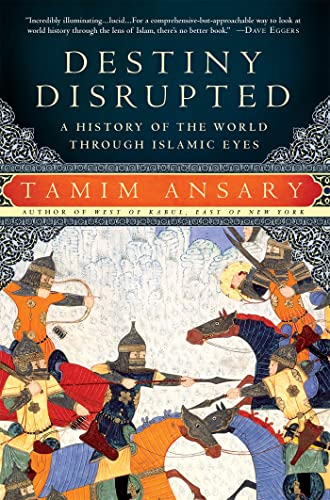
A history of the world from the Islamic perspective, with significant coverage of the Ottoman period and its meaning for Muslims worldwide. Offers a perspective rarely presented in Western historiography of the period.
10. The Middle East: A Brief History of the Last 2,000 Years by Bernard Lewis
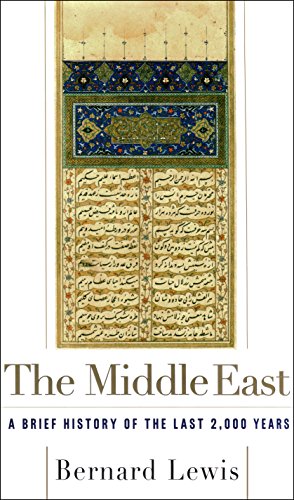
Lewis provides essential long-term context for the Ottoman period and its aftermath. The final chapters on the 20th century show how the borders drawn after 1918 interacted with older religious and ethnic divisions.
Why It Still Matters
The borders created from the Ottoman Empire's dissolution are the borders of modern Iraq, Syria, Lebanon, Jordan, Israel, and Palestine. Most of the conflicts in the region since 1918 have involved disputes over those borders, which were drawn by outsiders with limited knowledge of the populations involved. Understanding how those borders came to exist is essential for understanding the region today.
Your next good book, in your inbox
We only write when we find a book worth your time. Hand-picked recommendations across history, mythology, true crime and more.
Are you an author?
Get your book in front of readers like these, for free.
- Free book listing →Your own book page with an Amazon button
- Author page →Photo, bio and links to your site
- Featured placement →A spot in our best-of lists, from €29
Free tools we recommend
Get free honest reviewsReview exchange on iWrity, free to join
Books You Might Like

It Ends with Us: A Novel
Colleen Hoover

The Seven Husbands of Evelyn Hugo: A Novel
Taylor Jenkins Reid

The Song of Achilles
Madeline Miller

Educated: A Memoir
Tara Westover