Best Books About the Persian Empire: 10 That Reveal the World's First Superpower
The Achaemenid Persian Empire was the first true superpower in human history. At its peak under Darius I, it stretched from the Aegean Sea to the Indus Valley, covering 5.5 million square kilometers and ruling over 44 percent of the world's population. Yet Western history tends to remember it mainly through Greek eyes, as the enemy that invaded at Marathon, Thermopylae, and Salamis. These ten books correct that imbalance.
1. The Persians: Lost Civilizations by Geoffrey Parker
Parker's accessible introduction covers the full arc of Persian civilization from the Achaemenids through the Sassanids. He draws on archaeological evidence and Persian sources rather than defaulting to Greek accounts, giving readers a view of Persia from the inside. The best starting point for anyone new to the subject.
2. Cyrus the Great: The Mightiest Monarch of the Ancient World by Jacob Abbott
Abbott's biography of Cyrus the Great traces how a minor king of Anshan conquered Media, Lydia, and Babylon to create an empire within two decades. Written in the 19th century but still readable, it covers the major events of Cyrus's reign and the administrative innovations he introduced, including the famous policy of religious tolerance that set Persia apart from earlier empires.
3. The Achaemenid Persian Empire by David Llewellyn-Jones
Llewellyn-Jones is one of the leading scholars of ancient Iran, and this is his definitive single-volume study of the Achaemenid dynasty. He covers the political, administrative, and cultural history from Cyrus to Darius III, with particular attention to the royal court, gender and power, and Persian identity. More academic than other entries on this list but essential for a complete understanding.
4. The Persian Wars by Herodotus
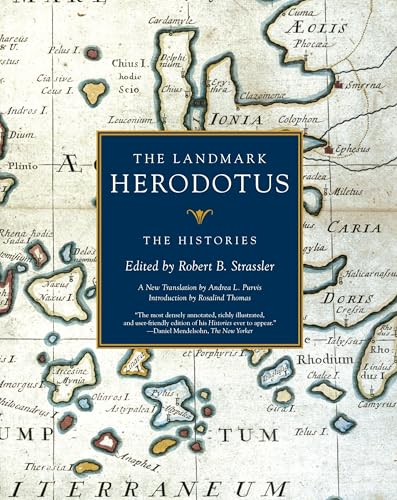
Herodotus is biased, sometimes unreliable, and clearly on the Greek side. Reading him anyway is essential because his account of the Persian Wars shaped how the West understood Persia for two thousand years. The Landmark Herodotus edition, edited by Robert Strassler, is the best English translation with maps, notes, and appendices that put the Greek biases in context.
5. Persian Fire by Tom Holland
Holland's popular history of the Greco-Persian Wars is the most readable account of Thermopylae, Marathon, and Salamis available. He draws on both Greek and Persian sources and treats the Persian Empire as a serious civilization rather than a backdrop for Greek heroism. The writing is cinematic and the research is solid.
6. The Histories of Persia by Olmstead
A.T. Olmstead's classic 1948 work remains the most detailed political history of the Achaemenid Empire in English. Olmstead reads the Persian inscriptions directly and treats them as primary sources equal to the Greek accounts. Dated in some conclusions but still cited by specialists. Best for readers who want depth on the administrative and political structure of the empire.
7. Alexander the Great by Robin Lane Fox
Alexander destroyed the Achaemenid Empire in a decade, and Fox's biography of Alexander is the best account of how. He covers the campaigns from the perspective of both the Macedonians and the Persians they were conquering, and his description of Persepolis and the Persian court gives a vivid picture of what Alexander was dismantling. Essential context for understanding what the Persian Empire actually was at its end.
8. The Cambridge History of Iran, Vol. 2
The academic reference work for Achaemenid Persia. Multiple scholars cover different aspects of the empire: economy, religion, art, administration, military. Not casual reading but the most comprehensive English-language resource if you want to go deep on a specific topic.
9. Persepolis: The Story of a Childhood by Marjane Satrapi
A graphic memoir set in modern Iran, not ancient Persia, but included here because Satrapi's opening uses the ruins of Persepolis as a frame for understanding Iranian identity across millennia. The contrast between the ancient empire and the Islamic Republic gives readers a different angle on what the Persian cultural tradition means to Iranians today.
10. The Shape of Ancient Thought by Thomas McEvilley
McEvilley's dense scholarly work examines the philosophical and cultural exchanges between Greece and India that ran through Persia. The Persian Empire was the connective tissue between the two great philosophical traditions of the ancient world. This book is for readers who want to understand what the empire meant as a crossroads of ideas, not just as a military and political structure.
The Persian Empire shaped the ancient world more than any other single political entity. These ten books give you that story from multiple angles, from popular history to academic scholarship to primary sources.
Your next good book, in your inbox
We only write when we find a book worth your time. Hand-picked recommendations across history, mythology, true crime and more.
Are you an author?
Get your book in front of readers like these, for free.
- Free book listing →Your own book page with an Amazon button
- Author page →Photo, bio and links to your site
- Featured placement →A spot in our best-of lists, from €29
Free tools we recommend
Get free honest reviewsReview exchange on iWrity, free to join
Books You Might Like

It Ends with Us: A Novel
Colleen Hoover

The Seven Husbands of Evelyn Hugo: A Novel
Taylor Jenkins Reid

The Song of Achilles
Madeline Miller

Educated: A Memoir
Tara Westover