Best Books About the Persian Empire: Cyrus, Darius and the Achaemenids
The Persian Empire, one of history's greatest powers, ruled vast territories from the Mediterranean to the Indus Valley. Yet it often gets overshadowed by Greek and Roman narratives in Western education. These books restore the Persian story to its proper place, revealing the genius of Cyrus the Great, the military ambition of Darius, and the cultural sophistication that made the Achaemenid dynasty the ancient world's most influential superpower.
The Foundations: Cyrus the Great and Empire Building
Cyrus the Great founded the Persian Empire around 550 BCE and immediately set a standard for tolerant governance that was revolutionary for its time. Unlike conquerors who ruled through terror, Cyrus allowed conquered peoples to keep their religions and customs, turning potential enemies into loyal subjects. His most famous act was releasing the Jewish people from Babylonian captivity, earning him praise even in the Hebrew scriptures.
Tom Holland's "Persian Fire" captures this era with vivid narrative power. Holland traces how Cyrus built an empire by innovation rather than brutality, establishing a bureaucratic system that held together territories stretching thousands of miles. The book shows why Cyrus earned the title "father of human rights" from modern scholars. You can find it here: Persian Fire on Amazon.
For a deeper academic treatment, Pierre Briant's "From Cyrus to Alexander" is the definitive scholarly work. Briant, a leading Achaemenid expert, reconstructs Persian history from coins, inscriptions, and Greek sources, showing how the empire actually functioned day to day. Find it here on Amazon.
Darius and the Machine of Conquest
Darius I transformed the Persian Empire into a disciplined war machine. He reorganized the provinces, built the Royal Road that connected the empire's far reaches, and launched campaigns that nearly conquered Greece itself. Darius represented ambition on a continental scale.
Lloyd Llewellyn-Jones' "King and Court in Ancient Persia" details how Darius built the administrative apparatus that made Persian dominance possible. The book reveals the sophistication of the Persian court, the intricate protocols of power, and how Darius projected authority across impossible distances. Available on Amazon.
Christopher Tuplin's "The Persian Wars" explores the military conflicts that defined Darius' reign, particularly his famous invasions of Greece and Egypt. Tuplin reconstructs the strategies, the logistics, and the moment when Persian invincibility collided with Greek resistance at Marathon and later at Salamis.
The Cultural and Religious Legacy
The Achaemenid Empire was not merely military; it was a center of art, architecture, and religious thought. Zoroastrianism, the state religion, influenced later faiths including Judaism, Christianity, and Islam. The architectural monuments at Persepolis remain among the ancient world's greatest achievements.
Jane McIntosh's "The Minoans: From the Stone Age Through the Iron Age" (though primarily about the Minoans) includes comparative analysis of Persian cultural production. For a dedicated study, "Persepolis and Ancient Persia" by Antonio Panaino explores how the capital city symbolized imperial power through architecture and ceremony. This book situates Persian cultural achievements in global context, showing how they rivaled contemporary Greek civilization.
Margaret Cool Root's "The King and the Kingdom" examines how Persian rulers used art, relief sculpture, and royal protocol to communicate power. The intricate reliefs carved into palace walls encoded messages about hierarchy, loyalty, and cosmic order that spoke directly to Persian ideology.
The Fall and Aftermath
Alexander the Great's invasion in 331 BCE ended the Achaemenid dynasty, yet Persian cultural influence outlasted its political power. Greek, Parthian, and Islamic rulers who succeeded the Achaemenids incorporated Persian administrative systems, artistic styles, and court protocols.
Paul Cartledge's "Alexander the Great: The Hunt for a New Past" reassesses Alexander's invasion through Persian sources, revealing what was lost when Persepolis burned. The book argues that we have overlooked Persian perspectives on Alexander's conquest for over two thousand years.
For understanding the post-Achaemenid period, "The Parthians and the Sasanian Persians" provides continuity, showing how Persian civilization persisted and adapted under new dynasties. This broader context reveals that even though the Achaemenid state fell, Persian culture proved nearly indestructible.
Why the Persian Story Matters
Reading about the Persian Empire challenges the "clash of civilizations" narrative that Western education often presents. The Persians were not barbarians at the gates; they were sophisticated administrators, military innovators, and cultural patrons. Their fall to Alexander resulted from specific military mistakes and internal divisions, not cultural inferiority.
These books restore intellectual balance. They show how the ancient world was genuinely multipolar, with the Persian Empire as a central force equal to Greece. For anyone interested in how empires actually function, how tolerance can be a tool of control, and how great civilizations rise and fall, the Persian story is essential reading.
Your next good book, in your inbox
We only write when we find a book worth your time. Hand-picked recommendations across history, mythology, true crime and more.
Books You Might Like

Sapiens: A Brief History of Humankind
Yuval Noah Harari
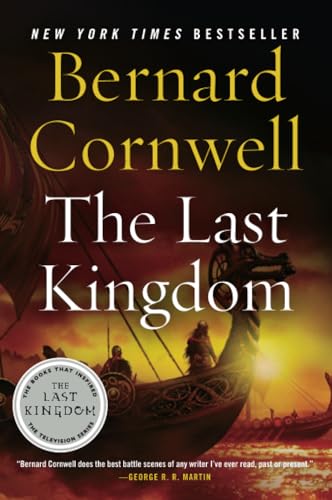
The Last Kingdom (The Saxon Stories, Book 1)
Bernard Cornwell

Meditations
Marcus Aurelius

The Hiding Place
Elizabeth Sherrill, John Sherrill Corrie ten Boom