Best Books About the Silk Road: 10 That Reveal the Greatest Trade Network in History
The Silk Road was never a single road. It was a web of overland and maritime routes stretching from China to the Mediterranean, active for over 1,500 years. Silk, spices, and glass moved along it, but so did religions, plagues, technologies, and ideas that changed every civilization they touched. These ten books are the best guides to this world.
1. The Silk Roads: A New History by Peter Frankopan

Frankopan's 2015 work reframes world history around the Silk Road and Central Asia rather than Western Europe. His argument is that the routes connecting East and West were the actual spine of civilization for most of recorded history, and that our Europe-centric view of history misses this. The book covers two millennia and is written for a general audience without sacrificing rigor.
2. Silk Road: A New History by Valerie Hansen
Hansen is a Yale historian of China, and her approach differs from Frankopan's. She focuses on the actual archaeological evidence from specific sites along the routes: the documents, textiles, and objects that survived to tell us what trade actually looked like. This is the more scholarly option and particularly strong on the Tang Dynasty period.
3. The Travels of Marco Polo
Marco Polo's account of his journey to the Mongol court of Kublai Khan in the 1270s is the most famous Silk Road travel narrative. Modern scholars debate how much of it is firsthand observation versus hearsay, but as a window into what a 13th-century merchant saw and believed about Central Asia and China, it is irreplaceable. The Penguin Classics translation edited by Ronald Latham is the best English-language version.
4. Empires of the Silk Road by Christopher Beckwith
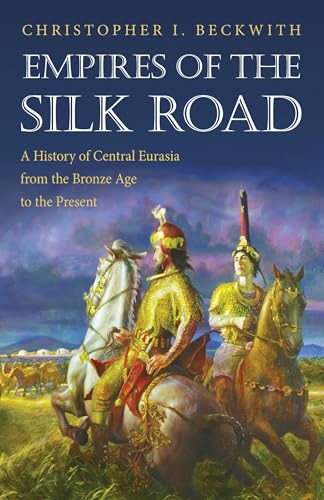
Beckwith, a scholar of Central Asian history, makes a provocative argument: that the pastoral nomadic peoples of the steppes were not barbarian destroyers of civilization but its active builders and transmitters. The book covers the role of the Scythians, Huns, Turks, and Mongols in creating and maintaining the Silk Road networks. It is more academic than the others on this list but essential for understanding the steppe dimension.
5. Lost Cities of the Silk Road by Susan Whitfield
Whitfield takes a different approach: she tells the story of the Silk Road through fictional characters who might have traveled specific segments at specific times. A merchant in Dunhuang, a slave in Samarkand, a Buddhist monk in Kucha. The fictional framing is based on real documents and artifacts. It is both accessible and well-grounded in the evidence.
6. The Silk Road: A Very Short Introduction by James Millward
Millward's Oxford University Press volume is the best short introduction to the subject. It covers the history from earliest times to the present day in under 200 pages, with clear explanations of the key debates (when did the Silk Road start? what actually traveled on it? when did it end?). The perfect starting point before reading longer works.
7. Genghis Khan and the Making of the Modern World by Jack Weatherford

The Mongol Empire was the force that reunified and secured the Silk Road for nearly a century. Weatherford's biography of Genghis Khan is the most accessible account of how the Mongols built the largest contiguous empire in history and what their pax mongolica meant for trade and cultural exchange. The Silk Road flourished under Mongol protection in a way it had not for centuries.
8. The Buddhist Conquest of China by Erik Zucher
Buddhism traveled the Silk Road from India to China between the first and seventh centuries CE, and its transmission along these routes is one of the most consequential cultural transfers in human history. Zucher's scholarly study traces exactly how this happened: which texts moved, who carried them, and how Chinese culture adapted and transformed the tradition it received.
9. Samarkand by Amin Maalouf
Maalouf's historical novel follows the manuscript of the Rubaiyat of Omar Khayyam from 11th-century Persia through the Silk Road cities of Central Asia to the 20th century. It is fiction, but it captures the cosmopolitan culture of the Islamic Golden Age and the Silk Road cities at their height. For readers who prefer narrative to academic analysis, this is the ideal entry point.
10. The Empire of the Steppes by Rene Grousset
Grousset's classic survey of the nomadic empires of Central Asia covers the Huns, Turks, Mongols, and Timurids. Published in 1939 and translated into English in 1970, it remains the most comprehensive overview of the steppe civilizations that controlled the Silk Road. More dated than the others on this list but still referenced by specialists.
The Silk Road shaped every major civilization on Earth. These ten books show how, from the archaeology of forgotten desert cities to the transmission of world religions and the rise and fall of empires.
Your next good book, in your inbox
We only write when we find a book worth your time. Hand-picked recommendations across history, mythology, true crime and more.
Are you an author?
Get your book in front of readers like these, for free.
- Free book listing →Your own book page with an Amazon button
- Author page →Photo, bio and links to your site
- Featured placement →A spot in our best-of lists, from €29
Free tools we recommend
Get free honest reviewsReview exchange on iWrity, free to join
Books You Might Like

It Ends with Us: A Novel
Colleen Hoover

The Seven Husbands of Evelyn Hugo: A Novel
Taylor Jenkins Reid

The Song of Achilles
Madeline Miller

Educated: A Memoir
Tara Westover