Best Books About World War 1: 10 That Explain the War That Changed Everything
THE FIRST WORLD WAR killed 20 million people between 1914 and 1918. It destroyed four empires: Ottoman, Austro-Hungarian, Russian, and German. It created the conditions for the Russian Revolution, the rise of fascism, and World War 2. Understanding it is not optional for anyone who wants to understand the 20th century. These books are where to start.
What Makes a Good World War 1 Book?
World War 1 is harder to write about than World War 2 because it lacks the moral clarity. World War 2 has Hitler and the Holocaust and a clear narrative of good against evil. World War 1 has no obvious villains, no clear war aims that most participants could articulate, and an outcome (the Treaty of Versailles) that many historians see as guaranteeing the next war.
Good books on World War 1 grapple with this moral complexity rather than avoiding it. The best ones explain not just what happened but why a generation of European statesmen and generals allowed something this catastrophic to occur.
10 Best Books About World War 1
1. The Guns of August (Barbara Tuchman)
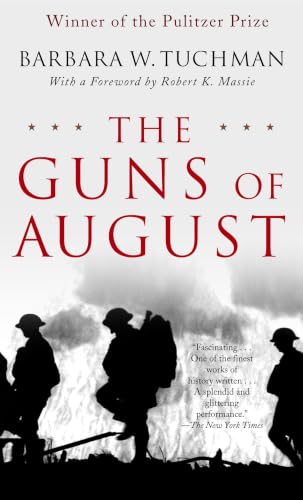
The definitive account of how the war started: the July Crisis, the mobilization plans, and the opening campaigns of August 1914. Tuchman won the Pulitzer Prize and wrote with the narrative drive of a thriller despite the dense political and military detail.
Her central argument: the war was not inevitable but became so through a series of decisions made by men who were prisoners of their own planning documents. The German Schlieffen Plan required attacking France through Belgium before turning east to face Russia. Once mobilization began, no one could stop it without admitting that all the planning had been wrong. Kennedy read this book during the Cuban Missile Crisis to remind himself how wars start when leaders lose control of events.
2. The First World War (John Keegan)
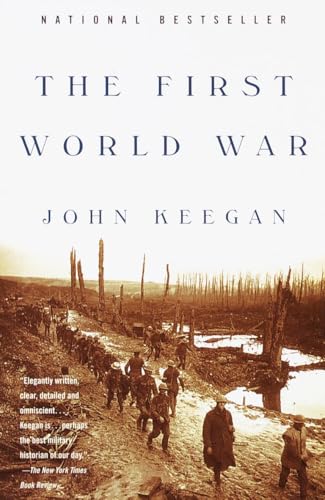
The best single-volume military history of the war. Keegan was the premier military historian of the 20th century and writes about World War 1 with the authority of someone who spent decades thinking about the relationship between military technology, terrain, and human suffering.
His analysis of why the Western Front became a stalemate is essential: the defensive technologies of 1914 (barbed wire, machine guns, artillery) made advance extremely costly while the offensive technologies needed to break through (tanks, close air support, coordinated infantry-artillery attacks) did not exist until late in the war. The generals were not uniquely stupid. They were working with weapons and doctrine that made breakthrough nearly impossible.
3. The Sleepwalkers: How Europe Went to War in 1914 (Christopher Clark)
The most important recent book on the causes of World War 1. Clark argues against the traditional view that Germany bears primary responsibility for the war and instead shows how all the major powers stumbled into a conflict none of them fully intended or understood.
His account of the 1914 July Crisis is extraordinary: six weeks of diplomatic maneuver, misunderstanding, and failure in which every major government made decisions that collectively produced a European war. The "sleepwalkers" of the title are the statesmen who walked toward catastrophe with their eyes open but their minds elsewhere, unable to see where their decisions were leading.
4. All Quiet on the Western Front (Erich Maria Remarque)
A novel, not history. But no list of World War 1 books is complete without it. Remarque was a German veteran of the Western Front and wrote the most powerful fictional account of the war experience in any language. Published in 1929, it sold 1.5 million copies in its first year.
The narrator Paul Baumer enlists enthusiastically at 18 and watches his generation die systematically and pointlessly in the trenches. The book does not argue. It shows: the stench, the rats, the lice, the gas, the artillery, the going-over-the-top, the wounds, the deaths. Read it after the histories and you will understand why the generation that survived World War 1 was called the Lost Generation.
5. Goodbye to All That (Robert Graves)
A memoir, not a history. Robert Graves was a British officer who fought at the Battle of the Somme, was wounded and left for dead, and survived to become one of the 20th century's major poets. He wrote this memoir in 1929, partly to make money and partly to exorcise the war from his memory.
The book covers his public school education, his early service, the specific texture of trench life (who the other officers were, what they talked about, how they maintained some semblance of humanity), and the grinding attrition of the Western Front. Graves wrote with unusual clarity about the gap between official accounts of battles and what actually happened. Essential primary source.
6. Paris 1919: Six Months That Changed the World (Margaret MacMillan)
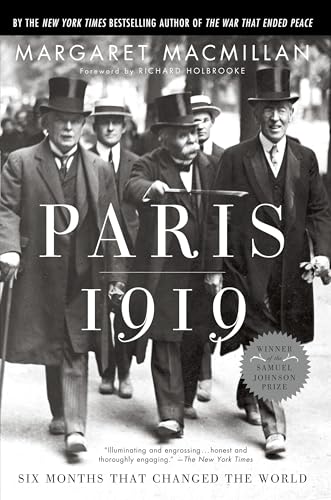
The war ended in November 1918. The peace was made in Paris over the following six months in negotiations involving 27 nations and hundreds of territorial disputes. MacMillan's book covers those negotiations in extraordinary detail and explains how the Treaty of Versailles created the conditions for Hitler's rise and World War 2.
The book is also a character study of the three men who dominated the negotiations: Woodrow Wilson (idealistic, moralistic, ultimately ineffective), Lloyd George (pragmatic, willing to compromise, but constrained by domestic politics), and Georges Clemenceau (old, cynical, focused entirely on preventing Germany from ever being strong enough to threaten France again). The tension between their visions explains much of what went wrong.
7. The Storm of Steel (Ernst Junger)
A completely different kind of World War 1 memoir. While Graves and Sassoon wrote about the war's horror and meaninglessness, Junger wrote about its exhilaration. A German officer who fought on the Western Front throughout the war and was wounded 14 times, Junger described combat with a kind of amoral aesthetic intensity that makes this one of the most disturbing and compelling war memoirs ever written.
Reading Junger alongside Graves shows you why the same experience produced such different responses. Junger's warrior mysticism became one of the intellectual currents feeding German nationalism in the 1920s. Understanding him is part of understanding how Germany moved from the trenches to the Nazi Party.
8. The Zimmermann Telegram (Barbara Tuchman)
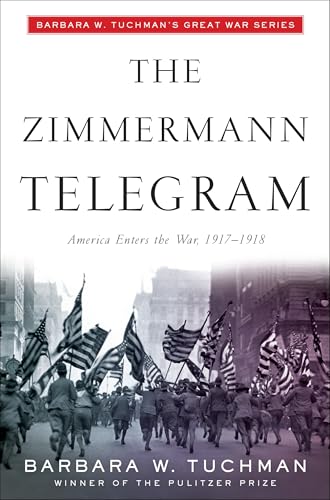
Before the United States entered World War 1, Germany sent a telegram to Mexico proposing a military alliance: if the US entered the war, Mexico would attack the US and receive Texas, New Mexico, and Arizona in return. British intelligence intercepted the telegram. The publication of its contents helped push American public opinion toward entering the war in 1917.
Tuchman tells this story with her characteristic narrative skill. But the book is also a study in intelligence, diplomacy, and the unintended consequences of communication. The Germans sent the telegram partly because they believed US opinion was irrelevant; they were wrong in a way that cost them the war.
9. A World Undone: The Story of the Great War, 1914 to 1918 (G.J. Meyer)
The most accessible comprehensive narrative of the entire war, written for general readers without military history backgrounds. Meyer covers all theaters: the Western Front, the Eastern Front, Gallipoli, the Middle East, the naval war, the home fronts, the diplomacy, and the eventual American entry.
Each chapter alternates between the military narrative and a "background" section explaining a specific aspect of the war: the nature of the weapons, the political situation in one of the major countries, the experience of different categories of soldiers. This structure makes the book more readable than most single-volume military histories.
10. The Great War and Modern Memory (Paul Fussell)
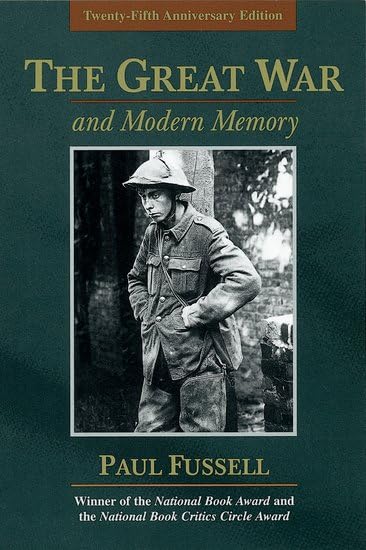
Not a history of battles but a study of how World War 1 changed the way literate people in English-speaking countries thought and wrote. Fussell, a World War 2 veteran and literary scholar, traces how the experience of the trenches produced a new ironic sensibility that permanently altered English-language literature and the cultural meaning of war.
The book explains why we use certain phrases today (the "front," "no man's land," "going over the top"), how the war's literature shaped subsequent generations, and why the word "great" in the war's name shifted from meaning "large" to carrying an ironic charge. Essential for understanding the cultural aftermath of the war.
Where to Start
For the causes and opening weeks: Tuchman's The Guns of August.
For the military history of the whole war: Keegan's The First World War.
For the human experience on the Western Front: All Quiet on the Western Front (fiction) paired with Goodbye to All That (memoir).
For the peace settlement and its consequences: MacMillan's Paris 1919.
Browse more history reading lists or go to best books about World War 2 for the conflict that followed directly from this one.
Your next good book, in your inbox
We only write when we find a book worth your time. Hand-picked recommendations across history, mythology, true crime and more.
Are you an author?
Get your book in front of readers like these, for free.
- Free book listing →Your own book page with an Amazon button
- Author page →Photo, bio and links to your site
- Featured placement →A spot in our best-of lists, from €29
Free tools we recommend
Get free honest reviewsReview exchange on iWrity, free to join
Books You Might Like

It Ends with Us: A Novel
Colleen Hoover

The Seven Husbands of Evelyn Hugo: A Novel
Taylor Jenkins Reid

The Song of Achilles
Madeline Miller

Educated: A Memoir
Tara Westover