Best Books About World War 1: 10 That Capture the War That Changed Everything
World War 1 was supposed to be over by Christmas 1914. It lasted four years and killed seventeen million people. It ended four empires, redrew the map of Europe and the Middle East, and created the conditions for the Second World War twenty years later. These ten books explain how it happened and what it felt like to live through it.
1. The Guns of August by Barbara Tuchman
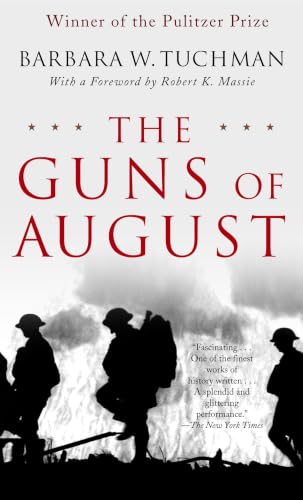
Tuchman's account of the first month of World War 1 remains the definitive narrative of how the war began. She traces the interlocking alliance systems, the mobilization schedules, and the cascade of miscalculations that turned an assassination in Sarajevo into a continental war. It won the Pulitzer Prize in 1963 and has never been surpassed as an account of those initial weeks.
2. All Quiet on the Western Front by Erich Maria Remarque
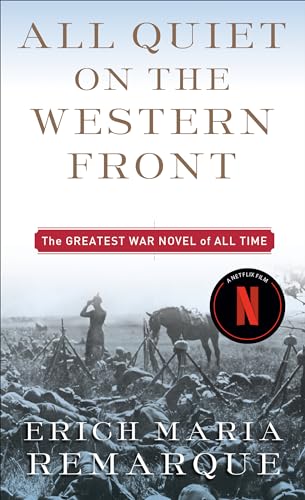
This novel by a German veteran was published in 1929 and immediately became one of the most important war books ever written. It follows a young German soldier from enlistment through the trenches. Remarque wrote from experience and the result is a portrait of industrial warfare that has never been equaled for its combination of precision and emotional weight. It was banned by the Nazis in 1933.
3. The First World War by John Keegan
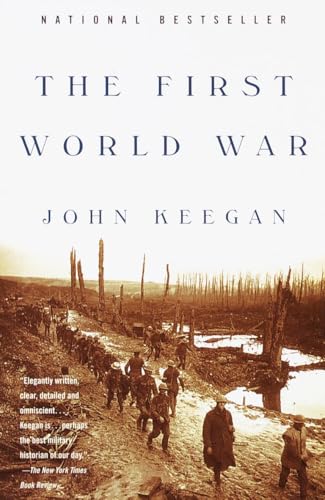
Keegan was one of the great military historians of the 20th century. This single-volume history covers the entire war with clear strategic analysis and vivid ground-level detail. Keegan is particularly good at explaining why the war became a stalemate, tracing the technical and tactical reasons that made defense overwhelming and offense catastrophically expensive.
4. Storm of Steel by Ernst Junger
Junger's memoir is the most famous German account of the war, and the most controversial. Unlike Remarque, Junger does not condemn the war. He describes combat with an almost aesthetic detachment, finding beauty in artillery barrages and close-quarters fighting. Reading it alongside All Quiet on the Western Front shows how two German veterans could experience the same war in utterly different ways.
5. The War That Ended Peace by Margaret MacMillan
MacMillan's history of the years leading up to 1914 asks a question Tuchman does not fully address: why did no one stop it? She examines the political culture of the pre-war years, the cult of offensive warfare, the arms race, and the specific decisions made by specific individuals that could have been made differently.
6. Goodbye to All That by Robert Graves
Graves served as an officer in the Royal Welch Fusiliers and was left for dead at the Somme. His memoir is one of the great works of English literature from the war, sharp and sardonic where Remarque is elegiac. It covers his pre-war education, his service, his wounding, and his disillusionment with England after the war.
7. A World Undone by G.J. Meyer
Meyer's account is the most comprehensive single-volume history of the war available for a general readership. At 700 pages it is thorough without being exhausting, covering every theatre from the Western Front to Gallipoli to the Eastern Front to the Middle East. Each chapter alternates between narrative history and short biographical sketches of key figures.
8. The Great War and Modern Memory by Paul Fussell
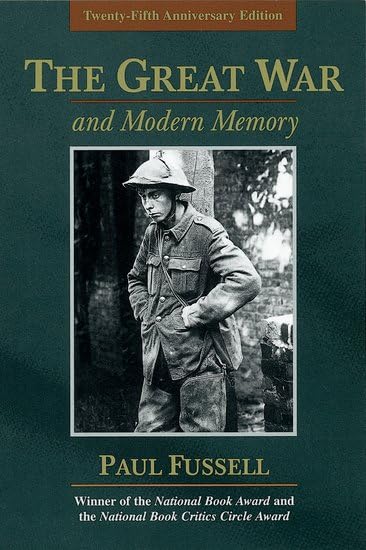
Fussell's 1975 study of the literary and cultural impact of World War 1 is not a history of the war but a history of how the war was remembered. He argues that WW1 created the ironic mode that dominates 20th century literature: the gap between official language and individual experience, between what leaders said and what soldiers saw.
9. Castles of Steel by Robert K. Massie
Massie's history of the naval war of 1914-1918 is the companion to his earlier book on the pre-war naval race. The naval war is often overshadowed by the land war, but it determined whether Britain could be blockaded into starvation, which would have changed the entire outcome. Massie writes naval history with the clarity of a novelist.
10. Paris 1919 by Margaret MacMillan
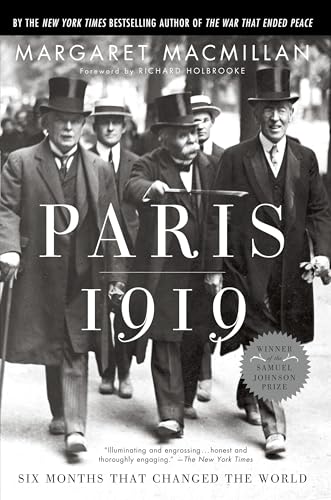
The peace conference of 1919 is where World War 1 ended and where the seeds of World War 2 were planted. MacMillan's account of the five months when Woodrow Wilson, David Lloyd George, and Georges Clemenceau reshaped the world is one of the most important books about the 20th century. The decisions made in Paris explain why the Middle East still looks the way it does.
World War 1 created the modern world: the modern state, the modern relationship between citizens and governments, and the modern sense that history can go catastrophically wrong. These ten books give you the causes, the experience, and the aftermath.
Your next good book, in your inbox
We only write when we find a book worth your time. Hand-picked recommendations across history, mythology, true crime and more.
Are you an author?
Get your book in front of readers like these, for free.
- Free book listing →Your own book page with an Amazon button
- Author page →Photo, bio and links to your site
- Featured placement →A spot in our best-of lists, from €29
Free tools we recommend
Get free honest reviewsReview exchange on iWrity, free to join
Books You Might Like

It Ends with Us: A Novel
Colleen Hoover

The Seven Husbands of Evelyn Hugo: A Novel
Taylor Jenkins Reid

The Song of Achilles
Madeline Miller

Educated: A Memoir
Tara Westover