Best Books About WW1 Western Front in 2026: Trenches, Commanders, and the War That Changed Everything
PICTURE THIS: you are 19 years old. You volunteered in August 1914 because everyone said it would be over by Christmas. It is now November 1916. You have been in the same two miles of mud for eight months. You have watched your friends die for ground that nobody can hold. And the worst part is you have no idea why.
The Western Front is one of history's most studied and least understood catastrophes. These books will tell you what actually happened, and why it mattered.
--- ◆ ---
The Essential History
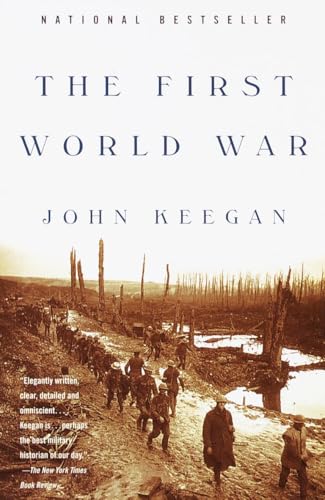 The First World War by John Keegan (1998) is the book you read first. Keegan was one of the great military historians of the 20th century, and this is his definitive account of the entire war. He covers strategy, tactics, and the human experience with equal authority. If you want to understand how the war began, how the stalemate developed, what the major battles actually achieved, and why it ended when it did, Keegan gives you all of that in a single readable volume. Find The First World War on Amazon.
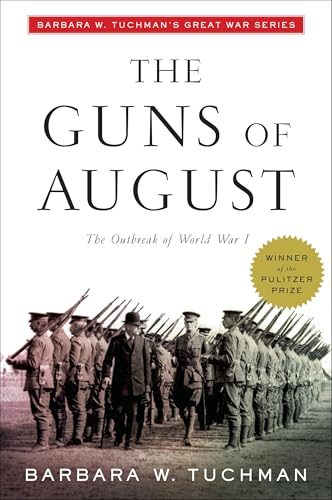 The Guns of August by Barbara Tuchman (1962) zooms into the first weeks of the war -- August 1914 -- and shows how a conflict that none of the major powers actually wanted became inevitable through interlocking mobilization plans, miscalculations, and the failure of political leadership to stop the military machine once it started moving. It won the Pulitzer Prize and reads like a thriller. Understanding August 1914 is essential context for understanding everything that followed. Find The Guns of August on Amazon.
--- ◆ ---
The Eyewitness Memoirs
Goodbye to All That by Robert Graves (1929) is one of the great British memoirs of the war. Graves was a young officer who served on the Somme, was reported dead, and survived to write this bitter, sardonic account of what the war was actually like at ground level. He has contempt for the politicians who started it, the generals who fought it, and the civilians who cheered it. His description of the Somme preparations and aftermath is indispensable. Find Goodbye to All That on Amazon.
Storm of Steel by Ernst Junger (1920) is the necessary counterpoint. Junger was a German officer who fought the same war and was genuinely thrilled by combat -- the danger, the camaraderie, the intensity. His account is disturbing precisely because it is not ironic. He loved it. Reading Graves and Junger together gives you the full range of how the war was experienced, and neither cancels the other out. Find Storm of Steel on Amazon.
--- ◆ ---
The Fiction That Gets It Right
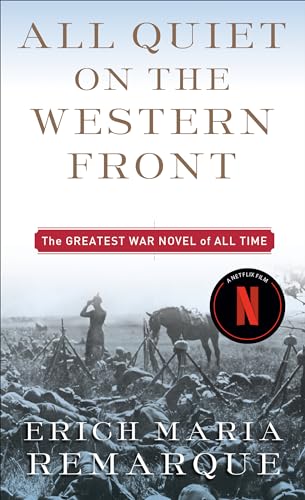 All Quiet on the Western Front by Erich Maria Remarque (1929) is the most widely-read WW1 novel in the world, and it deserves that status. Written from the perspective of a young German soldier, it is relentlessly anti-war without being sentimental. The scenes in the field hospital, the scenes on leave when the narrator cannot connect with anyone who has not been in the trenches, and the final pages are unforgettable. The 2022 German film adaptation won the Oscar for Best International Film and is a faithful companion piece. Find All Quiet on the Western Front on Amazon.
Birdsong by Sebastian Faulks (1993) alternates between the trenches and a 1970s frame narrative. The trench sequences are the most viscerally harrowing WW1 fiction written in the 20th century. Faulks researched the war obsessively and it shows -- the mining operations, the tunneling, the underground war beneath the lines. Not for the faint-hearted. Find Birdsong on Amazon.
--- ◆ ---
Why It Became a Stalemate
The standard myth is that WW1 generals were incompetent cavalry officers who sent men into machine gun fire without understanding what they faced. The reality is more complex and more disturbing. The war was a stalemate because defensive technology had genuinely outrun offensive capability. Machine guns, barbed wire, and the telephone (which let defenders call up reserves faster than attackers could exploit any breach) made attacking almost impossible. It took four years to develop the combined arms doctrine -- tanks, aircraft, infantry, and artillery coordinated together -- that finally broke the deadlock in 1918.
The Somme by Peter Hart is the best single-volume operational history of the most notorious battle of the war. Hart used participant accounts from both sides and does not simplify into hero-generals or fool-generals. The first day of the Somme (July 1, 1916 -- 57,000 British casualties) was catastrophic, but the battle as a whole lasted four months and served strategic purposes that are hard to dismiss. Find The Somme on Amazon.
--- ◆ ---
Chapter Resources
- Faulks, Sebastian. Birdsong. Hutchinson, 1993.
- Graves, Robert. Goodbye to All That. Jonathan Cape, 1929. (Revised edition, Penguin, 1960.)
- Hart, Peter. The Somme: The Darkest Hour on the Western Front. Pegasus Books, 2008.
- Junger, Ernst. Storm of Steel. (Trans. Michael Hofmann.) Penguin Modern Classics, 2003.
- Keegan, John. The First World War. Hutchinson, 1998.
- Remarque, Erich Maria. All Quiet on the Western Front. (Trans. A.W. Wheen.) Little, Brown, 1929.
- Tuchman, Barbara. The Guns of August. Macmillan, 1962.
Your next good book, in your inbox
We only write when we find a book worth your time. Hand-picked recommendations across history, mythology, true crime and more.
Are you an author?
Get your book in front of readers like these, for free.
- Free book listing →Your own book page with an Amazon button
- Author page →Photo, bio and links to your site
- Featured placement →A spot in our best-of lists, from €29
Free tools we recommend
Get free honest reviewsReview exchange on iWrity, free to join
Books You Might Like

It Ends with Us: A Novel
Colleen Hoover

The Seven Husbands of Evelyn Hugo: A Novel
Taylor Jenkins Reid

The Song of Achilles
Madeline Miller

Educated: A Memoir
Tara Westover