10 Best Books About World War II You Have Probably Not Read Yet
The Books Everyone Recommends (And Why You Should Go Deeper)
Most World War II reading lists are dominated by the same ten titles. The Diary of a Young Girl. The Rise and Fall of the Third Reich. Band of Brothers. These are genuinely important books, but if you have already read them and want something that changes how you understand the war, this list goes further.
These ten books cover the Pacific, the home front, the perpetrators, the survivors, and the aftermath. Each one fills in a part of the story that most people never encounter.
1. Ordinary Men by Christopher Browning

This is one of the most disturbing and important books about the Holocaust. Browning examines Reserve Police Battalion 101, a unit of middle-aged German men who were not SS members, not ideological fanatics, just ordinary police reservists who became mass murderers. Find Ordinary Men on Amazon.
The central question is not about monsters. It is about how normal people come to do monstrous things under social pressure, within a hierarchy, with the option to decline. Most did not decline. Browning's analysis of why not is required reading for anyone who wants to understand how genocide actually happens.
2. With the Old Breed by Eugene Sledge
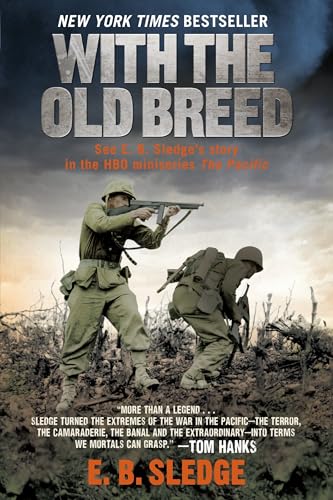
Sledge was a Marine who fought at Peleliu and Okinawa. His memoir, written from notes he kept in a pocket Bible, is one of the most viscerally honest accounts of combat ever published. The Pacific campaign is underrepresented in popular World War II history despite being extraordinarily brutal. Find With the Old Breed on Amazon.
Peleliu, which most people have never heard of, cost the Marines 40 percent casualties in a battle that many historians argue was unnecessary. Sledge was there. He describes what it was like in a voice that is precise, unsparing, and completely free of the rhetoric that tends to sanitize war memoirs.
3. The Girls of Atomic City by Denise Kiernan
The women who worked in Oak Ridge, Tennessee during the war built uranium for the atomic bomb without knowing what they were building. Kiernan interviews survivors and reconstructs their experience with the detail of a novel. Find The Girls of Atomic City on Amazon.
The compartmentalization was total. Workers knew only their own task. They were explicitly told not to ask questions. The result is a book about the intersection of secrecy, patriotism, and the experience of women in the wartime workforce that reads nothing like a standard history of the Manhattan Project.
4. The Rape of Nanking by Iris Chang

The Nanjing Massacre of 1937 killed between 200,000 and 300,000 Chinese civilians in six weeks. It is one of the largest atrocities of the twentieth century and remains seriously underrepresented in Western World War II history. Find The Rape of Nanking on Amazon.
Chang's book brings together survivor testimonies, Japanese diaries, and the records of Westerners who established a Safety Zone to protect civilians. It is harrowing reading and not suitable as an introduction to the war, but for readers who want to understand the full scope of World War II beyond the European theater, it is essential.
5. Matterhorn by Karl Marlantes
Marlantes served as a Marine in Vietnam, but this novel about the Vietnam-era Pacific experience has more in common with the World War II Pacific combat memoirs than with most Vietnam War fiction. He spent thirty years writing it. Find Matterhorn on Amazon.
The level of detail about small-unit tactics, the physical reality of jungle warfare, the moral weight of command decisions, and the gap between officers and enlisted men is unmatched in fiction. If you want to understand what Pacific island combat felt like from the inside, this is the closest literary equivalent.
6. Five Came Back by Mark Harris
Hollywood went to war. John Ford, William Wyler, John Huston, Frank Capra, and George Stevens all served in uniform making documentaries and training films. Harris traces what happened to each of them and how the war changed their work. Find Five Came Back on Amazon.
It is partly a book about how America decided to show the war to itself, what was shown, what was concealed, and why. George Stevens, who filmed the liberation of Dachau, never directed a comedy again. The book is also a meditation on the relationship between violence and art.
7. The Warmth of Other Suns by Isabel Wilkerson

This is not a World War II book in the conventional sense. But the Great Migration, which Wilkerson documents through three individual stories across several decades, was fundamentally shaped by World War II. Black Americans who fought for the United States returned to a country that still enforced legal segregation. The migration north and west was both a response to that injustice and a reshaping of American culture. Find The Warmth of Other Suns on Amazon.
For readers who want to understand the full context of what America was fighting for and what it failed to deliver at home, this book belongs on the list.
8. The Fall of Berlin 1945 by Antony Beevor
Beevor reconstructs the final battle for Berlin with a granularity that earlier histories never attempted, drawing on Soviet archives that became available after 1991. The book covers both the military campaign and what happened to the civilian population as the Red Army entered the city. Find The Fall of Berlin 1945 on Amazon.
The sections on Soviet soldiers and German civilians are not easy reading. Beevor includes testimony that had not previously been part of the standard historical record. It changed how historians understand the end of the war in Europe.
9. In the Garden of Beasts by Erik Larson
Larson focuses on 1933 Berlin through the eyes of the American ambassador William Dodd and his daughter Martha. Neither is a conventional hero. Martha found the early Nazi period exciting. Dodd struggled to be taken seriously in Washington when he reported what he was seeing. Find In the Garden of Beasts on Amazon.
The book captures the particular horror of watching a democracy become a dictatorship in real time, with all the gradual normalization and disbelief that makes it possible. It is also a portrait of how the United States failed to understand what was happening in Germany until very late.
10. The Long Way Home by David Laskin
Twelve immigrant soldiers who came to America from Eastern Europe, the Middle East, and other regions and were drafted into the American army in World War I. Laskin traces their stories from their original countries through America, through the war, and back. Find The Long Way Home on Amazon.
This is technically a World War I book, not World War II. It is included here because it provides essential context for who was fighting in American uniform by the 1940s, how ethnicity and immigration shaped the experience of war, and what it meant to fight for a country that had not fully accepted you yet.
Where to Find These Books
Several of these are available on Amazon in paperback and Kindle editions. Skriuwer features reader reviews and discussion threads for each title. If a book appears as available for exchange review, you can often read it before committing to a purchase.
Your next good book, in your inbox
We only write when we find a book worth your time. Hand-picked recommendations across history, mythology, true crime and more.
Are you an author?
Get your book in front of readers like these, for free.
- Free book listing →Your own book page with an Amazon button
- Author page →Photo, bio and links to your site
- Featured placement →A spot in our best-of lists, from €29
Free tools we recommend
Get free honest reviewsReview exchange on iWrity, free to join
Books You Might Like

Sapiens: A Brief History of Humankind
Yuval Noah Harari
The Last Kingdom (The Saxon Stories, Book 1)
Bernard Cornwell

Meditations
Marcus Aurelius

The Hiding Place
Elizabeth Sherrill, John Sherrill Corrie ten Boom