Best Business Strategy Books in 2026: 12 That Give You Mental Models Worth Keeping
The best business strategy books do not tell you what to do. They teach you how to think about what you should do. Strategy is not about copying what the successful company did. It is about understanding your own competitive position clearly enough to know where to compete and where to concede. The books that matter are the ones that show you how to see your market like this.
These 12 books are used by actual strategists. They appear on desks and in reading lists at companies that know they need to be sharp. Some are academic. Some are from people who built companies. All of them have held up because they describe something true about how markets work.
1. Competitive Strategy by Michael Porter
Michael Porter wrote this in 1980 and it defined how people think about strategy. His Five Forces framework is still the first tool anyone uses to analyze a market: rivalry between competitors, threat of new entrants, threat of substitutes, bargaining power of suppliers, bargaining power of customers.
Understanding these five forces tells you where the profit margin lives in your industry. Is your money being squeezed by suppliers or stolen by customers? Are new competitors about to make your advantage irrelevant? This framework does not solve the problem, but it ensures you are asking the right questions. It is the foundation that everything else builds on.
Available on Amazon.
2. The Innovator's Dilemma by Clayton Christensen
Clayton Christensen studied companies that dominated their market and then failed because a new technology made them obsolete. The paradox: if a company does everything right, improves its products, listens to its best customers, it will still fail when disruption comes.
Why? Because the disruptive technology is worse at first. It does not serve the high-end customer. So the smart, rational company ignores it. By the time the company realizes the threat is real, the new competitor owns the market. The lesson is that success creates blindness. You must consciously think about what you are not seeing.
3. Good to Great by Jim Collins

Jim Collins studied companies that went from average to exceptional and stayed that way. He found patterns. They had what he calls a hedgehog concept (the one thing you understand deeply and can be the best at). They promoted people with the right character and demoted people who had the wrong one, no matter how talented.
They had what Collins calls Level 5 leadership: leaders who combined personal humility with a fierce will to make the company great. These leaders did not talk about themselves. They were obsessed with building the institution. If you read only one business book about culture and leadership, read this one.
4. The Effective Executive by Peter Drucker
Peter Drucker was a management consultant who thought clearly about what managers actually need to do. They need to know what their time is actually being spent on, because most managers do not. They need to focus on contribution, not activity. They need to make decisions, not just gather information.
Drucker also argues that the quality of a decision matters less than whether it is actually made. An 80 percent solution you implement is better than a 95 percent solution you debate endlessly. This book is old (1967) and it does not have case studies or stories. It is just thinking. For that reason, it ages well and gets better as you become a manager.
5. High Output Management by Andy Grove
Andy Grove ran Intel. This book is the management system he actually used. It is about leverage: how to get your organization to output far more than you personally could produce. One-on-one meetings with your reports matter more than you think because they are a high-leverage way to affect their performance.
Grove thinks like an engineer. He measures. He systematizes. He is not interested in motivation talks. He is interested in making the organization run. The book includes practical templates and frameworks. If you are building a team, this tells you what to actually do every day.
6. The Hard Thing About Hard Things by Ben Horowitz

Ben Horowitz is a venture capitalist and entrepreneur who wrote about what nobody tells you about running a company. What happens when your company is failing and you have to make payroll. What happens when you have to fire your best friend. What happens when you are the most important person in the company and you are not equipped to be.
The book is honest in a way that most business books are not. Horowitz does not tell you that if you follow his system, success will come. He tells you about decisions that had no good option, only less bad ones. For that reason, people trust what he writes. He describes peacetime CEOs versus wartime CEOs, and which one is needed when.
7. The Five Dysfunctions of a Team by Patrick Lencioni
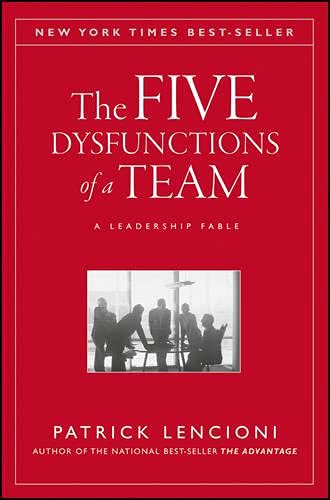
Patrick Lencioni wrote this as a business fable, not a case study. A new CEO comes into a company with a dysfunctional executive team. The story shows you what dysfunctional teams look like and what the CEO does to fix it.
The pyramid: trust at the bottom. Without trust between team members, nothing else works. Then conflict (the healthy kind, where ideas clash but people are not afraid). Then commitment (people actually agree to move forward, not just say they do). Then accountability (people hold each other to what they committed to). Without those, results do not come.
8. Playing to Win by Roger Martin
Roger Martin was the chief strategy officer at Procter and Gamble. This book lays out the P&G strategy framework. What is our aspirational purpose? Where will we play (which customers, which products)? How will we win in that arena? What capabilities must we build? What management systems must be in place?
This is not theory. This is how a company that actually competes thinks. If you run any organization larger than yourself, this framework will organize your thinking. Many other books give you pieces of this. Martin gives you the whole system.
9. Steve Jobs by Walter Isaacson
This is a biography, not a traditional strategy book, but it shows you strategy in action. Jobs had an idea about what computers should be and who they were for. He did not ask customers what they wanted. He built what he thought was right.
The book reveals both his genius and his failures. His refusal to adapt cost him sometimes. His unwillingness to compromise made him enemies. But his clarity of vision built Apple. For anyone interested in how conviction and strategy interact, this biography is essential.
10. Shoe Dog by Phil Knight
Phil Knight wrote the story of how Nike started. It was not a company that planned to dominate the world. It was a small import business that had to scrape for every order. The book shows how Knight and his team made decisions with limited information and limited resources.
They competed on design and innovation in a market where bigger companies competed on price. They found channels nobody else was using. They made mistakes and recovered. This is the best business memoir ever written, and it teaches strategy through narrative rather than framework.
Available on Amazon.
11. Toyota Production System by Taiichi Ohno
Taiichi Ohno invented the production system that became Lean manufacturing. This book is old (1978) and dense, but it is the source document for everything that comes after. Ohno emphasizes flow, elimination of waste, and the role of people in the system.
He does not believe you can order efficiency from the top. Workers see the waste. Workers know where the problems are. A good production system harnesses that. Kanban, continuous improvement, just-in-time inventory: these all come from Ohno. The book is technical but it has influenced more companies than almost any other business book.
12. Good Strategy, Bad Strategy by Richard Rumelt
Richard Rumelt argues that most things called strategy are just wishful thinking. A good strategy has three parts: a diagnosis of the situation (what is actually happening), a guiding policy (how to think about it), and coherent actions (what to do).
Bad strategy sounds good but does not describe the actual problem. Bad strategy often confuses ambition (where you want to be) with strategy (how you will get there). This book teaches you to recognize the difference and to build strategy that actually works in the real world.
Going Deeper Into Strategy
If you need more in this territory, Skriuwer collects business books and ranks them by reader reviews. The pattern in the best books is that strategy is not complicated. It is often simple. What is difficult is making the hard choices about where to compete and what to give up. These 12 books teach you how to think about those choices.
Your next good book, in your inbox
We only write when we find a book worth your time. Hand-picked recommendations across history, mythology, true crime and more.
Are you an author?
Get your book in front of readers like these, for free.
- Free book listing →Your own book page with an Amazon button
- Author page →Photo, bio and links to your site
- Featured placement →A spot in our best-of lists, from €29
Free tools we recommend
Get free honest reviewsReview exchange on iWrity, free to join
Books You Might Like
The Psychology of Money
Morgan Housel

How to Win Friends and Influence People
Dale Carnegie
