Best Children's Books Adults Should Read in 2026: 12 That Work at Every Age
The best children's books are not simplified versions of adult concerns. They address the most fundamental human questions directly, without the ironic distance that adults usually use to protect themselves from those questions. They are about mortality, belonging, courage, justice, the nature of friendship, the experience of being small in a large world. Read honestly, they are devastating. They are also, often, funny. A children's book that works for both children and adults does something that adult literature often cannot: it speaks to both simplicity and complexity at once.
The twelve books below are the ones that transcend their original audience. Children read them and find adventure and comfort. Adults read them and find their own lives reflected and their own questions addressed.
1. The Little Prince by Antoine de Saint-Exupery (1943)
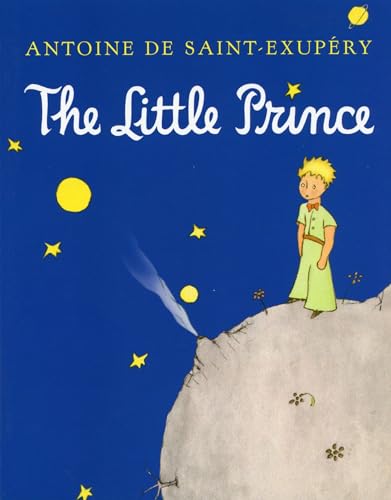
This is the most deceptive book on this list. A small prince travels from planet to planet and talks to adults who are obsessed with meaningless things: counting stars, collecting crowns, selling lamps. He finds a rose on his own planet, loves her, leaves her. Eventually he returns to Earth. A pilot crashes in the desert and meets the prince. The prince speaks about what matters: relationship, responsibility, beauty, the things that cannot be counted or possessed.
Adults read The Little Prince and see a critique of modern life, the way we become consumed by work and ambition and lose sight of what actually matters. We see longing and loss. The book is a parable, and each reader finds a different meaning in it, which is the mark of truly good literature. What does it mean to tame something? What is the cost of love? What is the price of growth?
Get it here: The Little Prince on Amazon
2. Charlotte's Web by E.B. White (1952)
This is a children's book about friendship between a pig and a spider, but it is also the most honest treatment of mortality in American literature. Wilbur the pig faces slaughter. Charlotte the spider, his best friend, saves him by writing words in her web that make Wilbur famous and worth saving. The miraculous part is not the words in the web. It is the friendship itself. Charlotte loves Wilbur, and Wilbur loves Charlotte, and Charlotte is dying. The book does not hide from this. It confronts death directly.
Adults reading Charlotte's Web encounter something they often avoid in their own reading: the simple, unbearable fact that people we love will die, and that love does not protect against loss. White's prose is precise and sometimes lyrical. He writes about farm life, about seasons, about the texture of experience. And beneath it all is grief, fully acknowledged.
Get it here: Charlotte's Web on Amazon
3. Where the Wild Things Are by Maurice Sendak (1963)
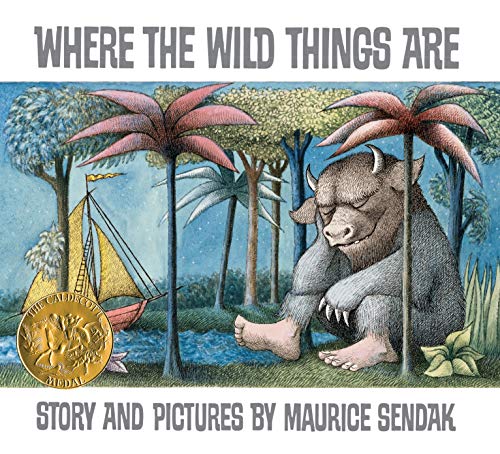
Sendak's picture book is about a boy named Max who, sent to bed without supper, imagines himself transported to an island populated by wild things. He becomes their king, but eventually he wants to go home. The book is a map of emotional territory: anger, fantasy as escape, the comfort of being loved unconditionally, the acceptance of limitation and return.
Sendak's illustrations are crucial. The wild things are not evil or even particularly threatening. They are primal, unrestrained, joyful. But Max chooses home. Not because home is perfect but because it is where he is loved. Sendak understood that children feel their emotions intensely, that rage and desire and fear are not small things, and that a book can honor those emotions without dismissing them.
Get it here: Where the Wild Things Are on Amazon
4. Winnie-the-Pooh by A.A. Milne (1926)
Milne's stories about a bear, a pig, and their friends in the Hundred Acre Wood are often read as simple and cute. But Milne was writing philosophy. Each character represents a different way of being in the world: Pooh is contentment, Piglet is anxiety, Eeyore is depression, Tigger is manic energy, Christopher Robin is the child becoming the adult. The stories are small comedies of misunderstanding and longing.
But the devastating part comes at the end, when Christopher Robin must grow up and leave the Hundred Acre Wood. Milne writes about time, about how paradise cannot last, about how children become adults and leave the people they love behind. It is the saddest children's book ever written, disguised as the cheeriest one.
Get it here: Winnie-the-Pooh on Amazon
5. James and the Giant Peach by Roald Dahl (1961)
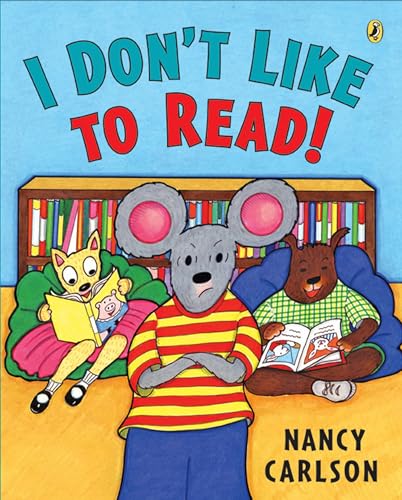
James is an orphan living with his cruel aunts. Then a giant peach grows in the garden, and James enters it and escapes. Inside he finds creatures: a centipede, a earthworm, a grasshopper, a ladybug, a glowworm, a spider, a silkworm. Together they travel across the ocean to New York. The book is about escape, about finding chosen family, about agency and imagination. James is small and powerless, but he finds a way out.
Dahl's genius was his refusal to sentimentalize children or to soften the cruelty they often experience. His children's books are funny and violent and magical. They do not ask children to accept injustice. They celebrate resistance and creativity and the power of imagination to transcend circumstance.
Get it here: James and the Giant Peach on Amazon
6. The Lion, the Witch and the Wardrobe by C.S. Lewis (1950)
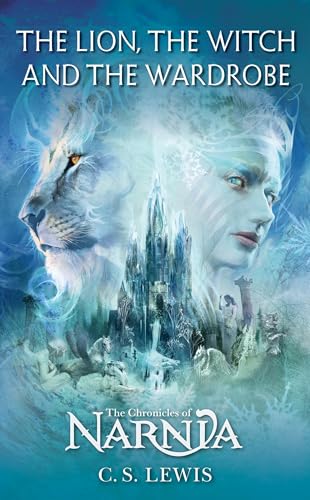
Lewis's Narnia is entered through a wardrobe, and what children find there is a world that needs saving. The story has layers of meaning: on the surface it is an adventure, below the surface it is theology, and at its deepest level it is about the experience of discovering that the world is larger and stranger and more meaningful than you knew. Lewis understood that fantasy is not escape from meaning but access to it.
Adults reading Narnia often focus on the allegorical elements. But what the book actually does is address the longing for a world where meaning is real, where sacrifice means something, where good and evil are not moral relativities but actualities. The book asks: what if your imagination was an access point to truth rather than a refuge from it?
Get it here: The Lion, the Witch and the Wardrobe on Amazon
7. Peter Pan by J.M. Barrie (1911)
This is a children's book about the refusal to grow up, which means it is a tragedy disguised as a fantasy. Peter Pan is a boy who will never age, who lives in a place where time does not pass. He takes other children to Never Never Land, where they have adventures, where they never grow old. But growth is not avoidable. To refuse to grow is to refuse to become human. The other children leave. Peter Pan remains alone, forever young, forever a child, forever incapable of real connection.
Barrie's book is disturbing if you read it honestly. It is about loss disguised as gain, about the terror of change, about the way immortality would actually be a curse. The sadness beneath the fantasy is profound.
8. Alice's Adventures in Wonderland by Lewis Carroll (1865)
Carroll's Alice falls down a rabbit hole into a world where logic does not apply. Nothing makes sense. Scale is unstable. Language is unstable. Identity is unstable. The adults Alice meets are mad or cruel or both. But Alice persists. She is curious. She tries to make sense of the nonsensical. The book is a portrait of consciousness encountering a world that does not yield to rational understanding.
Carroll invented surrealism. What he also did is capture what it feels like to be a child in an adult world: the feeling that adults are following rules you do not understand, that language is being used to confuse rather than clarify, that you are not sure if you are too small or if the world is too large. The book is funny. It is also profoundly unsettling.
Get it here: Alice's Adventures in Wonderland on Amazon
9. Pippi Longstocking by Astrid Lindgren (1945)
Pippi is a girl who lives alone, who is stronger than adults, who follows no rules. She is also kind and loyal and has a fierce sense of justice. Lindgren's novel is a radical fantasy of female autonomy. Pippi does not wait for adults to give her permission or guidance. She acts. And what she does is right, even when it violates conventions. The book is funny, anarchic, and deeply subversive about what girls are allowed to be.
10. A Wrinkle in Time by Madeleine L'Engle (1962)
L'Engle's novel combines science fiction with mysticism, physics with love. A girl searches for her missing scientist father across dimensions. The book addresses the gap between feeling and understanding, between knowing something intellectually and experiencing it emotionally. L'Engle was a Christian writer, but what she explores is not dogma but the way love and faith and intelligence work together. The novel's famous phrase is that love is not feeling but commitment and action.
Adults reading this recognize it as sophisticated philosophy disguised as adventure. The tesseract is both a physics concept and a metaphor. The journey across dimensions is both literal and psychological. L'Engle trusted her young readers to hold multiple meanings at once.
11. The Golden Compass by Philip Pullman (His Dark Materials, 1995)
This is young adult literature written at the highest level. Pullman's world has souls that live outside human bodies, as animals. The Magisterium is a corrupt religious authority. Lyra is a girl who becomes an agent in a struggle against that authority. The book is anti-authoritarian theology and adventure fantasy. Pullman is interested in free will, in institutional power, in the way religious authority can corrupt itself.
The armored bears are memorable. The parallel worlds are fascinating. But what stays with you is Pullman's refusal to subordinate his characters to moral lessons. The book is about resistance, and it is a kind of resistance itself: against easy answers, against the sanctification of authority, against the demand that children accept what they are told to accept.
What Children's Books Offer Adults
The best children's books are not didactic. They are not trying to teach you what to think. What they offer instead is the possibility of encountering fundamental questions without the cynicism or protective irony that usually accompanies adult consciousness. They ask: what does it mean to love? What happens when people die? What is justice? What is courage? How do we belong? What happens when we grow up?
Adults reading these books often find themselves moved to tears. Not because the books are sentimental but because they are honest in a way that most adult literature is not. They allow both children and adults to encounter what matters most without apology or hedging. That is why these books endure. They speak across ages because they speak to what every age confronts.
Your next good book, in your inbox
We only write when we find a book worth your time. Hand-picked recommendations across history, mythology, true crime and more.
Are you an author?
Get your book in front of readers like these, for free.
- Free book listing →Your own book page with an Amazon button
- Author page →Photo, bio and links to your site
- Featured placement →A spot in our best-of lists, from €29
Free tools we recommend
Get free honest reviewsReview exchange on iWrity, free to join
Books You Might Like

It Ends with Us: A Novel
Colleen Hoover

The Seven Husbands of Evelyn Hugo: A Novel
Taylor Jenkins Reid

The Song of Achilles
Madeline Miller

Educated: A Memoir
Tara Westover