Best Colonial Africa History Books 2026: Empire, Resistance, and Legacy
Colonial Africa was one of history's great catastrophes and continues to shape our world. The scramble for Africa among European powers carved up a continent with little regard for existing political boundaries or social structures. Millions died from violence, disease, and exploitation. African societies were disrupted, economies were restructured for European benefit, and resources were extracted at enormous cost to African peoples. Yet Africa's colonization is often told as a story of European achievement, downplaying African agency and resistance.
King Leopold's Ghost by Adam Hochschild
ADAM Hochschild's King Leopold's Ghost tells the story of the Congo under Belgian rule, one of colonialism's most brutal chapters. King Leopold II of Belgium personally owned the Congo as his private property from 1885 to 1908, extracting rubber wealth while extracting it, millions of Congolese died from violence, disease, and exhaustion. Hochschild combines history with detective work, uncovering how Europeans and Americans knew about the horror and some worked to end it.
Hochschild's genius lies in making the Congo visible as a place with people and agency while narrating the European systems of extraction and indifference that made the catastrophe possible. He profiles both the perpetrators and the activists who documented atrocities and demanded accountability. The book shows that colonialism was not a footnote to European history but its central moral crime. It also shows that while colonialism was powerful, it was not inevitable. African resistance existed, and external support for African liberation was possible.
Buy King Leopold's Ghost on Amazon
The Scramble for Africa by Thomas Pakenham
THOMAS Pakenham's The Scramble for Africa is a comprehensive narrative history of how European powers divided the African continent from the 1870s to 1900. The book covers the conferences, wars, treaties, and personalities that carved up Africa. Pakenham provides detail without losing the tragic arc: African societies with their own complex politics and economies suddenly found themselves divided and subordinated to European rule.
Pakenham is a traditional historian focused on events and personalities, but his narrative reveals how arbitrary the divisions were. Chiefs who had never heard of Europe suddenly found themselves ruled by European administrators. Natural trade networks were disrupted by colonial borders. Pakenham shows the violence required to establish European rule and the resistance Africans mounted. The book is readable narrative history that makes clear what was at stake in colonialism.
Buy The Scramble for Africa on Amazon
How Europe Underdeveloped Africa by Walter Rodney
WALTER Rodney's How Europe Underdeveloped Africa remains one of the most important analyses of colonialism's economic consequences. Rodney argues that colonialism was not development but active underdevelopment. He traces how Africa was forced into dependent trade relationships where it exported raw materials and imported expensive manufactured goods, creating structural poverty and dependence that persist.
Rodney's analysis is explicitly political and structured as an argument rather than neutral history. He shows that colonialism was not benevolent civilizing mission but systematic extraction. He demonstrates how colonial economic structures subordinated African development to European benefit and how this structure persists in the neo-colonial period. His work is essential for understanding why African nations struggle with development despite natural resource wealth. The answer is not inherent problems but colonialism's lasting effects.
Buy How Europe Underdeveloped Africa on Amazon
The Invention of Africa by V.Y. Mudimbe
V.Y. Mudimbe's The Invention of Africa is a philosophical and historical meditation on how colonialism invented the concept of "Africa" itself. Before colonialism, people identified with their ethnic group, region, or kingdom, not with Africa as a continental unit. Colonialism created Africa as an intellectual category and as a continental identity in opposition to Europe. Mudimbe shows that African nationalism and continental identity themselves emerged from and in response to colonialism.
Mudimbe's work is dense philosophical history. He examines how African intellectuals confronted the European project of understanding and categorizing Africa. He shows how decolonization involved not just political independence but intellectual independence. Mudimbe demonstrates that understanding colonialism requires understanding how colonialism shaped concepts like "Africa," "African," and "African history." His work is challenging but rewarding, essential for thinking beyond European frameworks.
Buy The Invention of Africa on Amazon
Things Fall Apart by Chinua Achebe (Fiction with Historical Force)
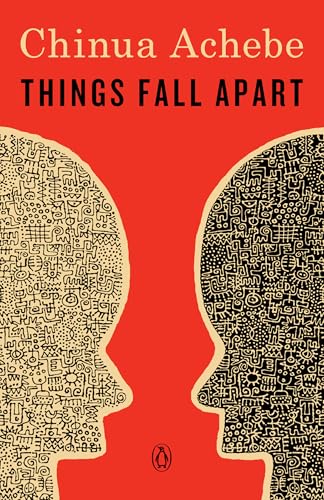
WHILE Achebe's Things Fall Apart is a novel, it functioned as historical revision. Published in 1958, it represented an Igbo village in Nigeria with complexity and dignity, refusing the European tropes of savagery and backwardness that dominated colonial literature. The novel shows a functioning society, not a chaos waiting for European civilization. When colonialism arrives, it does indeed disrupt and ultimately destroy the society, but not because the society was primitive.
Achebe's novel is history told from the colonized perspective. It shows what colonialism destroyed and what was at stake. It has been more influential than many academic histories in changing how people understand colonialism. The novel demonstrates why colonized peoples needed to write their own histories and tell their own stories. It is both literature and a historiographical act that claimed authority to represent African experience.
Buy Things Fall Apart on Amazon
The Year of Wonders by Erna Brodber
ERNA Brodber's The Year of Wonders is a historical novel about Jamaica in the 1960s, representing the transition from colonialism to independence. The novel moves between past and present, between individual consciousness and collective history. Brodber uses experimental narrative form to represent how colonialism and slavery continue to structure consciousness even after formal independence. She shows that decolonization is not a moment but a process requiring spiritual, psychological, and intellectual work.
Brodber's novel is less well-known than Achebe's but equally important. She represents the Caribbean experience of colonialism and shows that independence did not mean the end of colonial domination. Her formal experimentation mirrors her argument that traditional narrative forms are inadequate to representing colonial trauma and healing. The novel's difficulty reflects the difficulty of decolonization itself.
Buy The Year of Wonders on Amazon
Rethinking the Colonial Past and Present
These books reveal colonialism not as a historical episode but as a structure that continues to shape our world. African colonization killed millions, disrupted societies, extracted resources, and imposed artificial boundaries that continue to cause conflict. The colonizers understood themselves as bringing civilization and development. But colonialism was extraction and destruction. Understanding colonial Africa is understanding one of history's great moral catastrophes and understanding why inequality between Africa and Europe persists. These books recover African agency and perspective while making clear the violence of colonialism and its lasting consequences.
Your next good book, in your inbox
We only write when we find a book worth your time. Hand-picked recommendations across history, mythology, true crime and more.
Are you an author?
Get your book in front of readers like these, for free.
- Free book listing →Your own book page with an Amazon button
- Author page →Photo, bio and links to your site
- Featured placement →A spot in our best-of lists, from €29
Free tools we recommend
Get free honest reviewsReview exchange on iWrity, free to join
Books You Might Like

It Ends with Us: A Novel
Colleen Hoover

The Seven Husbands of Evelyn Hugo: A Novel
Taylor Jenkins Reid

The Song of Achilles
Madeline Miller

Educated: A Memoir
Tara Westover