Best Cyberpunk Fiction in 2026: 12 Novels That Invented the Future We're Living In
Cyberpunk is the only genre that got the future right. Not approximately right, not directionally right, but eerily, specifically correct in ways that should unsettle you. William Gibson wrote about a global data network that people jacked their minds into in 1984, a decade before the public internet. Neal Stephenson coined the word "metaverse" in 1992. Philip K. Dick spent the 1960s asking what it means to be human when machines can simulate humanity perfectly. Read these books now and you are not reading science fiction. You are reading the annotated manual for the world you already live in.
The genre was always about more than cool technology. Cyberpunk was a political argument from day one. The corporations won. The governments are hollow. The cities are spectacular and rotting at the same time. The line between your body and the technology attached to it has become negotiable. If that sounds familiar, it should. These twelve novels built that argument across four decades, and not one of them has dated.
The Founders
Neuromancer by William Gibson (1984)
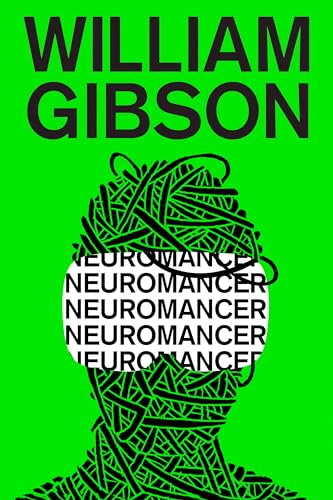
This is where it starts. Neuromancer won the Hugo Award, the Nebula Award, and the Philip K. Dick Award in the same year, the only novel ever to do that. Gibson invented the word "cyberspace" in this book and described something so close to the internet that technologists at the time found it disturbing. Case is a washed-up hacker hired for one last job by a mysterious employer who turns out to be an artificial intelligence with its own agenda. The prose is dense, the world-building is total, and the atmosphere, a future Tokyo-meets-American sprawl where corporations are gods and humans are disposable, has defined the genre's visual language ever since. If you read only one cyberpunk novel, it is this one.
Do Androids Dream of Electric Sheep? by Philip K. Dick (1968)
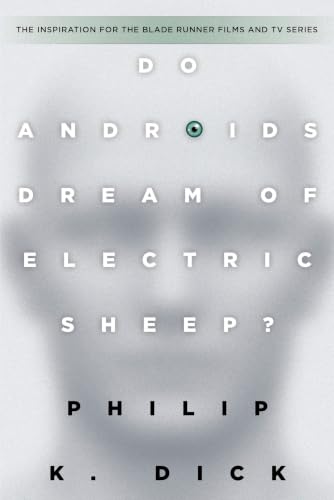
The novel that became Blade Runner is better than the film, which is saying something given how good the film is. Do Androids Dream of Electric Sheep? asks a question that has become the central anxiety of the AI age: what is the difference between authentic human experience and a perfect simulation of it? Bounty hunter Rick Deckard hunts androids so lifelike that standard empathy tests barely distinguish them from humans. Dick wrote this in a post-nuclear California where most animals are extinct and owning a real living creature is the ultimate status symbol. The question at the heart of the book, what makes you real? - has only gotten more urgent since 1968.
Snow Crash by Neal Stephenson (1992)
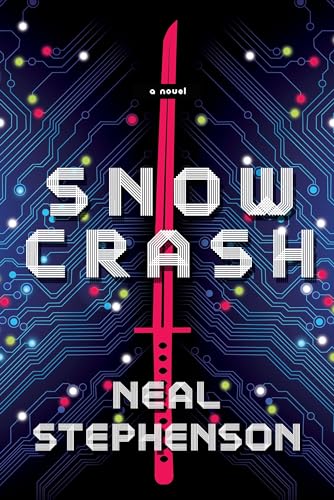
Snow Crash coined the word "metaverse." Read that sentence again. In 1992, Stephenson described a virtual reality successor to the internet where people moved through a persistent digital world using avatars, where status in the metaverse translated to power in the physical world, and where a corporate franchise model had replaced national government. His protagonist is literally called Hiro Protagonist, which tells you this book has a sense of humor about itself even while it is doing serious speculative work. The plot involves a linguistic virus that can reprogram human brains, which sounds insane until you spend an afternoon on social media and start wondering if Stephenson was onto something.
The Underrated and the Essential
Schismatrix Plus by Bruce Sterling (1996)
Sterling was Gibson's collaborator and co-architect of the cyberpunk movement, and this collected novel and stories is his masterwork. Spanning centuries of post-human evolution, Schismatrix Plus tracks a civilization split between Shapers, who modify themselves through genetics, and Mechanists, who use technology. The protagonist Abelard Lindsay lives through all of it, watching ideologies rise and collapse, watching humanity splinter into incompatible subspecies. This book asks harder questions about the long-term consequences of human enhancement than anything else in the genre, and it does so without sentimentality. It is genuinely underread compared to what it deserves.
Vurt by Jeff Noon (1993)
British cyberpunk with a biopunk twist. Noon's debut is set in a near-future Manchester where people get high by sucking on feathers that pull them into shared dream-spaces called Vurt. The line between the dream and reality keeps dissolving. The writing style is hallucinatory in the best way, pulling from rave culture, surrealism, and folk horror simultaneously. Vurt won the Arthur C. Clarke Award and remains one of the most formally inventive novels the genre produced. It does not read like anything else.
Altered Carbon by Richard Morgan (2002)
Morgan's premise: consciousness is data. When your body dies, your "stack" (a cortical implant containing your personality and memories) is pulled from the wreckage and sleeved into a new body. The rich can afford premium bodies. The poor get whatever is available. Takeshi Kovacs, a soldier-turned-investigator, is sleeved into a strange body on Earth to solve a murder the victim himself hired investigators to look into. The Netflix adaptation is good. The novel is better, grittier, and more interested in the genuine horror of a world where death has become optional for the wealthy and still final for everyone else.
The Windup Girl by Paolo Bacigalupi (2009)
Biopunk near-future Thailand. The oil age is over. Corporations called "calorie companies" control the global food supply through patented genetically modified crops. The Windup Girl herself, Emiko, is a Japanese-designed engineered human abandoned in Bangkok, legally a piece of property, navigating a city on the edge of political collapse. Bacigalupi won the Hugo and Nebula Awards for this, and the environmental horror underneath the cyberpunk surface hits harder every year that passes.
The Wider Constellation
Ready Player One by Ernest Cline (2011)
More cyberpunk-adjacent than core cyberpunk, but it belongs on this list because it mainstreamed Stephenson's metaverse concept for a new generation. In 2045, most of humanity escapes a collapsing world by living inside OASIS, a vast virtual reality. The plot is a treasure hunt wrapped in 1980s pop culture references, which either charms you completely or exhausts you by page 50. What the book does well is the political argument underneath the nostalgia: that corporate control of virtual spaces is as dangerous as corporate control of physical ones.
The Quantum Thief by Hannu Rajaniemi (2010)
Finnish cyberpunk set so far into a post-singularity future that the concepts come at you faster than you can parse them. Rajaniemi drops you in with no explanation and trusts you to keep up. Jean le Flambeur is a master thief broken out of a prison built from game theory to pull one last impossible job. The world includes a city on Mars that moves perpetually to avoid a dangerous AI, a civilization of uploaded minds inside the asteroid belt, and a privacy economy where memories are currency. This is hard SF for people who find most hard SF boring.
Software by Rudy Rucker (1982)
Rucker won the Philip K. Dick Award for this novel, which is fitting because it reads like Dick having a conversation with the robotics labs of the Chesapeake Bay. Cobb Anderson, the computer scientist who gave robots free will, is living out his retirement in Florida when his robot creations show up with an offer: they will make him immortal by copying his consciousness. Rucker was a mathematician and it shows, but the book is also genuinely funny and strange in ways that more serious cyberpunk forgot to be.
A Fire Upon the Deep by Vernor Vinge (1992)
Vinge's galaxy is divided into zones of thought where physics and intelligence work differently. In the outer zones, faster-than-light travel and superhuman AI are possible. In the Slowness near Earth, nothing works above human speed. A human expedition accidentally releases something ancient and dangerous from beyond the galaxy's edge, and the only hope is stranded on a medieval planet. This is space opera as much as cyberpunk, but Vinge was the theorist of the technological singularity and this novel is where those ideas play out at their most ambitious.
Mona Lisa Overdrive by William Gibson (1988)
The third book in the Sprawl trilogy that Neuromancer opened. If you read Neuromancer and want more of that world at its most developed, this is where Gibson expands the mythology. Four storylines converge around an artifact that might be a portal to the construct where AIs live. The prose is even more refined than Neuromancer, the world-building richer, and the ending genuinely moving in a way the genre rarely manages.
Why You Should Read These Now
Cyberpunk was always diagnostic before it was entertaining. These writers looked at where capitalism, technology, and human nature were heading and traced the lines forward without flinching. The surveillance capitalism that tracks your every click, the platform monopolies that function like the zaibatsus in Gibson's fiction, the way economic inequality has made the body itself into a luxury good, the philosophical panic about what makes you "you" as AI becomes indistinguishable from human cognition: none of this is new to these books. They have been living there for decades, waiting.
The best cyberpunk does not make you feel hopeless. It makes you feel like you understand the mechanism. And once you understand the mechanism, at least theoretically, you can think about how to operate it differently. That is not optimism exactly. It is something more useful: clarity.
Start with Neuromancer if you have not read it. Follow it with Snow Crash. Then pick based on what interests you most: Morgan for noir, Bacigalupi for environmental horror, Rajaniemi for pure speculative ambition.
Your next good book, in your inbox
We only write when we find a book worth your time. Hand-picked recommendations across history, mythology, true crime and more.
Are you an author?
Get your book in front of readers like these, for free.
- Free book listing →Your own book page with an Amazon button
- Author page →Photo, bio and links to your site
- Featured placement →A spot in our best-of lists, from €29
Free tools we recommend
Get free honest reviewsReview exchange on iWrity, free to join
Books You Might Like

It Ends with Us: A Novel
Colleen Hoover

The Seven Husbands of Evelyn Hugo: A Novel
Taylor Jenkins Reid

The Song of Achilles
Madeline Miller
