Best Entrepreneurship Books 2026
Starting a business means facing brutal honesty about failure, competition, and what it takes to survive. These books strip away the startup mythology and deliver actionable insight into what separates founders who build lasting empires from those who crash and burn.
What Makes a Great Entrepreneurship Book?
The best entrepreneurship texts don't romanticize the grind. They show the actual decisions founders make, the psychological toll of uncertainty, and the specific systems that scale. Look for books written by people who built real companies, not armchair theorists selling dreams. The best ones combine memoir with framework, narrative with tactics.
1. Zero to One by Peter Thiel

Peter Thiel's "Zero to One" challenges everything you think you know about startups. He argues that real innovation comes from doing something no one has done before (zero to one), not from incremental improvement (one to n). Thiel draws on his experience founding PayPal to explore how technology creates value, why competitive markets crush margins, and how the right founding team can become a kind of cult.
What sets this book apart is its contrarian stance. Thiel isn't interested in the startup fairy tale. He's interested in power. Specifically, how some companies capture it and most don't. He examines the 7 questions every startup must answer: engineering, timing, monopoly, people, distribution, durability, and secrets. His philosophy is provocative, sometimes unsettling, and absolutely essential reading for anyone building something new.
Get it here: Zero to One on Amazon
2. The Lean Startup by Eric Ries

Eric Ries rewrote how founders think about product development. The lean startup methodology abandoned the old waterfall approach (build in secret, launch in glory, watch it fail) and replaced it with rapid experimentation, validated learning, and iterative improvement.
What makes this book invaluable: it translates lean manufacturing principles into startup terms anyone can use. Ries walks you through the Build-Measure-Learn feedback loop, pivot-or-persevere decisions, and how to run experiments that actually tell you something true about customer demand. If you're launching anything, this framework will save you months of wasted development and millions in wrong bets. The book is structured around real case studies, making the principles immediately applicable.
Get it here: The Lean Startup on Amazon
3. Rework by David Heinemeier Hansson & Jason Fried

"Rework" is heresy in Silicon Valley, and that's exactly why you need it. The authors of this book built Basecamp, a company that is wildly profitable, doesn't take venture capital, and doesn't work 80-hour weeks. They argue that conventional startup wisdom is backwards.
This book systematically dismantles myths: you don't need a ten-year plan, a massive team, or investor approval. You don't need a traction-obsessed product roadmap. You don't need to hire fast or scale recklessly. Instead, Hansson and Fried advocate for simplicity, profitability, and saying no to nearly everything. Each section is a short manifesto on topics like planning, hiring, product, marketing, and culture. The writing is sharp, the advice is practical, and if you're burning out on VC pressure, this book is oxygen.
Get it here: Rework on Amazon
4. The Innovators by Walter Isaacson
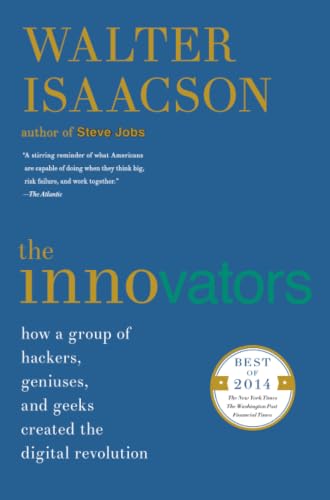
If Zero to One gives you philosophy, "The Innovators" gives you history. Isaacson traces how the computer age actually began, following figures from Ada Lovelace through Steve Jobs. He shows that innovation rarely comes from lone geniuses. It comes from collaboration, sometimes by accident, often born from the collision of different fields.
What you gain: a pattern language for recognizing where breakthroughs happen. Isaacson reveals that the most powerful innovations come when technology meets liberal arts, when dreamers work alongside engineers, when different disciplines collide. This is crucial if you're building anything in AI, biotech, or other cutting-edge spaces. The book reads like narrative history, not a business manual, but the lessons about team dynamics, timing, and crossing domain boundaries are gold.
Get it here: The Innovators on Amazon
5. Blitzscaling by Reid Hoffman & Chris Yeh
Reid Hoffman co-founded LinkedIn and has backed some of the fastest-growing companies ever. "Blitzscaling" explores what happens when you abandon controlled growth and sprint toward dominance in a network-effects market. This book is for founders facing a specific problem: if you don't scale at maximum speed, someone else will capture the market.
Hoffman and Yeh explain how to distinguish between markets where blitzscaling is necessary (social networks, marketplaces, messaging apps) and markets where it kills you (hardware, manufacturing, restaurants). They walk through staffing, financing, and decision-making during hypergrowth. The book includes case studies of companies that scaled right and ones that didn't. If your company has momentum and you're facing the choice between controlled growth and blitzscaling, this is your roadmap.
Get it here: Blitzscaling on Amazon
Key Takeaways
The common thread across all these books: successful entrepreneurship is not inspiration plus hard work. It's systems, decisions, and ruthless honesty about what works. Zero to One teaches you to think differently. The Lean Startup teaches you to test fast. Rework teaches you to ignore most advice. The Innovators teach you that breakthroughs come from unlikely combinations. Blitzscaling teaches you when to go all-in.
Read these in sequence. Start with Rework and The Lean Startup if you're just starting. Move to Zero to One once you understand your market. Add The Innovators and Blitzscaling as your company matures and you face scaling decisions.
Frequently Asked Questions
Q: Should I read all of these before starting a business? A: No. Start with Rework and The Lean Startup. You learn by doing. Use the others as guides when you hit specific challenges.
Q: Which book is best for raising venture capital? A: Zero to One. It's the closest these books get to VC thinking. But honestly, if your only goal is fundraising, you're focused on the wrong thing.
Q: Are these books written by people who still run businesses? A: Mostly yes. Thiel and Hoffman advise startups. Ries consults on lean methodology. Isaacson writes history. Hansson and Fried run Basecamp. They've all kept skin in the game.
Q: What if I'm not starting a tech company? A: These principles work for any business. The frameworks around experimentation, team building, and execution apply everywhere.
Skriuwer Editorial recommends building a library of entrepreneurship reads and returning to them as your business evolves. The lessons compound over time.
Your next good book, in your inbox
We only write when we find a book worth your time. Hand-picked recommendations across history, mythology, true crime and more.
Are you an author?
Get your book in front of readers like these, for free.
- Free book listing →Your own book page with an Amazon button
- Author page →Photo, bio and links to your site
- Featured placement →A spot in our best-of lists, from €29
Free tools we recommend
Get free honest reviewsReview exchange on iWrity, free to join
Books You Might Like

It Ends with Us: A Novel
Colleen Hoover

The Seven Husbands of Evelyn Hugo: A Novel
Taylor Jenkins Reid

The Song of Achilles
Madeline Miller

Educated: A Memoir
Tara Westover