Best Epistolary Novels in 2026: 12 Books Told Through Letters, Diaries, and Documents
Before social media, before texting, before email, people wrote letters. They kept journals. They filed documents. And novelists discovered early on that putting a story inside those private writings could do something a conventional narrator cannot: it can make you feel that you are reading something you were not supposed to see.
The epistolary novel, from the Latin "epistola" meaning letter, is one of the oldest forms in fiction. It also turns out to be one of the most modern. Instagram posts, WhatsApp threads, Reddit posts, text message screenshots shared as evidence in court, the internet runs on fragments of private communication made suddenly public. Epistolary fiction anticipated all of it, and the form has never been more intuitive to read than it is now.
The twelve books below cover the range from the genre's origins in the 18th century to 21st-century fiction that uses the same tools with fresh urgency.
1. Pamela by Samuel Richardson
Richardson's 1740 novel is where the modern epistolary form begins. Pamela Andrews, a servant girl, writes letters to her parents documenting her employer's persistent attempts to seduce or assault her and her eventual moral triumph. The novel was an immediate sensation and sparked a fierce debate about whether Pamela was genuinely virtuous or simply calculating.
What Richardson discovered was that the letter form creates a particular kind of intimacy between reader and character. You are inside Pamela's consciousness in a way that was new in 1740 and that still works. The fact that everything you know comes from Pamela herself is also the point: she is her own unreliable narrator, shaped by self-interest as all narrators are.
Get it here: Pamela on Amazon
2. Dracula by Bram Stoker
Stoker's 1897 novel belongs on the gothic fiction list and on this one, because the epistolary form is not incidental to Dracula, it is essential to how the horror works. The story arrives through Jonathan Harker's journal, Mina's diary, Lucy's letters, Dr. Seward's phonograph recordings, and newspaper clippings. No single person sees the whole picture.
The effect is one of collective piecing-together, a group of people assembling evidence of something they can barely name. The fragmentary structure means the reader understands the threat faster than any individual character does, which creates a specific kind of dread. You can see the trap closing before they can.
Get it here: Dracula on Amazon
3. Persian Letters by Montesquieu
Published in 1721, Montesquieu's novel consists of letters exchanged between two Persian noblemen traveling in Europe and the people they left behind in Persia. On the surface it is a comic satire of French society seen through the eyes of outsiders. Underneath it is a serious work of social philosophy about despotism, religion, gender, and the relativity of cultural norms.
Persian Letters established the fictional traveler as a satirical device, the outsider who asks naive questions that turn out to be devastating. Voltaire picked up this tool and ran with it. The novel also works as a political novel through the subplot of the Persian harem, where the wives left behind under guard slowly move toward rebellion. The final letters are genuinely dark.
4. The Color Purple by Alice Walker
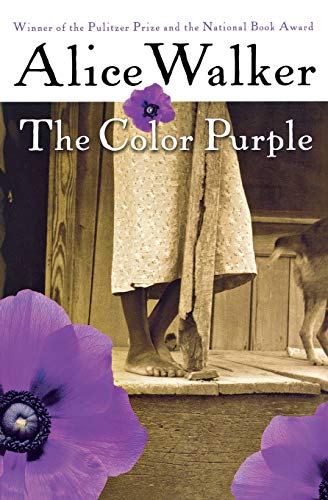
Walker's 1982 Pulitzer Prize-winning novel is a masterpiece of the form. Celie, a poor Black woman in the rural American South in the early 20th century, writes letters to God because she has no one else to tell. She cannot be heard by the people around her. The letters are the only place she exists as a full subject.
The shift that happens mid-novel, when Celie begins receiving letters back from her sister Nettie in Africa and when her letters to God become letters to Nettie, is one of the most moving structural choices in American fiction. The form carries the entire emotional arc of the book. Celie finds her voice by finding someone to write to.
Get it here: The Color Purple on Amazon
5. We Need to Talk About Kevin by Lionel Shriver
Shriver's 2003 novel is written as a series of letters from Eva to her estranged husband Franklin, in the aftermath of a school shooting carried out by their son Kevin. The letters are Eva's attempt to reconstruct who Kevin was, what she failed to see or did not want to see, and whether she bears responsibility for what he became.
The letter form is doing essential work here. Eva is writing to Franklin but she is also writing to herself, and the act of writing is inseparable from the act of self-justification. Everything she tells us is filtered through her guilt. The reader has to decide constantly how much to trust a narrator who has every reason to shape the story in her favor.
Get it here: We Need to Talk About Kevin on Amazon
6. The Perks of Being a Wallflower by Stephen Chbosky
Chbosky's 1999 novel is a series of letters from 15-year-old Charlie to an anonymous recipient he addresses only as "Friend." Charlie is starting high school, he is lonely and observant and carrying trauma he does not yet have language for, and his letters document his first year with unusual directness.
The choice to make the recipient anonymous is interesting. It means Charlie is writing into a kind of void, which is exactly the adolescent condition the novel is about: having things to say and not being sure anyone is actually listening. The format also gives Chbosky permission to let Charlie's voice be unpolished in a way that feels authentic rather than affected.
7. Flowers for Algernon by Daniel Keyes
Keyes's 1966 novel tracks Charlie Gordon's transformation through his own progress reports. Charlie, a 32-year-old man with an intellectual disability, undergoes an experimental surgery that dramatically raises his intelligence. The reports he files document his change from barely literate to brilliant, and then document the reversal.
The formal device is devastating. Early reports are full of misspellings and grammatical errors that gradually correct themselves as Charlie's intelligence climbs. Then, slowly, the errors begin to return. You watch the deterioration happen in the prose itself. No external narrator could produce this effect. The form is the story.
8. 84 Charing Cross Road by Helene Hanff
Hanff's 1970 book is a real epistolary, not a novel: the actual correspondence between Hanff, a New York writer, and Frank Doel, a bookseller at 84 Charing Cross Road in London, conducted over 20 years from 1949 to 1969. Hanff ordered out-of-print books; Doel found them. Over two decades, a friendship developed that was never conducted in person.
The book is short and it is about nothing much: books, prices, food parcels sent from America to a Britain still under post-war rationing, the texture of two lives glimpsed through correspondence. It is also one of the most affecting books on this list because the relationship is real and its ending, Frank Doel died before Hanff could visit London, is genuinely sad in a way that fiction cannot manufacture.
Get it here: 84 Charing Cross Road on Amazon
9. Gone Girl by Gillian Flynn
Flynn's 2012 thriller alternates between Nick Dunne's first-person narration and entries from his wife Amy's diary. Amy disappears on their fifth wedding anniversary. Nick's account is self-serving and evasive. Amy's diary presents a very different picture of their marriage. One of them is lying. The novel's midpoint revelation reframes which narrative you should have been trusting.
Flynn uses the diary form precisely because diaries feel trustworthy. We assume private writing is honest. Gone Girl spends its entire first half exploiting that assumption and then destroys it. The genre mechanics are precise: the formal choice is not decorative but structural to the thriller's central trap.
10. The Book Thief by Markus Zusak
Zusak's 2005 novel is narrated by Death, who has collected the story of Liesel Meminger, a German girl living near Munich during World War Two, from a book she left behind. The narrative device is epistolary in spirit if not in strict form: Death presents documents, reports, and observations as assembled evidence of a life.
The choice of narrator does something that a conventional narrator cannot. Death has no stake in the outcome and has seen everything. The distance creates a kind of tenderness that would become sentimentality in a human narrator. Death likes humans, despite everything, and finds their brief lives bewildering and beautiful. That combination is what the book is about.
11. Clarissa by Samuel Richardson
Richardson's second major novel, published in 1748, is one of the longest novels in English and one of the most formally ambitious uses of the epistolary form. Clarissa Harlowe's story, her imprisonment by her family, her abduction by Lovelace, the assault she suffers, her subsequent death, is told through letters exchanged between multiple correspondents with competing perspectives.
What Richardson achieved is something close to a modern novel's narrative complexity, multiple unreliable voices, contested interpretations of events, and a central character seen from outside as well as inside. Lovelace's letters are particularly striking: charming, self-justifying, and deeply sinister. He believes himself the hero of his own story even as he commits crimes against Clarissa.
12. Letters to a Young Poet by Rainer Maria Rilke
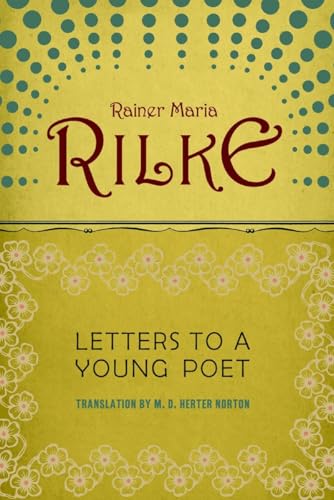
Rilke's 1929 volume is not a novel but it belongs on this list because it is one of the most sustained demonstrations of what letters can do. Between 1902 and 1908, the 27-year-old Rilke exchanged letters with Franz Xaver Kappus, a 19-year-old military cadet who had written asking whether his poetry was any good. Rilke's ten letters constitute some of the finest prose in the German language.
The letters are about solitude, about what it means to live as an artist, about how to be patient with questions that have no easy answers. They are also simply beautiful. Reading them you understand why the epistolary form survives: a letter is a particular kind of attention paid to a particular person, and that specificity gives it an intimacy that public writing rarely achieves.
Get it here: Letters to a Young Poet on Amazon
Why the Form Keeps Coming Back
The epistolary novel survived every shift in literary fashion because the unreliable first person is permanently interesting. A letter or a diary entry is always a performance as much as a confession. The writer knows they are writing. They choose what to include and what to leave out. And the gap between what they say and what actually happened is where the most interesting fiction lives.
Social media has not killed this dynamic. If anything, it has made readers more sophisticated about it: everyone now has experience of curating their own self-presentation online. The epistolary novel's central question, who is actually telling this story and why, has never felt more immediate.
Browse more literary fiction recommendations in the fiction collection on Skriuwer.
Your next good book, in your inbox
We only write when we find a book worth your time. Hand-picked recommendations across history, mythology, true crime and more.
Are you an author?
Get your book in front of readers like these, for free.
- Free book listing →Your own book page with an Amazon button
- Author page →Photo, bio and links to your site
- Featured placement →A spot in our best-of lists, from €29
Free tools we recommend
Get free honest reviewsReview exchange on iWrity, free to join
Books You Might Like

It Ends with Us: A Novel
Colleen Hoover

The Seven Husbands of Evelyn Hugo: A Novel
Taylor Jenkins Reid

The Song of Achilles
Madeline Miller

Educated: A Memoir
Tara Westover