Best Existentialism Books in 2026: Freedom, Authenticity, and the Absurd
Best Existentialism Books in 2026: Freedom, Authenticity, and the Absurd
Existentialism emerged from the devastation of World War II. The certainties of the past had collapsed. Traditional authority and inherited meaning no longer held. Philosophers faced a world where human atrocity had no explanation except human choice. From that wreckage came existentialism, a philosophy that places absolute freedom and responsibility at the center of human existence.
The Founding Texts
Being and Nothingness by Jean-Paul Sartre is the foundational existentialist text. Sartre argues that consciousness is nothingness, a void that allows freedom. We are condemned to be free. Every choice is ours alone. There is no essence that determines our nature. A waiter is not born a waiter. He chooses the role, and if he plays the role too perfectly, identifying completely with it, he falls into "bad faith," the self-deception of pretending his role is predetermined. The book is dense and demands active reading, but it's the source from which all subsequent existentialist philosophy flows.
Existentialism Is a Humanism by Jean-Paul Sartre is a more accessible essay where Sartre clarifies misunderstandings about existentialism. He argues that existentialism does not lead to moral relativism. Just because there is no predetermined human essence doesn't mean all choices are equal. When you choose for yourself, you choose for humanity. You affirm values through your choices. The essay remains a useful entry point into Sartre's thought.
Nausea by Jean-Paul Sartre is Sartre's philosophical novel. The protagonist experiences the sudden, overwhelming awareness that reality has no predetermined meaning. Objects are simply there, existing without justification or explanation. The feeling of nausea arises from recognizing that existence is absurd, that there are no essences, that freedom is boundless and horrifying. The novel shows existentialism in action, experience rather than abstract argument.
The Absurd and Meaning
 The Myth of Sisyphus by Albert Camus is the existentialist response to meaninglessness. Camus argues that the world is absurd because humans seek meaning but the universe offers none. We are strangers in a strange land, condemned to die, searching for rational explanation in an irrational cosmos. Rather than commit suicide or embrace false hope, Camus argues we must imagine Sisyphus happy. We must push the rock uphill knowing it will roll down, and we must accept that struggle as the substance of life.
The Stranger by Albert Camus is Camus's novel of absurdism. The protagonist commits murder and shows no remorse. What disturbs the court is not the crime but his refusal to perform conventional emotion. He won't lie and say he regrets killing someone when he doesn't. His authenticity becomes his damnation. The novel shows how society demands we live in bad faith, performing emotions and values we don't truly feel. To live authentically is to alienate yourself from society.
The Plague by Albert Camus is allegory and realism combined. A plague descends on an Algerian city, trapping residents in quarantine. The novel explores how people respond to absurd circumstances beyond their control. Some surrender to despair. Others find meaning in solidarity and action against the plague. The plague is existence itself, indifferent to human suffering, and the characters' responses show different approaches to an absurd world.
Authenticity and Bad Faith
Either/Or by Søren Kierkegaard predates existentialism but established its concerns. Kierkegaard presents two modes of existence: the aesthetic, where life is the pursuit of pleasure and novelty, and the ethical, where life is commitment to principles and others. The aesthete lives in despair because pleasure is fleeting. The ethical person achieves authenticity through commitment. The book shows the anxiety that comes with freedom and the need to choose a way of life rather than drift.
The Concept of Anxiety by Søren Kierkegaard explores anxiety as the fundamental human condition. Anxiety arises from freedom, from the dizzying awareness that everything is possible and you must choose. Anxiety precedes despair. It's the vertigo of standing before infinite possibility.
Authentic Existence by Hubert Dreyfus provides a contemporary reading of Heidegger's existentialism through Heidegger. Heidegger emphasized authenticity as genuine self-understanding, distinguishing it from the "they-self," the person you become by conforming to social expectations. The book shows how existentialism addresses the problem of living in a world of received meanings and inherited expectations.
Existential Freedom and Responsibility
Critique of Pure Reason by Immanuel Kant isn't existentialist, but it establishes the foundation. Kant argues that we can never know things as they are in themselves, only as they appear to us. This opens the existentialist question: if we construct reality through our consciousness, what is our responsibility in that construction?
Humanistic Psychology as developed by Abraham Maslow and Carl Rogers drew directly from existentialism. They argued that psychology must address the human experience of freedom and the search for self-actualization. The self is not fixed but something you create through choices and self-understanding.
 Man's Search for Meaning by Viktor Frankl applies existentialism to extreme circumstances. Frankl was imprisoned in Nazi concentration camps. He survived by finding meaning in his suffering, by choosing his response to unbearable circumstances. His famous claim: "Everything can be taken from a man but one thing: the last of the human freedoms, to choose one's attitude in any given set of circumstances." The book shows existential philosophy in the most extreme conditions imaginable.
Contemporary Existentialism
The Courage to Be by Paul Tillich examines what it takes to maintain authenticity in the face of non-being. Tillich argues that courage is not the absence of anxiety but the affirmation of existence despite anxiety. You must have the courage to be yourself, to accept your finite existence, and to create meaning in an indifferent universe.
Existentialism and Human Emotions by Jean-Paul Sartre explains how emotions fit into existentialist philosophy. Emotions aren't passive reactions to reality. They are ways of engaging with the world, often ways of escaping freedom. When we're overwhelmed, we may emotionally retreat into denial or despair as a way of avoiding responsibility.
The Human Condition by Hannah Arendt examines how modern life alienates us from the activities that make us human. Work, action, and speech are the foundations of the human condition, yet industrial society reduces humans to labor. Arendt argues we must recover action and public participation as ways of affirming our human existence.
Literature of Existential Themes
 Crime and Punishment by Fyodor Dostoevsky explores whether extraordinary people are justified in transgressing moral law for higher purposes. Raskolnikov murders a pawnbroker to test his theory, then experiences the existential weight of responsibility. The novel shows how individual conscience rebels against abstract moral systems.
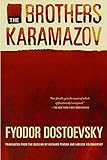 The Brothers Karamazov by Fyodor Dostoevsky presents existential doubt through the character of Ivan Karamazov. Ivan rejects God and divine authority on the grounds that innocent suffering cannot be justified by eternal harmony. He chooses to reject the world rather than accept its suffering.
The Trial by Franz Kafka presents existence without meaning. K is arrested without knowing the charge, tried by a process he cannot understand, and executed without resolution. The novel captures existential absurdity, the way bureaucracy and authority obscure meaning rather than reveal it.
Why Existentialism Endures
Existentialism is not comfortable philosophy. It removes the comfort of predetermined meaning, inherited purpose, and cosmic justice. Yet it's profoundly human. It addresses how we actually live, the choices we make, the meaning we create, the anxiety we feel, and the authenticity we seek. In a world of increasing complexity and conformity, existentialism reminds us that freedom is both our greatest burden and our greatest possibility.
Best Existentialism Books: Quick Links
- Being and Nothingness by Jean-Paul Sartre - https://www.amazon.com/dp/0671867806?tag=31813-20
- Nausea by Jean-Paul Sartre - https://www.amazon.com/dp/0811200426?tag=31813-20
- The Myth of Sisyphus by Albert Camus - https://www.amazon.com/dp/0525564454?tag=31813-20
- The Stranger by Albert Camus - https://www.amazon.com/dp/0679720200?tag=31813-20
- Man's Search for Meaning by Viktor Frankl - https://www.amazon.com/dp/080701429X?tag=31813-20
Your next good book, in your inbox
We only write when we find a book worth your time. Hand-picked recommendations across history, mythology, true crime and more.
Are you an author?
Get your book in front of readers like these, for free.
- Free book listing →Your own book page with an Amazon button
- Author page →Photo, bio and links to your site
- Featured placement →A spot in our best-of lists, from €29
Free tools we recommend
Get free honest reviewsReview exchange on iWrity, free to join
Books You Might Like

It Ends with Us: A Novel
Colleen Hoover

The Seven Husbands of Evelyn Hugo: A Novel
Taylor Jenkins Reid

The Song of Achilles
Madeline Miller

Educated: A Memoir
Tara Westover