Best Classic Fantasy Books in 2026: 12 That Built the Genre's Foundation
Fantasy literature is not escapism. It is the oldest form of literature, predating realism by millennia. Its project is the same as all great literature: to take the reader out of their habitual relationship to the world and show them what is actually at stake in the human condition. It uses myth, symbol, and the extraordinary to make visible what everyday realism obscures. A story set in another world with magic and dragons can illuminate the present more clearly than any realistic novel.
These twelve classics are the foundation of the fantasy genre.
1. J.R.R. Tolkien's The Lord of the Rings (1954)
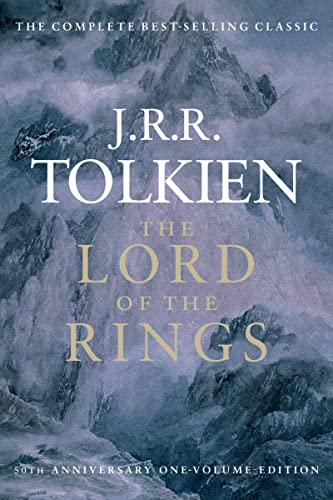
The genre-defining work. Tolkien created a complete mythology, a genealogy of languages, a history spanning thousands of years. The Ring must be destroyed. The Fellowship sets out. The quest is the structure, but the real story is about friendship, sacrifice, corruption, and the weight of power. Tolkien's achievement is not that he invented fantasy (he did not) but that he created a totality, a world that feels complete and historical and alive. The mythology is not decoration but the foundation of everything. Find The Lord of the Rings on Amazon.
Why it matters: Tolkien proved that fantasy could be literary and profound. He showed that the secondary world (the fantasy world) could have its own internal coherence and logic. Every fantasy writer since has worked in his shadow.
2. Ursula K. Le Guin's A Wizard of Earthsea (1968)
A young wizard in a world of islands must confront a shadow he has released. The novel is a coming-of-age story, a quest, a meditation on balance and responsibility. Le Guin's Earthsea is spare, elegant, haunted by the need for equilibrium. The wizard's power must be balanced against the consequences of using that power. The book is short, but it is dense. It is the anti-Tolkien: instead of expanding the world, it deepens the interior landscape. Find A Wizard of Earthsea on Amazon.
Why it matters: Le Guin showed that fantasy could be literary and philosophical. She proved that the wizard's journey inward could be as important as the journey outward.
3. T.H. White's The Once and Future King (1958)
Arthur becomes king, builds a kingdom, attempts to establish justice and peace. The novel is philosophical, political, tragic. White uses Arthurian legend to explore the question of power and how it should be used. Might versus right. The sword as symbol of violence or justice. The kingdom as utopian possibility constantly threatened by the persistence of war. The Arthurian tradition is more philosophy than action, more meditation than narrative. Find The Once and Future King on Amazon.
Why it matters: White proved that the fantasy novel could be a vehicle for political philosophy. He showed that the secondary world could be used to interrogate real political problems.
4. C.S. Lewis's The Lion, the Witch and the Wardrobe (1950)
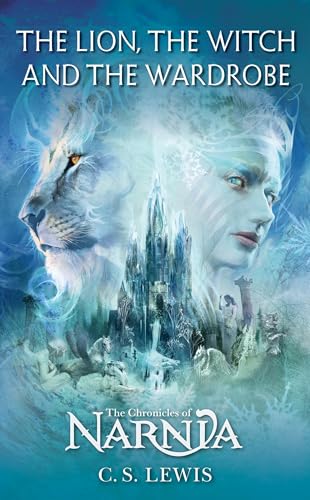
Children enter a wardrobe and find themselves in a fantastical world. Narnia is eternally winter. Aslan is the Christ figure. The children must save Narnia. Lewis built fantasy from Christian allegory, which could be reductive, but Lewis's gifts of imagination and mythic thinking make the book work beyond the theology. The White Witch is genuinely terrifying. Aslan is genuinely numinous. The book works because Lewis believed in the reality of the spiritual truths he was embodying. Find The Lion, the Witch and the Wardrobe on Amazon.
Why it matters: Lewis showed that allegory could be literarily sophisticated. He proved that a secondary world could be populated with theological meaning without becoming didactic.
5. George MacDonald's The Princess and the Goblin (1872)
A princess, her grandfather, a miner boy, and a magical quest. The book is the Victorian source for modern fantasy. Both Lewis and Tolkien credited MacDonald as a major influence. What MacDonald accomplished was a sense of the magical as natural, as embedded in the world rather than standing apart from it. The goblins are not demons but neighbors, threatening but understandable. The book has a fairy-tale quality, but it is novel-length, novelistic in its character development. Find The Princess and the Goblin on Amazon.
Why it matters: MacDonald established that fantasy could be literary from its inception. He showed that the magical could be woven into ordinary life, that wonder was not separate from the mundane.
6. Fritz Leiber's Swords and Deviltry (1970)
The birth of sword and sorcery. Fafhrd and the Gray Mouser are thieves and adventurers in a world of cities and gods and magic. Leiber's genius was creating a world that felt lived-in, that had its own geography and history and culture. The Conan stories were action-driven; Leiber's stories balanced action with character and atmosphere. The tone is varied: sometimes comic, sometimes tragic, sometimes mystical. Find Swords and Deviltry on Amazon.
Why it matters: Leiber proved that sword and sorcery could be literary. He showed that action and adventure could be executed with style and wit.
7. Michael Moorcock's Elric of Melniboné (1972)
Elric is an albino emperor of a decadent empire. He must choose between duty to his throne and loyalty to his wife. His sword, Stormbringer, is cursed and hungry. Moorcock's fantasy is philosophical, dealing with chaos and order, with the nature of good and evil. Elric is not a hero but an anti-hero, destructive, tragic. Moorcock created a mythology that was darker and more complex than Tolkien's, where victory and defeat were ambiguous. Find Elric of Melniboné on Amazon.
Why it matters: Moorcock proved that the fantasy hero could be flawed and tragic. He showed that the secondary world could be built on moral ambiguity rather than the clear division between good and evil.
8. Gene Wolfe's The Wizard Knight (2004)
A young man is taken to another world and given the chance to live out a fantasy. But the novel is not straightforward. It is told from the perspective of the protagonist, who is old and remembering a youth that happened in another world. The layers accumulate. Is this world real or the protagonist's fantasy? Are his memories accurate? Wolfe creates a fantasy that questions the nature of reality and consciousness. The prose is baroque, allusive, difficult. Find The Wizard Knight on Amazon.
Why it matters: Wolfe proved that fantasy could be experimental and literary. He showed that the secondary world could be built from unreliable perception, that the very nature of what is real and unreal could be uncertain.
9. Mervyn Peake's Gormenghast (1950)
A castle so vast it becomes a world. Titus Groan is born into a family that rules by ritual. The castle is ancient, baroque, strange. Peake's prose is ornate, overwhelming, baroque to match the setting. Gormenghast is not a normal high fantasy. It is gothic, grotesque, darkly comic. The world operates by its own logic, and the reader must learn that logic slowly. Find Titus Groan (book one) on Amazon.
Why it matters: Peake proved that fantasy could be aesthetically daring. He showed that prose style could be excessive and serve the world-building rather than obscuring it.
10. Patricia McKillip's The Riddle-Master of Hed (1976)
A farmer-prince leaves his land to find the answer to a riddle. His journey takes him through a world that is beautiful and dangerous and magical. McKillip's genius is her ability to create atmosphere through suggestion rather than exposition. The world unfolds through the protagonist's movement through it. The magic is subtle, integrated into the landscape. The prose is lyrical without being purple. Find The Riddle-Master of Hed on Amazon.
Why it matters: McKillip proved that fantasy could be lyrical and subtle. She showed that mystery could be the engine of narrative, that not all things need to be explained.
11. Lloyd Alexander's The Book of Three (1964)
A pig-keeper boy begins a quest. The book draws from Welsh mythology but adapts it for children. Alexander's gift was making the Welsh mythological tradition accessible while remaining true to its logic. The secondary world is rich with detail, populated with characters who feel real. The tone is serious but not solemn. Find The Book of Three on Amazon.
Why it matters: Alexander proved that children's fantasy could be literary and complex. He showed that adapting mythology could be done with respect and imagination.
12. N.K. Jemisin's The Fifth Season (2015)
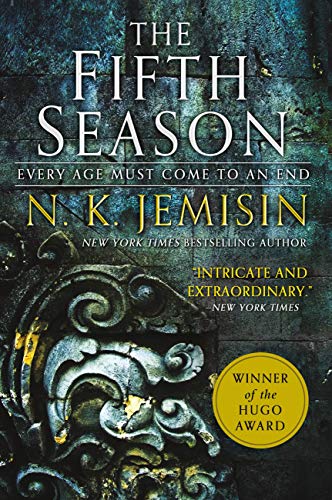
A world where earthquakes and geological catastrophe are regular. Women called orogenes can control these forces, but they are enslaved and abused. The novel is told from three perspectives, across multiple timelines. Jemisin's fantasy is rooted in questions of power, oppression, and resistance. The secondary world serves as a means of exploring real systemic injustice. The magic system is intricate and meaningful. Find The Fifth Season on Amazon.
Why it matters: Jemisin proved that contemporary fantasy could address systemic oppression. She showed that the secondary world could be used to explore questions of race and gender and power in ways that realistic fiction could not.
Why Fantasy Still Matters
Fantasy literature has an extraordinary power to make the political visible. When you tell a story about a kingdom and its structure, you are telling a story about power. When you describe how magic works, you are describing how energy and knowledge flow through a society. When you build a world with different rules, you are asking what remains constant and what changes. The secondary world is not an escape from the real world but a lens through which to see it more clearly.
These twelve novels demonstrate the range of fantasy: from pure mythological creation (Tolkien) to allegory (Lewis) to philosophical meditation (White) to formal experimentation (Wolfe) to social critique (Jemisin). They remain central because fantasy is the form that allows us to ask the biggest questions about human nature and human society.
Explore the Genre
- For complete mythological worlds: Start with Tolkien's The Lord of the Rings or MacDonald's The Princess and the Goblin. Both create entire secondary worlds.
- For philosophical depth: Try White's The Once and Future King or Wolfe's The Wizard Knight. Both deal with ideas at the deepest level.
- For lyrical prose: Read McKillip's The Riddle-Master of Hed or Le Guin's A Wizard of Earthsea. Both balance action with beautiful language.
- For contemporary relevance: Try Jemisin's The Fifth Season or Moorcock's Elric stories. Both address systemic power and oppression.
Search Amazon for fantasy classics to find them in your favorite format.
Want more curated reading lists? Explore our collections of best science fiction books, best horror novels, and best detective fiction.
Your next good book, in your inbox
We only write when we find a book worth your time. Hand-picked recommendations across history, mythology, true crime and more.
Are you an author?
Get your book in front of readers like these, for free.
- Free book listing →Your own book page with an Amazon button
- Author page →Photo, bio and links to your site
- Featured placement →A spot in our best-of lists, from €29
Free tools we recommend
Get free honest reviewsReview exchange on iWrity, free to join
Books You Might Like

It Ends with Us: A Novel
Colleen Hoover

The Seven Husbands of Evelyn Hugo: A Novel
Taylor Jenkins Reid

The Song of Achilles
Madeline Miller

Educated: A Memoir
Tara Westover