Best Fantasy Books of All Time: 10 Worlds You Will Never Want to Leave
Fantasy is the genre that refuses to apologize for itself. It builds worlds from scratch, populates them with creatures and conflicts that have no real-world equivalent, and then somehow makes you care more about those invented stakes than you do about most real events. The best fantasy novels do something fiction rarely manages: they feel more real than reality while being entirely made up. These ten books are the ones that define what the genre can do at its peak.
1. The Lord of the Rings by J.R.R. Tolkien
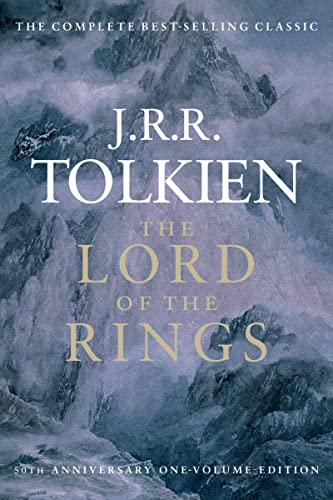
There is no fantasy list without this book, and no apology is needed for that. Tolkien did not just write a story about a hobbit carrying a ring across a dangerous landscape. He invented a world with its own languages, histories, calendars, and cosmology, and then wrote a story set inside it that feels like the tip of an iceberg. The depth is the point. Middle-earth rewards repeated reading because there is always more underneath. The threat of the One Ring is not just physical danger but moral corruption, and the book's central argument, that ordinary people choosing to do the right thing matters more than power, has aged better than almost any other literary message from the 20th century. Buy The Lord of the Rings on Amazon.
2. A Game of Thrones by George R.R. Martin
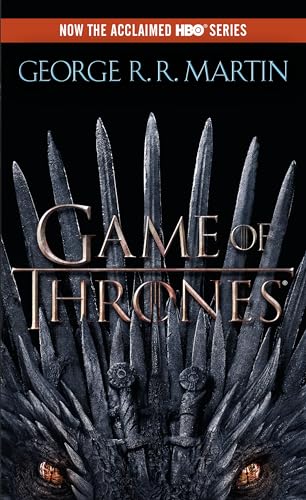
Martin's contribution to the genre was teaching it that good people can lose and bad people can win, at least in the short term. Westeros is a fantasy world built on realistic political mechanics: marriage alliances, economic power, and the brute reality that armies cost money. The characters feel like real people making decisions under pressure rather than archetypes moving through predetermined roles. Ned Stark's fate in the first book was a genuine shock to readers who had grown up expecting heroes to survive, and it changed how the genre thought about stakes. Buy A Game of Thrones on Amazon.
3. The Name of the Wind by Patrick Rothfuss
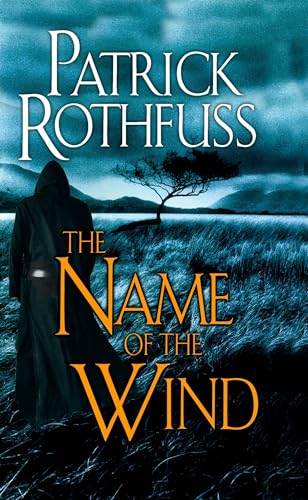
Kvothe tells his own legend to a chronicler at an inn, knowing the listener expects a hero and providing something more complicated. Rothfuss writes prose that reads like it was revised fifty times, which it apparently was, and the University sequences where Kvothe learns the art of naming have a sense of intellectual wonder that most fantasy novels miss entirely. The magic system feels genuinely discovered rather than invented, which is rare. The first book in the Kingkiller Chronicle is complete in itself and stands as one of the most beautiful pieces of writing the genre has produced. Buy The Name of the Wind on Amazon.
4. The Way of Kings by Brandon Sanderson
Sanderson is the most systematic fantasy writer working today. His Stormlight Archive is built around a magic system called Stormlight, tied to storms that periodically devastate the landscape, and around a world where the ecology, the politics, and the history all follow from that central fact. The Way of Kings opens on a world already deep into a long war, and the process of figuring out what is actually happening is half the pleasure. Kaladin's arc from enslaved soldier to something more is one of the best character progressions in modern fantasy. At over a thousand pages it is a commitment, but almost no one regrets making it.
5. Assassin's Apprentice by Robin Hobb
Hobb writes fantasy that hurts. Fitz is a royal bastard trained as an assassin from childhood, and the Six Duchies he inhabits is a kingdom under genuine threat from raiders who strip their victims of their minds and souls. The Farseer trilogy is famous for refusing to spare its protagonist: Fitz makes bad decisions, pays real consequences, and loves people he cannot protect. If you have read fantasy that felt emotionally safe and wanted something that did not, start here. The bond between Fitz and the wolf Nighteyes is one of the finest human-animal relationships in fiction, fantasy or otherwise.
6. The Blade Itself by Joe Abercrombie
Abercrombie arrived in fantasy and immediately started dismantling its conventions. Logen Ninefingers is a barbarian who has done genuinely terrible things and knows it. Jezal dan Luthar is a privileged young officer who is not a good person at the start of the book and does not become one simply because the plot requires it. The First Law trilogy treats heroism and villainy as positions on a spectrum rather than fixed identities, and the world it inhabits has the gritty weight of history rather than the polished gleam of myth. Abercrombie has said he was reacting against fantasy that let characters off too easily, and the books show it.
7. The Colour of Magic by Terry Pratchett
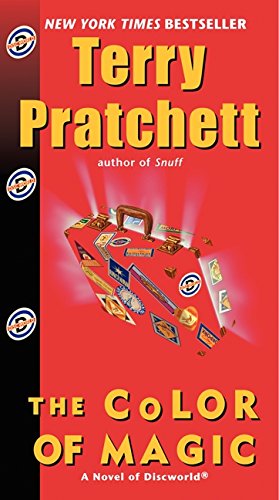
Discworld started as a parody of fantasy tropes and became something far larger: a 41-book series that used a flat world resting on the backs of four elephants standing on a giant turtle as a vehicle for thinking seriously about death, justice, politics, religion, and what it means to be human. The Colour of Magic introduces the Discworld and its two most famous early characters, the failed wizard Rincewind and the tourist Twoflower. It is the lightest entry in the series, but the wit is sharp and the invention is extraordinary. Pratchett gets funnier and more philosophical as the series progresses, but this is where the world begins. Buy The Colour of Magic on Amazon.
8. Mistborn: The Final Empire by Brandon Sanderson
Sanderson appears twice on this list because he has produced two separate series good enough to belong here. Mistborn is set in a world where the prophesied hero failed a thousand years ago and the Dark Lord won. The tyrant has ruled ever since. The magic system, Allomancy, involves swallowing and burning metals to gain specific powers, and Sanderson works out the tactical implications with the rigor of a game designer. The heist structure of the first book gives it a pace and energy that the more epic Stormlight books trade for depth.
9. The Lies of Locke Lamora by Scott Lynch
Lynch takes the heist novel and drops it into a fantasy city that owes more to Renaissance Venice than to medieval Europe. Locke Lamora is a con artist of genius who runs elaborate schemes against the nobility of Camorr, and the book alternates between his present-day crisis and flashbacks to his training. The city feels genuinely lived-in, the banter between the Gentlemen Bastards is some of the best dialogue in the genre, and the book does not pull its punches when things go wrong. It is one of those novels that earns its dark moments because the light moments are so good.
10. Jonathan Strange and Mr Norrell by Susanna Clarke
Clarke's novel is set in an alternate 19th century England where magic once existed and two very different magicians attempt to bring it back. The prose style is deliberately Victorian, complete with extensive footnotes detailing the history of English magic, and the book rewards patient readers with one of the most fully realized alternate histories in fantasy literature. The relationship between the cautious, proprietary Norrell and the brilliant, reckless Strange drives the plot, but it is the folklore-rich world underneath the story that makes the book unforgettable. Clarke took ten years to write it and it shows, in the best possible way.
Where to Start
If you have never read serious fantasy and want a starting point, The Lord of the Rings or The Name of the Wind are the most accessible of these ten. If you have read widely in the genre and want something that pushes against its conventions, The Blade Itself or Assassin's Apprentice will give you that. All ten are worth your time. Fantasy at its best is not escapism in the dismissive sense. It is a way of examining real things through an invented lens, and these books do that better than almost anything else in print.
Your next good book, in your inbox
We only write when we find a book worth your time. Hand-picked recommendations across history, mythology, true crime and more.
Are you an author?
Get your book in front of readers like these, for free.
- Free book listing →Your own book page with an Amazon button
- Author page →Photo, bio and links to your site
- Featured placement →A spot in our best-of lists, from €29
Free tools we recommend
Get free honest reviewsReview exchange on iWrity, free to join
Books You Might Like