Best Gothic Fiction in 2026: 12 Novels That Prove Darkness Is the Most Honest Lens
Gothic fiction endures because it allows us to speak what cannot be spoken in daylight. It traffics in repressed desire, inherited trauma, the past that refuses to stay buried, and the monstrousness that hides inside respectable life. The supernatural in gothic fiction is rarely supernatural at all. It is metaphor. The vampire is sexual transgression. The haunted house is psychological rupture. The monster is the self one refuses to acknowledge.
The genre is roughly 250 years old, and it has never been more relevant. The twelve books below show what gothic fiction can do: how it bends form to its purposes, how it uses architecture and atmosphere as character, and why the fears it articulates still reach us now.
1. Frankenstein by Mary Shelley (1818)
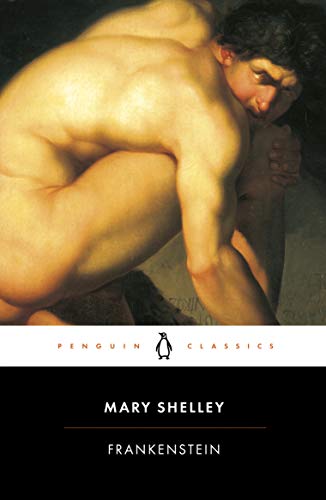
Mary Shelley wrote this when she was 18. It is the foundational text of both science fiction and gothic horror, and the reason it endures is that the real monster is not the creature. It is Victor Frankenstein: his narcissism, his cowardice, his refusal to take responsibility for what his ambition has produced. The creature he abandons becomes something worse not because it was made wrong but because it was shown no love. The frame narrative (a ship's log from an Arctic explorer) adds distance and unreliability that mirror the novel's emotional temperature.
Get it here: Frankenstein on Amazon
2. Dracula by Bram Stoker (1897)
Stoker's genius was formal. The novel is built from journal entries, letters, newspaper clippings, and a ship's log. The reader assembles the threat from fragments, as the characters do, understanding nothing until it is almost too late. The epistolary structure creates genuine unease. What Stoker knew: what you do not show is always scarier than what you do. Count Dracula appears surprisingly little. The horror is in the glimpse, the inference, the thing just beyond the page.
Get it here: Dracula on Amazon
3. Jane Eyre by Charlotte Bronte (1847)

This is gothic as feminist criticism. Jane Eyre walks into a haunted house and finds her own power there. The wife in the attic (Bertha Mason) is the novel's true subject: the woman whose rage and sexuality cannot be contained by Victorian propriety, the woman who must be locked away because she threatens everything the ordered world depends on. Charlotte Bronte writes Bertha as monstrous and tragic and entirely human. The burning of Thornfield, the Gothic collapse at the novel's climax, is Bertha's final act of defiance.
Get it here: Jane Eyre on Amazon
4. Wuthering Heights by Emily Bronte (1847)
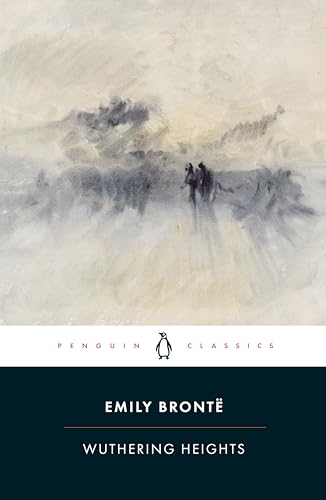
This is gothic in the most raw sense: the moors as hostile force, Heathcliff as someone who loves so destructively that he destroys himself and everyone around him, the idea that love and cruelty are not opposites but the same thing viewed from different angles. Nelly Dean's narration fractures the story's reliability. What she tells us about Heathcliff and Catherine may not be true, or may be true in a way that serves her purposes rather than theirs. The Gothic element here is not supernatural. It is psychological: the way trauma passes from generation to generation, the way the past colonizes the present.
Get it here: Wuthering Heights on Amazon
5. Selected Tales by Edgar Allan Poe (1830s-1840s)
Poe invented the short horror story. The Tell-Tale Heart. The Fall of the House of Usher. The Masque of the Red Death. Berenice. Ligeia. Each one is a study in dread. Poe understood that the most effective horror comes from inside the narrator's mind, that a consciousness that cannot trust itself is scarier than any external threat. His prose is extreme by contemporary standards: overwrought, declamatory, florid. But the strangeness is the point. These are not calm accounts of disturbing events. They are the events themselves, distorted by a mind on the edge of fracture.
Get it here: Complete Tales and Poems on Amazon
6. Rebecca by Daphne du Maurier (1938)
Last night I dreamt I went to Manderley again. Du Maurier's opening line is perfect. The novel is gothic romance at its most controlled: a young woman marries a wealthy widower and moves into his Cornish estate, where the memory of his dead first wife, Rebecca, pervades every room and every relationship. What makes this extraordinary is the unreliable narrator. The woman whose name we never learn is so consumed by her own inadequacy that she cannot see what is actually in front of her for most of the book. When the truth emerges, it reframes everything. Du Maurier spent the entire novel building toward a revelation that changes the genre of the story you thought you were reading.
7. The Turn of the Screw by Henry James (1898)
Henry James's novella is structured as a question: are the ghosts real or is the governess insane? James refuses to answer. The ambiguity is everything. The governess may be protecting two children from supernatural evil, or she may be a woman whose isolation and repressed desire have created elaborate delusions. The text generates genuine unease because it will not resolve the central mystery. Modern readers often interpret the ghosts as projections of the governess's sexuality, the children as objects of her fixation. James knew what he was writing. The Turn of the Screw is gothic because it leaves you in the same position as the governess herself: unable to trust your own perception, unable to distinguish reality from interpretation.
8. The Haunting of Hill House by Shirley Jackson (1959)
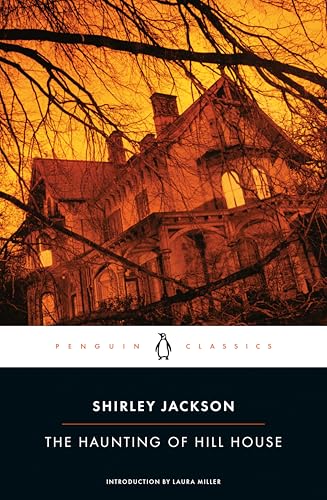
This is the gold standard for psychological horror. Hill House itself is the central character. The house appears to respond to Eleanor in ways that may be supernatural or may be projections of her psychological state. Jackson never resolves this, which is what makes it so perfect. The opening paragraph sets the tone: "No live organism can continue for long to exist sanely under conditions of absolute reality; even larks and katydids are supposed, by some, to dream. Hill House, not sane, stood by itself against its hills, holding darkness within." Nothing that follows undercuts that promise. The house is both real and metaphor, threat and mirror.
Get it here: The Haunting of Hill House on Amazon
9. The Bloody Chamber by Angela Carter (1979)
Carter retells fairy tales as gothic stories where desire and danger are the same thing. The wolf is seduction and predation at once. The castle is beautiful and trapping simultaneously. Carter's prose is baroque and exact. She understands that gothic fiction at its best is feminist: it gives voice to the woman who is supposed to be silent, the woman who is supposed to be victimized, the woman whose sexuality is dangerous and therefore punishable. In these stories, women are not passive. They are agents, sometimes monstrous, always alive in ways that transcend the neat categories Victorian propriety demands.
10. Fingersmith by Sarah Waters (2002)
Waters sets this novel in Victorian England and builds it around two con artists and a lesbian love story hidden inside a gothic thriller. The plot is intricate and unreliable (as the best gothic plots are). The atmosphere is suffocating: gaslit rooms, asylums, the coded language of hidden desire. Waters uses the gothic architecture of the Victorian era to explore how women's bodies and minds were controlled, imprisoned, gaslit. The twist at the novel's center is both shocking and inevitable. Fingersmith is gothic because it traffics in the unspeakable: female desire, female betrayal, female agency.
11. The Mysteries of Udolpho by Ann Radcliffe (1794)
Radcliffe is the foundational writer of the gothic novel. The Mysteries of Udolpho is the template: orphaned heroine, decaying Italian castle, mysterious past, supernatural events that are later explained as natural, the slow accumulation of dread and atmosphere. Jane Austen satirized this novel in Northanger Abbey because it was so popular and so excessive. But Radcliffe understood something essential about gothic fiction: that the anticipation of horror is often scarier than horror itself, that the imagination of the reader is the most effective tool the writer has. The castle of Udolpho is mostly mysterious. The past is mostly withheld. And that is what makes it so effective.
Get it here: The Mysteries of Udolpho on Amazon
Why Gothic Fiction Endures
Gothic fiction uses the supernatural as metaphor for the things that cannot be spoken directly in society. Repressed desire. Inherited trauma. Class anxiety. The past that refuses to stay buried. Sexual transgression. The monstrousness that hides inside the family unit. The reason the genre is still alive after 250 years is that these concerns do not date. Every society produces things it cannot speak about, experiences it must hide, truths that belong to darkness. Gothic fiction is the place where those things come to the surface, where they take shape and speak. That is why we keep reading it.
Your next good book, in your inbox
We only write when we find a book worth your time. Hand-picked recommendations across history, mythology, true crime and more.
Are you an author?
Get your book in front of readers like these, for free.
- Free book listing →Your own book page with an Amazon button
- Author page →Photo, bio and links to your site
- Featured placement →A spot in our best-of lists, from €29
Free tools we recommend
Get free honest reviewsReview exchange on iWrity, free to join
Books You Might Like

It Ends with Us: A Novel
Colleen Hoover

The Seven Husbands of Evelyn Hugo: A Novel
Taylor Jenkins Reid

The Song of Achilles
Madeline Miller

Educated: A Memoir
Tara Westover