Best Graphic Novels of All Time: 10 That Prove Comics Are Literature
The debate about whether comics can be literature was settled a long time ago, mostly by the books on this list. Art Spiegelman won the Pulitzer Prize. Alan Moore changed the way superhero narratives were understood by everyone from film directors to literary critics. Neil Gaiman wrote a mythology. The question now is not whether graphic novels count, but which ones are worth your time.
This list does not try to cover every genre. It covers the ten graphic novels that hold up as complete works of literature, where the combination of words and images does something neither could do alone. These are not the most entertaining comics or the most commercially successful. They are the ones that justify the form.
Where to Start
If you have read no graphic novels, start with Persepolis. It is the most accessible entry on this list and the one that has converted the most reluctant readers. Then read Maus. After those two, your instincts will tell you which direction to go. Watchmen if you want formal complexity and deconstruction. Blankets if you want emotional autobiography. Sandman if you want mythology and long-form storytelling.
Art Spiegelman, Maus (1991)
The book that forced serious literary culture to reckon with comics as a medium. Spiegelman depicts his father Vladek's experience as a Jewish survivor of Auschwitz, with Jewish people as mice and Germans as cats. The conceit is not a metaphor so much as a way of making visible the dehumanizing categories the Nazis themselves used. The frame story, in which Art interviews and argues with his difficult, traumatized father in the present day, is as important as the Holocaust narrative. It is a book about what survivors pass on and what their children do with it.
Collected in a single volume since 1991, it includes both My Father Bleeds History and And Here My Troubles Began. The Pulitzer board gave it a special award in 1992 because the existing categories did not fit it.
Maus by Art Spiegelman on Amazon
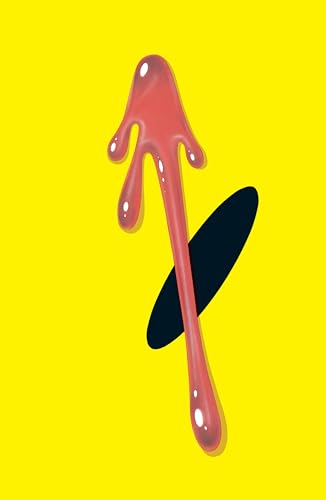
Alan Moore and Dave Gibbons, Watchmen (1986-1987)
Twelve issues collected into a graphic novel that asked what kind of person would actually put on a costume and fight crime, and answered: damaged ones. Set in an alternate 1985 where superheroes exist and Nixon is still president, Watchmen uses the superhero genre to examine power, ethics, and the difference between justice and order. Rorschach, Dr. Manhattan, Ozymandias, the Comedian: each character represents a different political position taken to its logical extreme.
Dave Gibbons' dense nine-panel grid rewards rereading. Symbols recur across issues. The pirate comic-within-the-comic comments on the main narrative. The final issue's ending has been argued about for forty years. It is formally the most complex work in the superhero genre and one of the most formally complex graphic narratives in any genre.
 Watchmen by Alan Moore on Amazon
Neil Gaiman and various artists, The Sandman (1989-1996)
Seventy-five issues collected across ten volumes, plus spinoffs. Dream, one of the seven Endless (abstract personifications of aspects of existence), is imprisoned for most of the twentieth century and must reclaim his kingdom and his purpose after his release. Gaiman used the DC Vertigo imprint to write something closer to world mythology than superhero comics, drawing on Shakespeare, Norse legend, Japanese folklore, and original invention.
Different artists drew different arcs, giving each section a distinct visual identity. A Game of You, drawn by Shawn McManus, looks nothing like The Kindly Ones, drawn primarily by Marc Hempel. The whole is more than the sum of its parts in the way that long novels sometimes achieve: the ending of the final volume, The Wake, lands with the weight of a decade of accumulated story.
Frank Miller and Lynn Varley, Batman: The Dark Knight Returns (1986)
Published the same year as Watchmen and in direct conversation with it, Miller's four-issue series imagines a sixty-year-old Bruce Wayne coming out of retirement in a decaying Gotham City. Where Moore's superheroes are psychologically broken, Miller's are morally compromised. Batman's return escalates the city's violence. The government sends Superman to stop him. The Cold War nearly ends the world.
Miller's art is brutal and expressive in ways that conventional superhero draftsmanship was not at the time. Lynn Varley's coloring, rough and warm and sometimes deliberately garish, is half the book's visual identity. The Dark Knight Returns defined the grim, politically charged superhero narrative that dominated the 1990s and still dominates blockbuster filmmaking now.
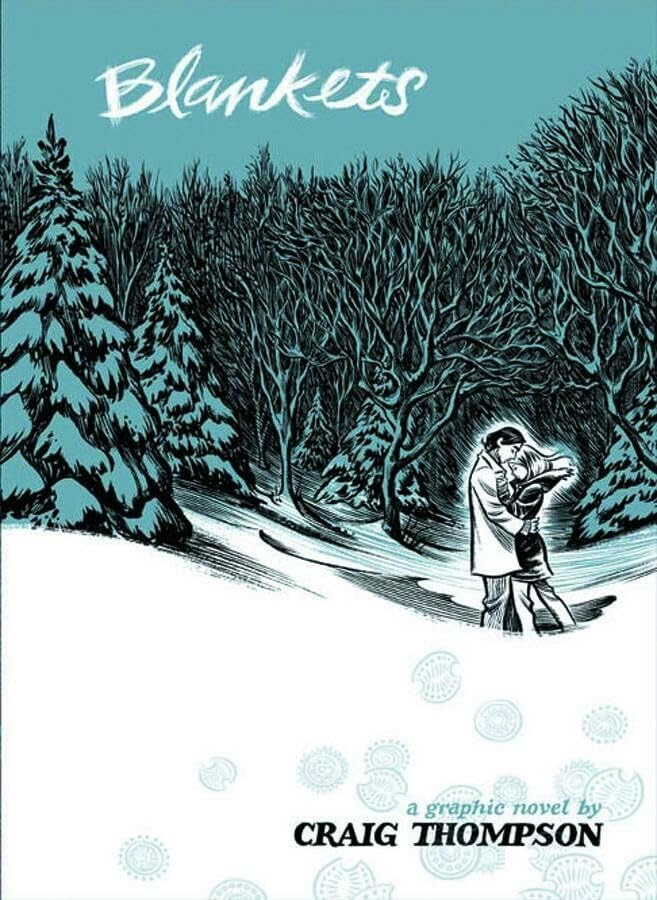
Craig Thompson, Blankets (2003)
A 592-page autobiographical graphic novel about growing up evangelical Christian in rural Wisconsin, falling in love for the first time, and losing faith. Thompson's line work is extraordinary: loose and expressive in the present-day scenes, precise and architectural in the memories of his shared bedroom with his younger brother. The snowscape that runs through the book functions as both setting and metaphor in the way that the best literary imagery works, naturally rather than decoratively.
Blankets is less formally experimental than the other books here. It tells its story cleanly and emotionally and does not ask anything of the reader beyond attention. That directness is part of what makes it one of the most loved graphic novels among people who would not usually read comics.
 Blankets by Craig Thompson on Amazon
Marjane Satrapi, Persepolis (2000-2003)
Satrapi's memoir of growing up in Iran through the Islamic Revolution, the Iran-Iraq war, and her exile to Europe is drawn in stark black and white with a deceptive simplicity. The style is influenced by Persian miniature painting rather than Western comics conventions. The flat graphic shapes make the violence and loss land harder, not softer.
Collected in a single volume in English, it covers her childhood in Tehran, her teenage years in Vienna, and her eventual return to Iran. The political and the personal are inseparable throughout. Satrapi was writing about the revolution as something that happened to families and children, not just to governments and ideologies.
Chris Ware, Jimmy Corrigan: The Smartest Kid on Earth (2000)
The most formally demanding book on this list. Ware's graphic design background is everywhere: intricate diagrammatic layouts, tiny panels, instruction-manual aesthetics applied to human misery. Jimmy Corrigan is a lonely, middle-aged man who meets his father for the first time. The narrative alternates with the story of his grandfather. The book is about masculine emotional failure passing down generations, depicted with a precision that is both clinical and devastating.
Jimmy Corrigan won the Guardian First Book Award in 2001, the first graphic novel to win a major mainstream literary prize in Britain. It remains the most technically ambitious of all graphic novels and the hardest to read on a first pass. It is also the one that most clearly demonstrates that the comics page can do things no other format can.
Alan Moore and Eddie Campbell, From Hell (1999)
A dense, fully footnoted graphic novel about Jack the Ripper. Moore and Campbell treat the Whitechapel murders as a lens for examining the economic, sexual, and political structures of Victorian Britain. The killer's identity is disclosed early. The book is not a mystery. It is an argument about how systems produce violence and how violence reveals systems.
Eddie Campbell's scratchy, atmospheric black-and-white art gives the Victorian streets texture and weight. The appendix, thirty pages of Moore's research notes explaining every historical detail, is itself a significant piece of work. The book was published in serial form from 1991 to 1996 and collected in 1999.
Joe Sacco, Palestine (1993-1995)
Sacco invented literary comics journalism with this account of two months he spent in the occupied territories in the early 1990s. His caricatured self-portrait, the cramped visual storytelling, and the direct speech of Palestinians he interviewed combine into something that reads simultaneously as memoir, journalism, and political argument. Edward Said wrote the introduction.
Palestine established that comics journalism could cover political subjects with the same depth and moral seriousness as long-form written reporting. Sacco's later work, Footnotes in Gaza and Paying the Land, extended the method. Palestine remains the original and the one that defines what he made possible.
Alison Bechdel, Fun Home (2006)
A memoir about Bechdel's relationship with her closeted gay father, who died in what may have been a suicide shortly after she came out to her parents. Bechdel structures the book through literary references, particularly to James Joyce and F. Scott Fitzgerald, and through close, obsessive examination of her own memory. Her father's love of restoration, his coldness, his secrets, and her own dawning sexuality are tracked through objects, rooms, and family photographs.
Fun Home is the most literary of the autobiographical graphic novels, in the specific sense that its meaning is constructed through allusion and layering rather than direct statement. It was adapted into a Tony Award-winning musical in 2015, which is a strange fact about a book this formally complex.
Three Reads to Start With
- Maus by Art Spiegelman. The book that settled the argument about comics as literature. Essential reading regardless of whether you have ever picked up a graphic novel before.
- Watchmen by Alan Moore. The most formally complete graphic novel ever made. If you have only heard about it, reading it is a different experience entirely.
- Blankets by Craig Thompson. The most accessible entry point for readers who are not already comics readers. Emotionally direct, beautifully drawn, and complete in itself.
What These Books Have in Common
Every book on this list uses the specific properties of the comics page: the gutter between panels where the reader constructs what happens, the simultaneous presence of image and text, the ability to show the inside of a thought as visual rather than verbal. Watchmen could not exist as a novel. Maus could not be a film. Jimmy Corrigan is, at its core, a piece of graphic design that happens to be about human loneliness. These books work the way they work because the medium is doing the work, not despite it.
The list also skews toward memoir and political subject matter. This is not accidental. The graphic novel form proved itself first in autobiography and journalism, where the presence of an author drawing their own experience creates a specific kind of credibility. Fiction was slower to find its distinctive voice in the form. Watchmen, Sandman, and From Hell are the fiction titles that fully justify their medium on the same terms.
Your next good book, in your inbox
We only write when we find a book worth your time. Hand-picked recommendations across history, mythology, true crime and more.
Are you an author?
Get your book in front of readers like these, for free.
- Free book listing →Your own book page with an Amazon button
- Author page →Photo, bio and links to your site
- Featured placement →A spot in our best-of lists, from €29
Free tools we recommend
Get free honest reviewsReview exchange on iWrity, free to join
Books You Might Like

It Ends with Us: A Novel
Colleen Hoover

The Seven Husbands of Evelyn Hugo: A Novel
Taylor Jenkins Reid

The Song of Achilles
Madeline Miller
