Best History Books of All Time: 12 That Change How You See the World
THE BEST HISTORY BOOKS don't just inform you. They reorganize how you see everything that came before now and everything unfolding today. The list below isn't sorted by popularity or average rating. It's sorted by how much each book actually changes the reader.
What Makes a History Book Great?
Three things separate the books on this list from the thousands of history titles published every year.
Narrative pull. The best historians are also storytellers. You turn pages not because you feel obligated to learn but because you want to find out what happens next, even when you already know.
Original argument. The best history books don't just summarize what happened. They have a thesis. They're trying to convince you of something about how the world works or why it got to be this way.
Primary source depth. The historians on this list read the letters, the court records, the newspaper reports from the time. The detail that emerges from that level of research is what gives these books their authority.
The 12 Best History Books of All Time
1. Sapiens: A Brief History of Humankind — Yuval Noah Harari

The most widely read history book of the 21st century. Harari's thesis: what separates humans from every other species is our ability to believe in collective fictions, money, nations, corporations, gods, and use those shared beliefs to cooperate at scale. He traces this from the Cognitive Revolution 70,000 years ago to the present.
Not everyone agrees with everything Harari argues, but the framework is genuinely useful. It's become one of those books that educated people assume you've read.
2. The Guns of August — Barbara Tuchman
The Pulitzer-winning account of the first month of World War I. Tuchman doesn't just describe what happened. She shows how it was possible, given every leader's assumptions, for the entire continent to sleepwalk into catastrophe without any single person intending it.
John F. Kennedy read this book during the Cuban Missile Crisis and used it as a warning about the danger of miscalculation. It's the most gripping narrative history ever written about a month in politics.
3. The Rise and Fall of the Third Reich — William L. Shirer
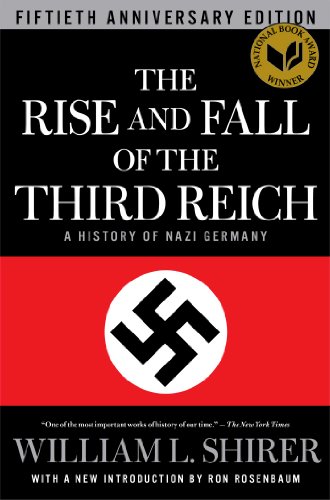
A thousand pages of meticulous documentation from a journalist who was actually in Berlin as the regime rose. Shirer was there for the Nuremberg rallies, the annexation of Austria, the early years of the war. His access to captured Nazi documents after the defeat makes this the most complete single-volume account of the regime.
It's long. Read it anyway. Nothing else does what this book does.
4. A People's History of the United States — Howard Zinn

The book that argues American history looks entirely different when you center the experience of workers, slaves, indigenous people, and immigrants rather than presidents and generals. You don't have to agree with Zinn's politics to find the corrective useful. After 40 years, it remains one of the most-assigned and most-argued-about American history books ever published.
5. The Mediterranean and the Mediterranean World in the Age of Philip II — Fernand Braudel
The book that changed what history is supposed to be about. Before Braudel, history was mostly about events: battles, treaties, the deaths of kings. Braudel argued that geography, climate, and the slow rhythms of economic life matter more than any individual event. He traces the Mediterranean world across three timescales: the longue duree (geological and climatic), the medium term (economic and social), and the short term (events and politics).
Reading Braudel teaches you to think about causation differently.
6. The Decline and Fall of the Roman Empire — Edward Gibbon
The book that defined what serious history writing could look like, written in the 1770s. Gibbon's multivolume account of Rome's fall from the height of the second century to the fall of Constantinople in 1453 is still worth reading, both for what it says and for the quality of the prose.
Modern scholars have revised many of Gibbon's specific claims, but no one has replaced the work as a totality. Start with an abridged version if the full six volumes seem daunting.
7. The Diary of a Young Girl — Anne Frank

Technically a primary source document, not a history book. But no professional history of the Holocaust conveys what it was like to live through it with the immediacy of this diary. It's the most read document to emerge from World War II, and it remains the most effective single piece of testimony about what European Jews experienced.
8. Empire: How Britain Made the Modern World — Niall Ferguson
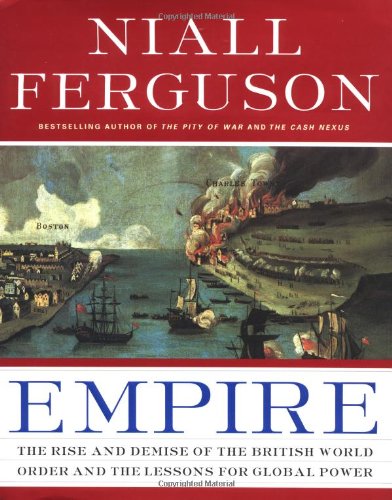
The most argued-about book about the British Empire in recent decades. Ferguson's controversial thesis is that, on balance, the empire contributed more positive than negative outcomes to world history, through institutions, rule of law, and economic development. His critics argue he underweights slavery, famine, and exploitation. Either way, the book forces you to think carefully about how to evaluate imperial history.
9. The Communist Manifesto — Marx and Engels
Not a history book in the traditional sense, but one of the most consequential documents in modern history. Every serious student of the 19th and 20th centuries needs to have read it. It is shorter than you think (under 50 pages), far more readable than you expect, and the diagnosis of capitalism's internal contradictions remains relevant regardless of your politics.
10. Longitude — Dava Sobel
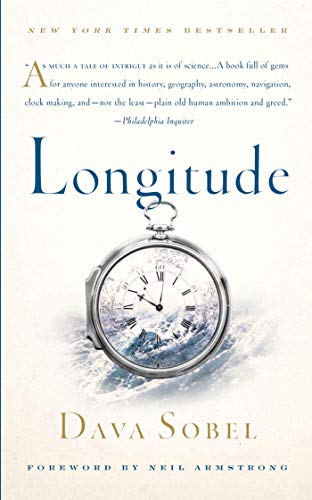
The story of how an 18th-century clockmaker named John Harrison solved the most important scientific problem of his age: how to determine longitude at sea. Sailors were dying by the thousands because there was no way to know where you were east-west on the open ocean. Sobel tells this as a detective story, with a cast of eccentric scientists, a hostile establishment, and an ignored genius.
Short (175 pages), gripping, and a masterclass in narrative nonfiction.
11. The Shock Doctrine — Naomi Klein
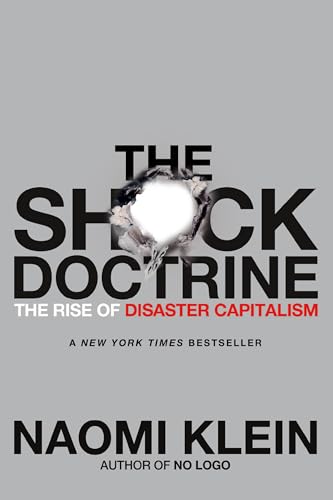
Klein's thesis: economic crises, natural disasters, and political upheavals have been systematically used since the 1970s to implement free-market economic policies that couldn't survive democratic debate. She traces this from Chile under Pinochet through Russia, Poland, South Africa, and the aftermath of Hurricane Katrina and the Iraq War.
Whether you find her convincing or enraging, the pattern she documents is real and the research is thorough.
12. The Warmth of Other Suns — Isabel Wilkerson

The story of the Great Migration, when six million Black Americans moved from the Jim Crow South to the cities of the North and West between 1915 and 1970. Wilkerson tells it through three individuals whose stories she followed over 15 years of research. The result reads like a novel and documents one of the largest internal migrations in American history.
Winner of the Pulitzer Prize and one of the most important American history books of the last 25 years.
How to Build a History Reading List
The books above give you an architecture. After Sapiens for the big picture, go narrow: pick one period or region that interests you and read three books about it from different perspectives. One standard academic account, one revisionist argument, one primary source or memoir.
That combination: overview plus close reading plus primary source, is how historians actually think. It's also how you develop the ability to evaluate competing historical claims rather than just accepting whatever argument sounds most convincing.
For more curated reading lists by topic, browse the best military history books, the best books about ancient Rome, or the dark history reading list.
Your next good book, in your inbox
We only write when we find a book worth your time. Hand-picked recommendations across history, mythology, true crime and more.
Are you an author?
Get your book in front of readers like these, for free.
- Free book listing →Your own book page with an Amazon button
- Author page →Photo, bio and links to your site
- Featured placement →A spot in our best-of lists, from €29
Free tools we recommend
Get free honest reviewsReview exchange on iWrity, free to join
Books You Might Like

It Ends with Us: A Novel
Colleen Hoover

The Seven Husbands of Evelyn Hugo: A Novel
Taylor Jenkins Reid

The Song of Achilles
Madeline Miller

Educated: A Memoir
Tara Westover