Best Horror Books of 2026: Stories That Burrow Under Your Skin
{
  "@context": "https://schema.org",
  "@type": "Article",
  "headline": "Best Horror Books of 2026: Stories That Burrow Under Your Skin",
  "author": {
    "@type": "Organization",
    "name": "Skriuwer"
  },
  "datePublished": "2026-06-12",
  "description": "Explore the greatest horror novels that terrify through atmosphere, psychology, and the unknown."
}
{
  "@context": "https://schema.org",
  "@type": "FAQPage",
  "mainEntity": [
    {
      "@type": "Question",
      "name": "What's the difference between horror and thriller?",
      "acceptedAnswer": {
        "@type": "Answer",
        "text": "Horror creates fear and dread through unknown or supernatural threats. A thriller creates suspense through known dangers and problems to solve. Horror is about what might happen or what might be lurking. A thriller is about watching someone navigate a problem you understand. Good horror makes you fear what you cannot see or fully comprehend."
      }
    },
    {
      "@type": "Question",
      "name": "What are the main subgenres of horror?",
      "acceptedAnswer": {
        "@type": "Answer",
        "text": "Gothic horror emphasizes atmosphere, isolation, and old mysteries. Psychological horror makes the mind itself terrifying. Body horror focuses on physical transformation and decay. Cosmic horror presents humans as insignificant in an uncaring universe. Creature horror uses monsters as the threat. Supernatural horror features ghosts, demons, or other entities beyond the normal world."
      }
    },
    {
      "@type": "Question",
      "name": "Can horror be literary and artistic?",
      "acceptedAnswer": {
        "@type": "Answer",
        "text": "Absolutely. The best horror literature uses fear as a tool to explore deeper themes. Authors like Henry James, Shirley Jackson, and Stephen King use horror to examine social anxiety, isolation, family trauma, and what we fear about human nature. Horror when done well is as sophisticated as any literary genre."
      }
    }
  ]
}
Horror is the literature of fear. Not just fear of monsters or violence though those can appear. Horror is fear of what we do not understand, fear of loss of control, fear of death, fear of other people, fear of ourselves.
Good horror does not rely on gore or cheap scares. Good horror creates an atmosphere where something might happen. Good horror makes you feel that something is wrong even if you cannot name what. Good horror often ends with you understanding what the character did not, and wishing you could unknow it.
Horror has been dismissed as low art. But the greatest horror novels contain psychological depth equal to any serious fiction. They use fear as a vehicle to explore the human condition.
1. The Haunting of Hill House by Shirley Jackson
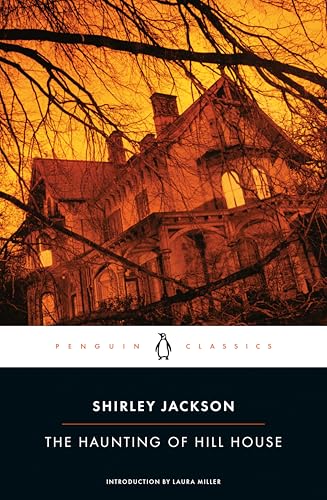
Shirley Jackson's The Haunting of Hill House is a perfect novel. Everything in it is precise and controlled and terrifying. A group of investigators arrives at Hill House, a mansion that may or may not be haunted, to study the phenomenon.
Jackson focuses on Eleanor, a lonely woman who has never had a life of her own. At Hill House, she begins to feel that the house has chosen her. The house might be genuinely haunted or Eleanor might be experiencing a breakdown. Jackson never fully resolves which is real. The ambiguity is the point.
Jackson's prose is elegant and psychological. She describes the physical sensations of fear. She shows how fear compounds with isolation and loneliness. She shows how a vulnerable person can be manipulated by a place that seems to offer what they need.
The horror in The Haunting of Hill House is not from jump scares or gore. It comes from atmosphere and psychology and the slow realization that the characters may be in danger and may not escape. Available on Amazon.
2. The Exorcist by William Peter Blatty
William Peter Blatty's The Exorcist is about demonic possession but it is really about faith and doubt and the limits of rational understanding. A girl named Regan becomes possessed by something that seems to defy medical or psychological explanation.
Blatty writes with meticulous detail. He shows the medical tests and psychiatric evaluations. He shows how the medical establishment encounters something it cannot explain. He shows the priests who must confront their own doubts about God and good and evil.
The horror comes from the violation of the body and the mind. Regan is a child and something is destroying her. The adults who love her cannot protect her. Her mother cannot save her. The doctors cannot cure her. Only faith might work but the priest with the greatest faith has lost it.
The novel raises philosophical questions about the existence of evil and how we confront what might be beyond our understanding. It is horror as theology.
3. The Turn of the Screw by Henry James
Henry James' The Turn of the Screw is a novella that generates more critical debate than most full-length novels. A governess arrives at a country estate to care for two children. She begins to see ghosts. The question is whether the ghosts are real or whether the governess is mentally ill and imposing her fears on the children.
James never answers the question. The ambiguity is essential to the work. As a reader, you must decide what is real. Different interpretations lead to different morals. If the ghosts are real, the story is about protecting innocence from supernatural evil. If the governess is mad, the story is about how fragility and isolation can destroy the vulnerable.
The horror is psychological and interpretative. It works through suggestion and implication rather than description. James shows you almost nothing and makes you see everything. Available on Amazon.
4. The Shining by Stephen King

Stephen King's The Shining is about a family isolated in a massive hotel during winter. Jack Torrance, a writer and recovering alcoholic, takes a job as caretaker. His wife Wendy and son Danny come with him. The hotel, built over a burial ground, is filled with malevolent spirits that feed on violence and rage.
King shows the family slowly disintegrating. Jack becomes more volatile. Wendy becomes more afraid. Danny becomes more aware of the supernatural presence. The hotel itself becomes a character, actively working to break the family apart by awakening Jack's rage and alcoholism.
What makes The Shining horrifying is not the supernatural elements but the family breakdown. The horror is that the place exploits what is already broken in Jack. The ghost does not create the violence. It awakens it. This is psychological horror that uses the supernatural to amplify human trauma.
King's greatest strength is his ability to write about families and relationships. He makes you care about these people before subjecting them to terror. You fear for them because you understand what they might lose.
5. Mexican Gothic by Silvia Moreno-Garcia
Silvia Moreno-Garcia's Mexican Gothic is a gothic horror novel set in Mexico during the 1950s. Noemí, a young woman from Mexico City, is asked to check on her cousin who has married into an old family. The cousin seems to be going insane. Noemí arrives at the family mansion to discover that the family may be manipulating her cousin and that the house itself may be alive.
Moreno-Garcia creates an atmosphere of decay and corruption. She uses Mexican mythology and colonial history as the source of the horror. The horror is not from ghosts but from a family and a place that is slowly consuming the people who live there.
The novel shows how power operates through families and how women are particularly vulnerable to family control. It shows how isolation enables abuse. It uses the gothic tradition but transforms it through a Mexican setting and perspective. Available on Amazon.
6. House of Leaves by Mark Z. Danielewski
Mark Z. Danielewski's House of Leaves is horror as formal experiment. The novel follows multiple narratives about a house that is larger on the inside than the outside. The house has rooms that should not exist. People disappear inside it.
The book itself is disorienting. The footnotes go on for pages. The text shifts fonts and directions. Pages have only a few words. The form mirrors the content. You experience the confusion and dislocation that the characters experience.
House of Leaves is not for everyone. It demands active participation from the reader. But for readers willing to engage with it, it is an experience of genuine unsettledness and dread. The book makes you uncomfortable in ways that extend beyond the narrative to the reading experience itself.
7. The Woman in Black by Susan Hill
Susan Hill's The Woman in Black is a ghost story told with Edwardian restraint. A young lawyer, Arthur Kipps, encounters a ghost while visiting a remote estate. The ghost is a woman in black whose presence causes death and suffering.
Hill's horror comes from what is not said as much as what is. The prose is measured and restrained. The supernatural phenomena are described with matter-of-factness that makes them more uncanny. The final revelation is heartbreaking and terrible at once.
The novel shows that horror does not require gore or explicit content. It requires understanding what frightens people and maintaining narrative control.
The Purpose of Fear
The best horror fiction asks difficult questions about what we fear and why. It uses fear as a tool to explore isolation, loss of control, death, and what people do to each other. Horror reminds us that there are things in the world beyond our understanding and beyond our ability to control. Sometimes that knowledge is liberating. Sometimes it is terrifying.
Your next good book, in your inbox
We only write when we find a book worth your time. Hand-picked recommendations across history, mythology, true crime and more.
Are you an author?
Get your book in front of readers like these, for free.
- Free book listing →Your own book page with an Amazon button
- Author page →Photo, bio and links to your site
- Featured placement →A spot in our best-of lists, from €29
Free tools we recommend
Get free honest reviewsReview exchange on iWrity, free to join
Books You Might Like

It Ends with Us: A Novel
Colleen Hoover

The Seven Husbands of Evelyn Hugo: A Novel
Taylor Jenkins Reid

The Song of Achilles
Madeline Miller

Educated: A Memoir
Tara Westover